
one of the women working in the rice paddies around Ziro walking away – the astute observer will note the small, orange Dutch clogs
The small town of Ziro is actually a conglomeration of small towns; there is Old Ziro, and Hapoli, a newer market area, all very lively. Unfortunately, we have once again a guest house which is miles out of town – one of those things you have little control over, if you let someone else organise your trip. We take a stroll over the fresh products market, which is bigger than we have seen in a while. And with yet again unexpected finds, like bamboo shoots kept in large plastic bottles, and a flat basket full of silk worms, still alive, apparently a real delicatesse here.
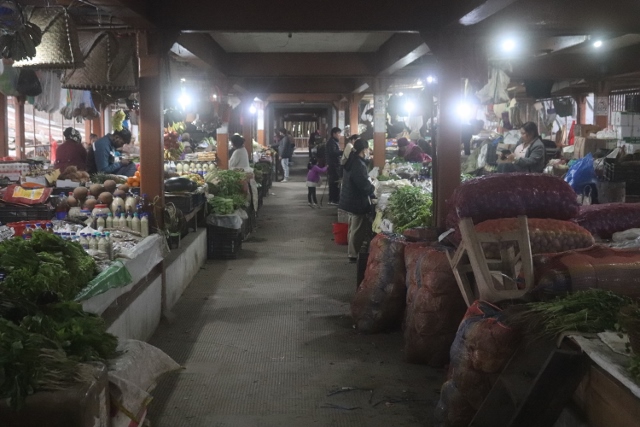
the market building in Ziro, quite large for a relatively small town
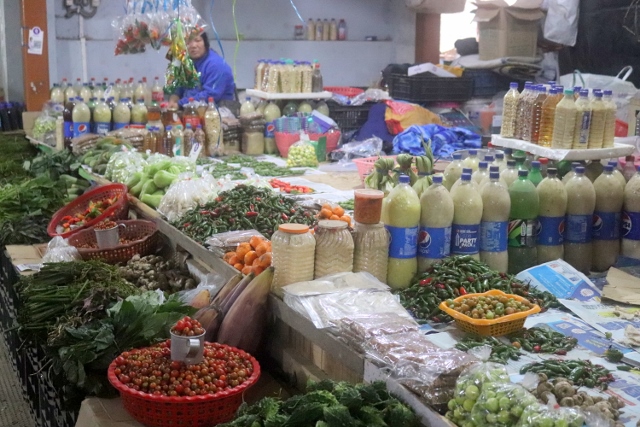
one of the bestselling products is bamboo shoots, kept in large plastic bottles

and thse are silk worms, not to produce silk, but for consumption – after cooking them…

the meat shop is outside the main market; outside temperature ensures the meat stays properly cooled
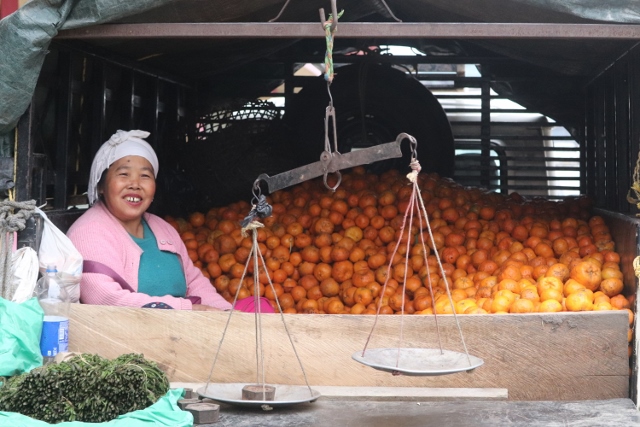
and this is the orange selling lady, selling from a truck

they surround the temples with characteristic flags, white with a red sun in the middle
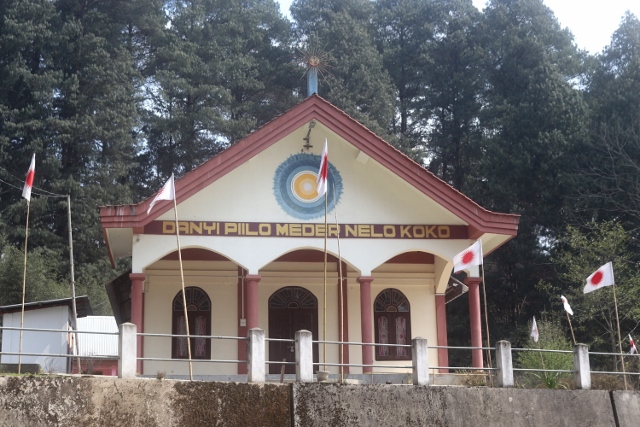
the Danyi Pillo temple, related to the local religion that worships the sun and the moon
But the main attraction of the Ziro area are its villages. The dominant tribe here are the Apatani, who have been inhabiting this region for perhaps 30 generations. Although some have converted to Christianity, most Apatani adhere to their Danyi-Piilo belief, praying to the Sun (Ayo Danyii) and the Moon (Atoh Piilo). Each village will have a temple, adorned with a number of white flags showing a bright red sun – something we have also seen on the way to Ziro, quite a long way back.
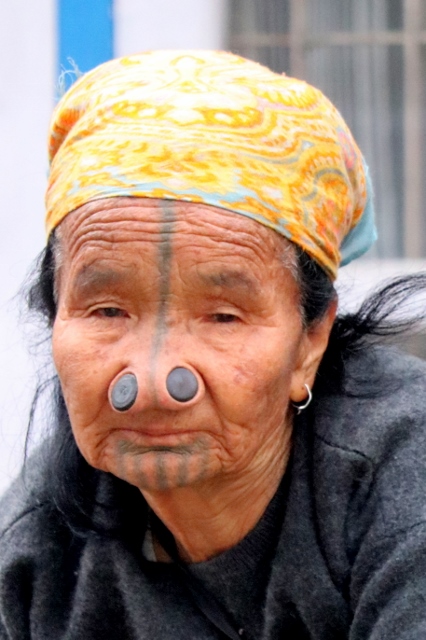
tattoos and nose plugs are a thing in the Ziro valley
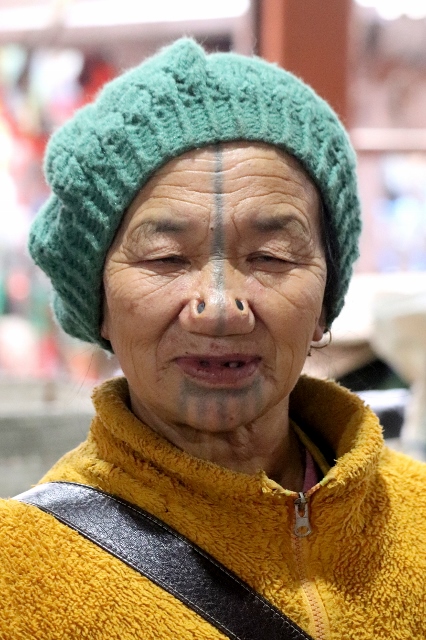
with which the local women have been adorned
The Noseplugs
The most characteristic feature of the Apatanis is the women’s nose plug, and facial tattoos. Legend has it that the Apatani women were exceptionally beautiful, the reason why they were often abducted by neighbouring tribes. To prevent this from happening, women were forced to insert the plugs and tattoo their faces, to make them less attractive. Whether true or not, the practice grew into an essential part of Apatani culture – to the extent that men, too, have facial tattoos -, until the Indian government imposed a ban on the nose plugs in the 1970s. So you will only find older women with the plugs, and soon this will be a thing of the past. For the better, I suppose.
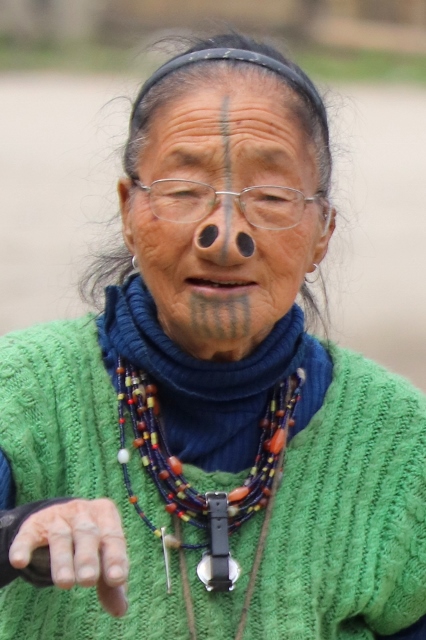
until about the 1970s, when the Indian government banned the practice

so these are some of the last specimen surviving!!

entrance to Hari village, with an arch like every village seems to have

outskirts of Hari, the familiar corrugated-iron roofs dominating

the ponds, also in the outskirts, where the rice plants are being nurtured before being planted in the paddies

a typical Hari house, wooven-bamboo walls, a range of plants and the laundry on the veranda

another example of the wooven-bamboo walls, not unattractive

these stairs lead to storage buildings, that keep the food off the floor to prevent animals from enjoying it, too

this man sells the fish that is raised inside the rice paddies

they are really small fishes, admittedly
Hari
The first village we visit is Hari. The houses here are a mixture of traditional, bamboo-woven structures and new, brick- or cement-built, covered with corrugated iron. But no matter what the construction, each house is protected by totems, at the front and at the back. The front with a few bamboo sticks and eggshells, the back with a more elaborately woven bamboo and grass structure – or perhaps it is the other way around. Another totem is a long pole with decorations at the top, which you put in front of the house for every male family member – although this tradition is waning somewhat, often one pole for all males is deemed sufficient. What is remarkable, is that, unlike all the other places we have been so far in NE India, the people here are non-committal; not unfriendly, but just not interested in visitors, no eye contact, and hardly any interaction. Not sure if this is a reaction to the tourists visiting, or just a more reserved attitude than that of other tribes.

one of the totems, with egg shells, that are typically placed in the front of the house

some are bigger, and done with more eggs
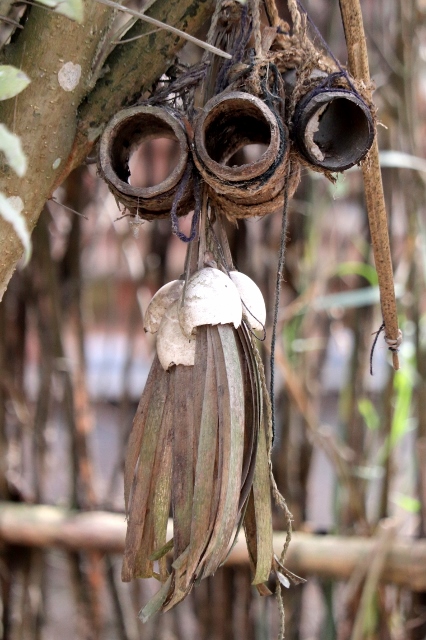
others are a combination of bamboo poles and egg shells

these woven totems are typically raised at the back of the house

this one with a collection of feathers

and these are part of a larger group of totems, representing the whole village

a tall pole, decorated, is put up next to the house for each male mamber of the family
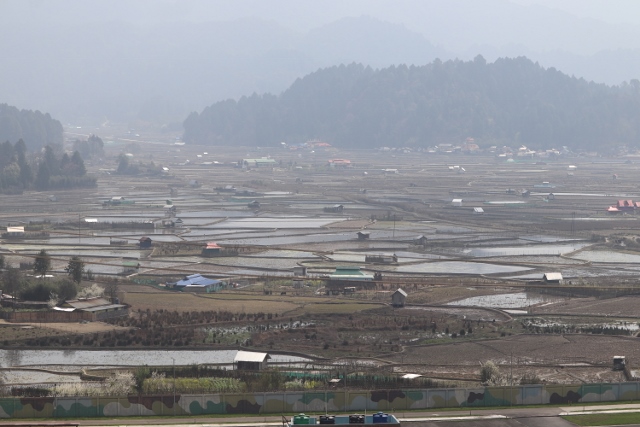
the entire Ziro valley seems to be covered with rice paddies, at this moment in the season wet, but without rice, still

the rice will mostly grow at the monsoon season, july to august

the small huts in between are to take shelter, from the hot sun, or from the monsoon downpour, of course
The Rice Paddies
The main activity here is growing rice, like in so many other areas in India. But here they grow rice with a twist, they combine it with fish. The paddies are not only supporting growing rice plants, but also small fishes – which are being caught from time to time, for eating. At some stage we happen to meet a group of women working the – now dry – paddies. They have their tea break, and don’t mind us taking pictures. Of them. One is old enough to have the nose stubs, but the others are equally impressive faces, with the tattoos only.

at this moment in time the paddies are being prepared for the planting of the rice

this one, in particular, enjoying the tea
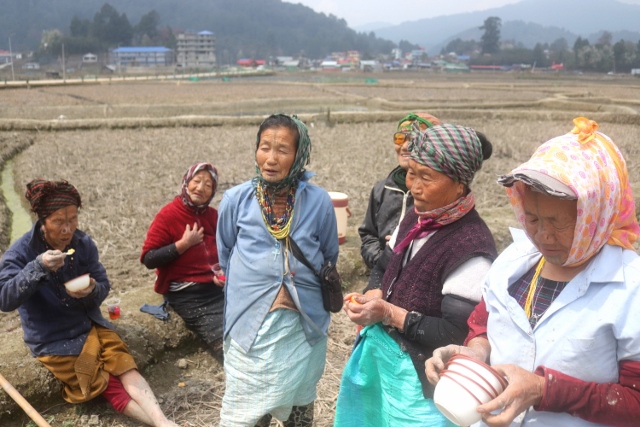
a group of women is having a tea break from their work in the paddies
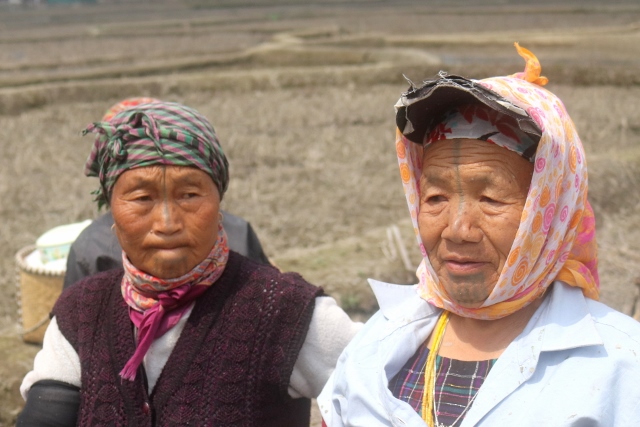
all of them are tattood
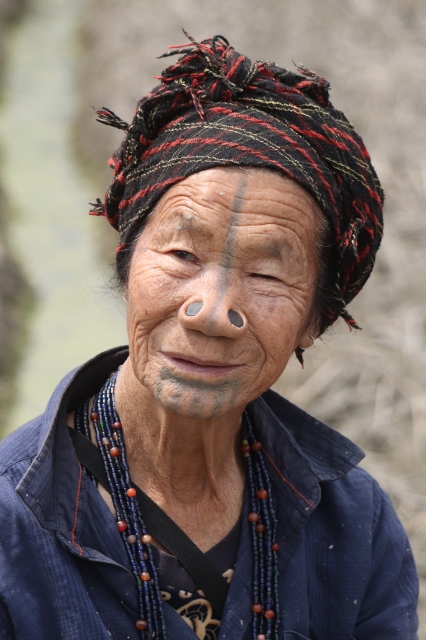
and one of them has the nose plugs, too

another lady in the fields, also with tattoos

and I marvel at the colourful jewelry they are wearing, in the fields
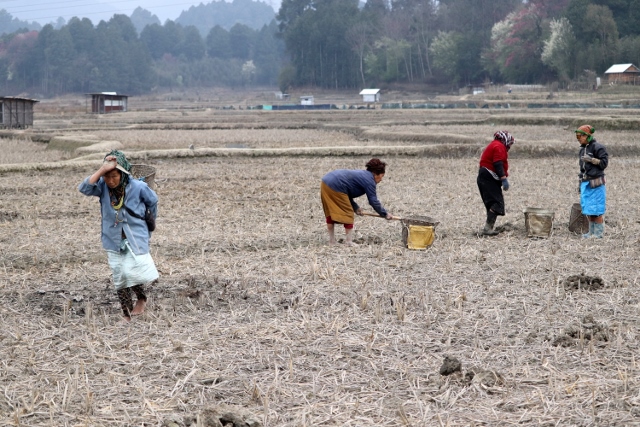
after tea, time to start work again
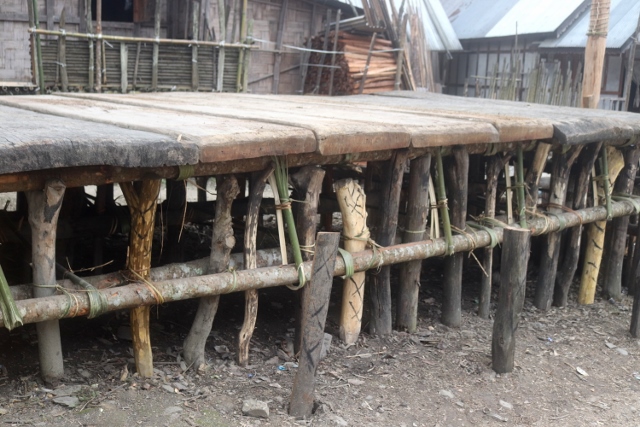
an original tager lapang, a clan platform for celebrations; this one is all wood, most newer ones are made of concrete
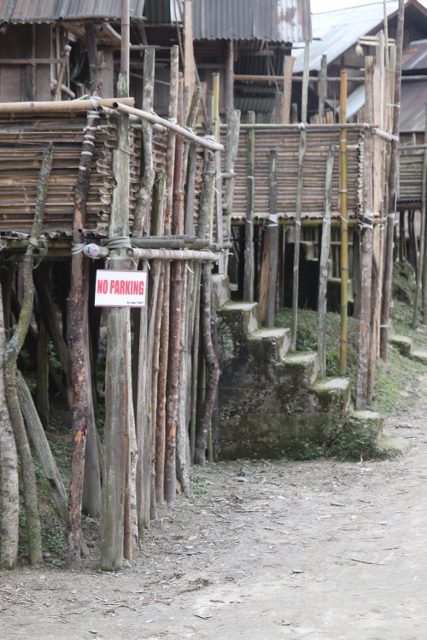
the no parking signs have been places, in anticipation of the huge inflow of people for the annual Myoko festival
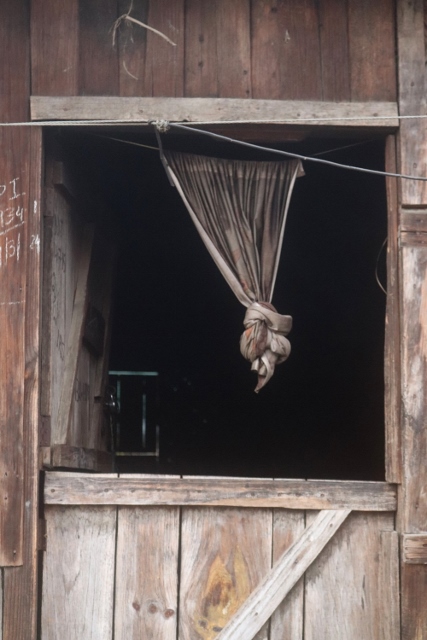
a window is a popular subject matter in my photos

some houses have wooden walls, and a veranda from bamboo poles

rice grains drying, ahead of the festival – but somehow, they are always drying, somewhere, festival or not

no time yet to celebrate, today is still a working day
Hong
We also get to the village of Hong, not much different from Hari, except that Hong has the honour of organising the Myoko festival this year. This is an annual gathering of seven surrounding villages, and each year one of them organises it – invites the other villages. Unlike in Hari, in Hong there is a lot of activity going on, related to the preparations for the festival, which starts tomorrow night. Now it shows how important the totems are, many are being replaced to look good. Each clan is cleaning its platform – its tager lapang, as it is called; this is where the clan gathers for the celebration, in the old days only the men, but now women are also allowed. The newer platforms are concrete, but the older ones are made of wood, both pillars and cover.

but this is definitely for the party tomorrow
Some 5000 to 6000 people are expected for the opening of the festival, but somehow, I don’t think I am sorry to miss it. For starters, these people are still not very welcoming. Our guide tells us that there is little in terms of traditional dress, nor dancing; the main tradition is the ceremonial slaughter of cows, chicken and other animals – even monkeys. And heavy drinking, of home-made rice- and millet-wine, apong.

and this is another totem, quite an elaborate one, for a male family member
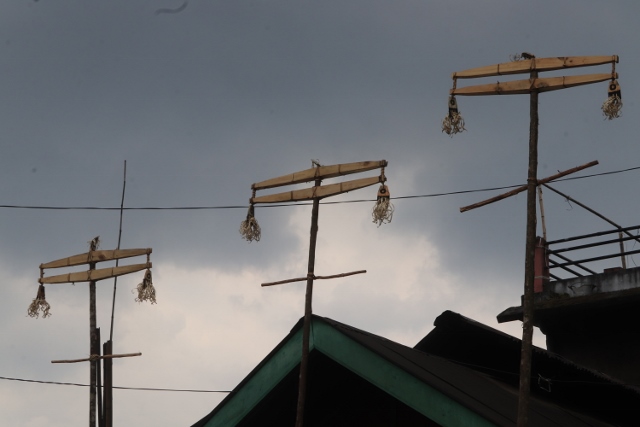
lucky family, perhaps?; although nobody admits it anymore, these days, boy children are preferred over girls

I am not entirely sure what this bamboo tent is for, it is also a totem, I believe
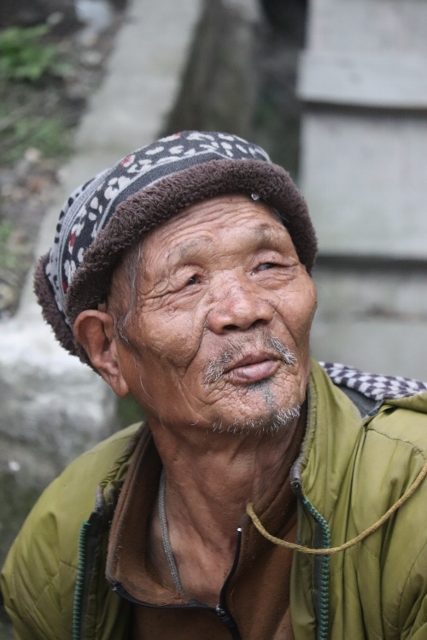
not only the women, also some of the men have characteristic features

with a chin tattoo, and in this case a great, and traditional, hairdo

and this is the lady of the manor, running the homestay

insode the houses are pretty basic, but comfortable; this is allegedly the first homestay in the village

with for every guest his or her own mug and spoon, perhaps

an unexpected encounter with a winery in Hong village

and somebody to make us taste the varieties

with all the proper equipment in place
The Winery
Which, we learn last minute, is not the only wine in Hong. There is actually a real winery, which uses fruits to produce mostly semi-sweets wines. Some of the varieties are quite nice, like the kiwi, pear and guava wine, others take a little more to get used to, like the guava and spicy pepper and the kiwi and ginger combinations. But the process is that of wine making, all right, including pulping, fermentation in stainless steel tanks and even aging in French oak barrels – except that to reduce costs, they now add wood chips instead. 60,000 litres per year. And you know? Beggars are no choosers, and of course we buy some.
next: to Majuli

which, unfortunately, are not from grapes, but from various fruits, sometimes mixed with chillie or ginger
