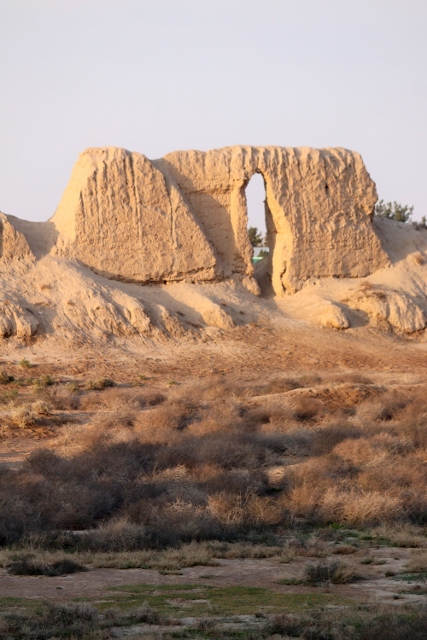
a badly eroded wall in the old city of Merv, once the biggest city in the world
Turkmenistan’s best known cultural heritage, UNESCO-recognised, is Merv, close to the city of Mary, in the east of the country.

the entrance to the UNESCO World Heritage site of Merv; does it say ‘no trucks allowed’?
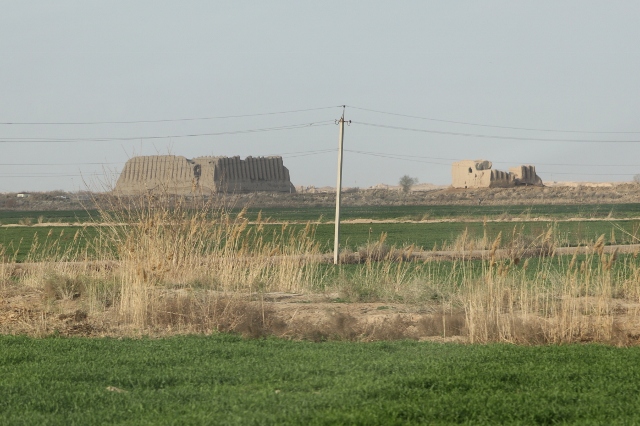
appraoch of Merv, with the Greater (left) and Lesser Kiz Kale (right)
Ancient Merv, as it is now called, was once one of the greatest urban centres along the Silk Road, thriving as a crossroads of trade, culture, and ideas. It served as the capital for several political entities, like that of the Abbasid Islamic caliphate in the 9th C, and most importantly, as the capital of the Seljuk empire in the 11th-12th C. Under the Seljuks it may have been the world’s largest city, with a population of up to 500,000, attracting scholars, scientists, poets.
Which all came to a sudden end in 1221 when it was razed by the Mongols under Tolui Khan, son of Genghis, who murdered the entire population and destroyed most of the buildings. Although partly rebuilt afterwards, the city never regained its former prosperity, and ceased to exist when it was once again destroyed by the Shah of Bukhara in the 18th C.
Merv was not a single city but a collection of walled settlements built over time, all in a pretty poor state right now. The largest one is the Soltangala, the Sultan’s fortress, from Abbasid times, which consisted of several kushks, semi-fortified two-story residences of Merv’s elite, whose corrugated walls gave it a unique and striking appearance. The largest and best-preserved structure is the Greater Gyzgala, the maiden’s palace; according to our guide this one was populated by the virgins who the Sultan accumulated, although it doesn’t say anything about whether they remained virgins. The building has extraordinarily thick walls, with deep corrugations, as well as multiple interior stairways leading to second storey living quarters. The second structure in this part of Merv is the Lesser Gyzgala, which has few covered parts by now. In fact, all of Merv’s kushks are in precarious states of preservation. This becomes even more obvious at other neighbourhoods, where only parts of the outer wall remain.

with clearly second floor dwellings
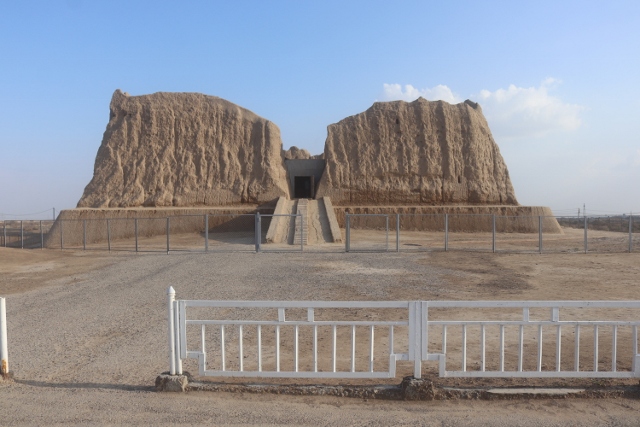
the Greater Kiz Kale, or Gyzgala

inside the Greater Gyzgala
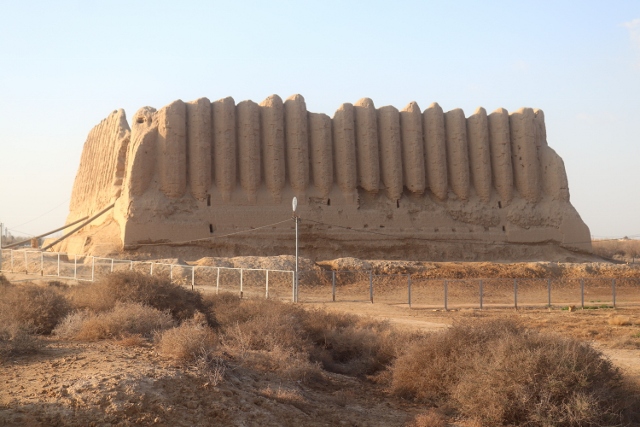
the backside of the Greater Gyzgala, very impressive
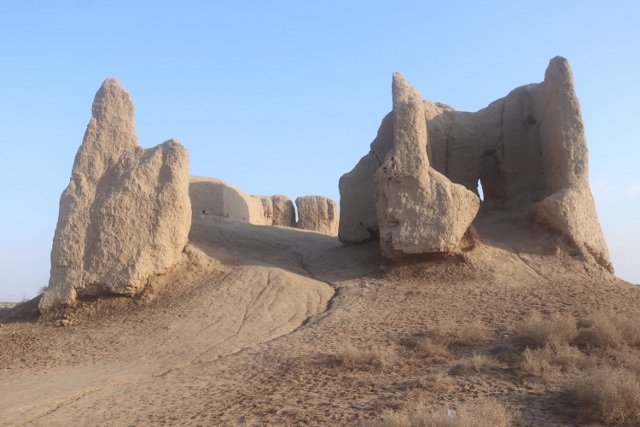
and this is the Lesser Gyzgala, with also less remaining

the highest point of the Lesser Gyzgala
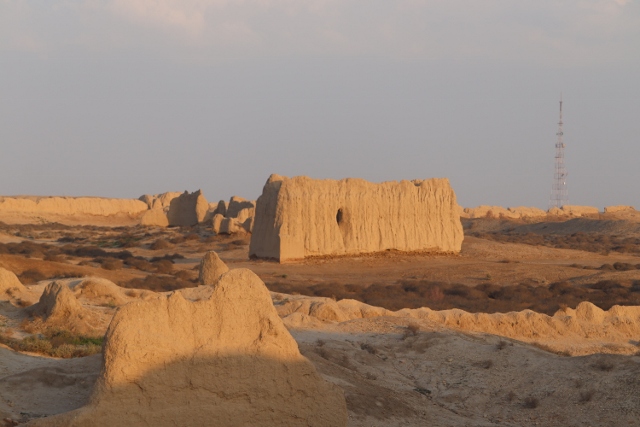
leaving individual humps, not even buildings, as remnants of Merv
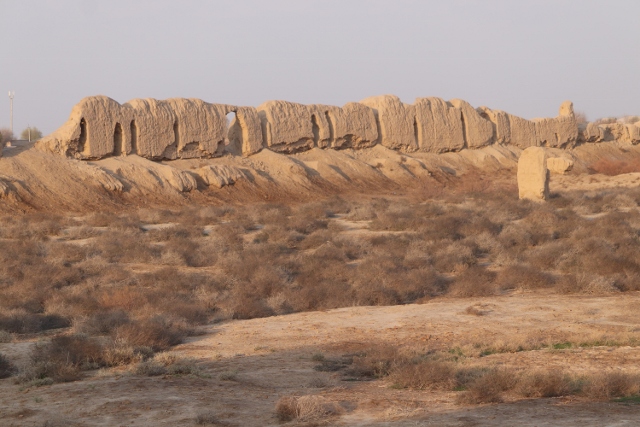
one of the many walls that dot the site, subject to severe erosion

the main mausoluem, that of Sultan Ahmad Sanjar, one of the few buildings that resisted the Mongol onslaught

although restored since, obviously

inside the mausoleum
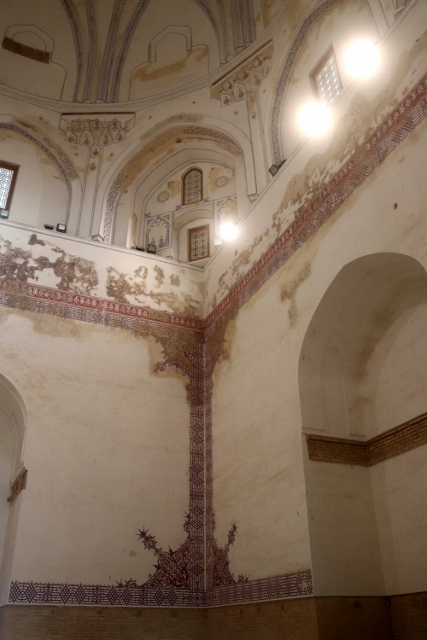
delicate decorations along the walls, nices, corners
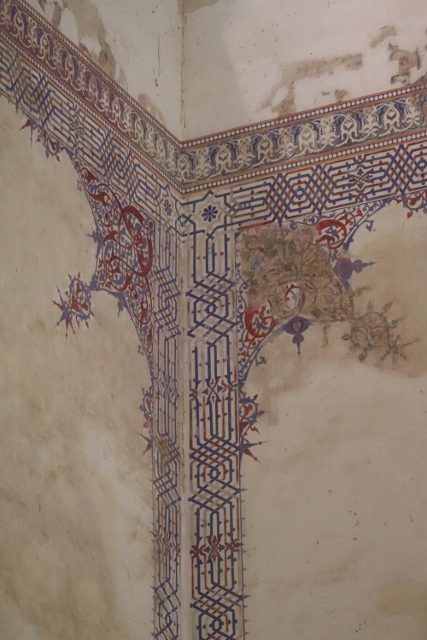
in detail, much of this original, I think
Which cannot be said of the mausoleum of Sultan Ahmad Sanjar, who ruled Merv in the first half of the 12th C. Even the Mongols couldn’t destroy this enormous structure, a Seljuk construction, although the current version obviously has been restored. Like so many other mausoleums, smaller, and located somewhere around.
We visit the site, which covers a huge area, late in the afternoon, good for the photos, but ultimately with not enough time to fully appreciate this impressive city.
all, because we have to visit Gonur Depe, too
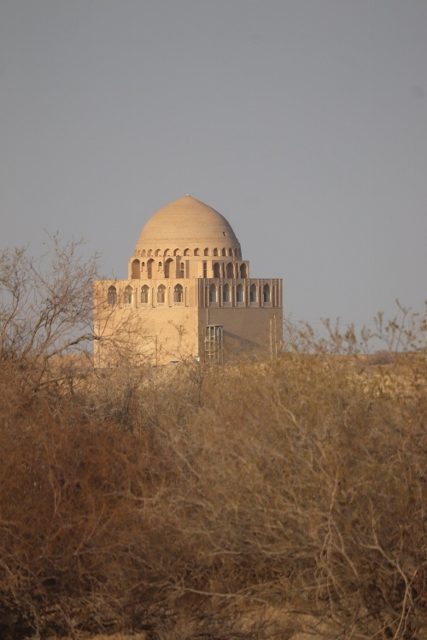
a random mausoleum, somewhere on the site
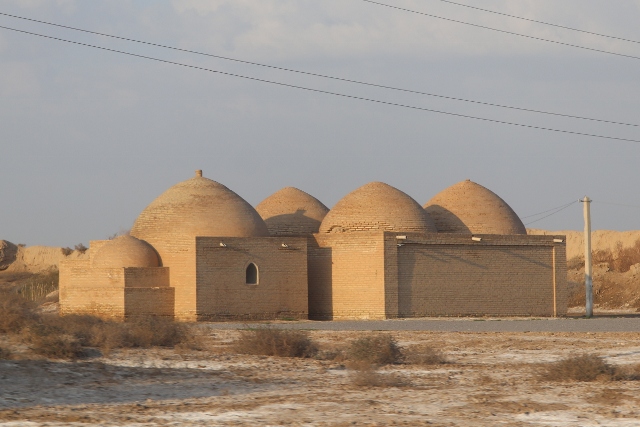
and a collection of them, too unimportant – unfortunately – to visit, with too little time

another mausoleums, that of the two Sahabi brothers, al-Aslami and al-Ghifari, also in Merv
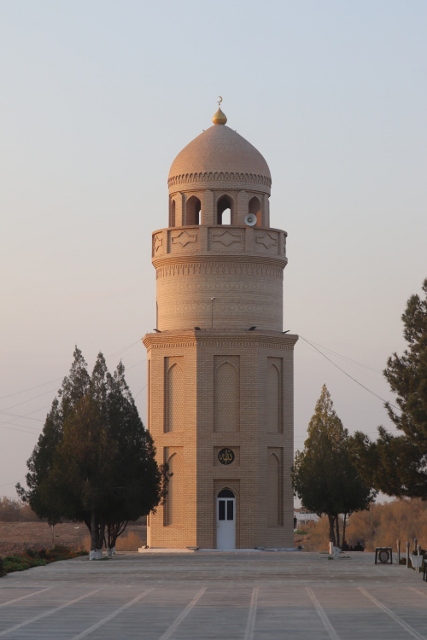
the minaret at the more recent Yusuf Hamdani Sufi complex
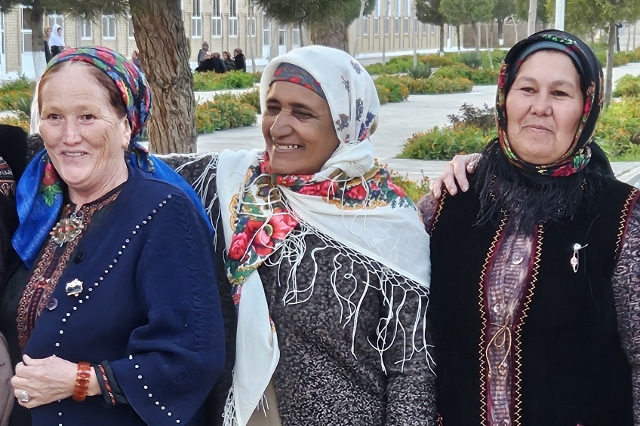
where we encounter local women, curious enough to be photographed

although they may have been unaware of the close ups
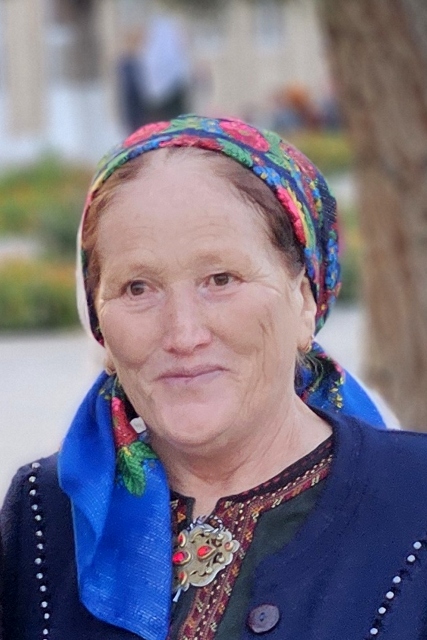
which makes them a lot more personal

and impressive as individuals
