this is the third and last part of a series of entries on the Ruhrgebiet in Germany, the first can be accessed here, and for the second click here.
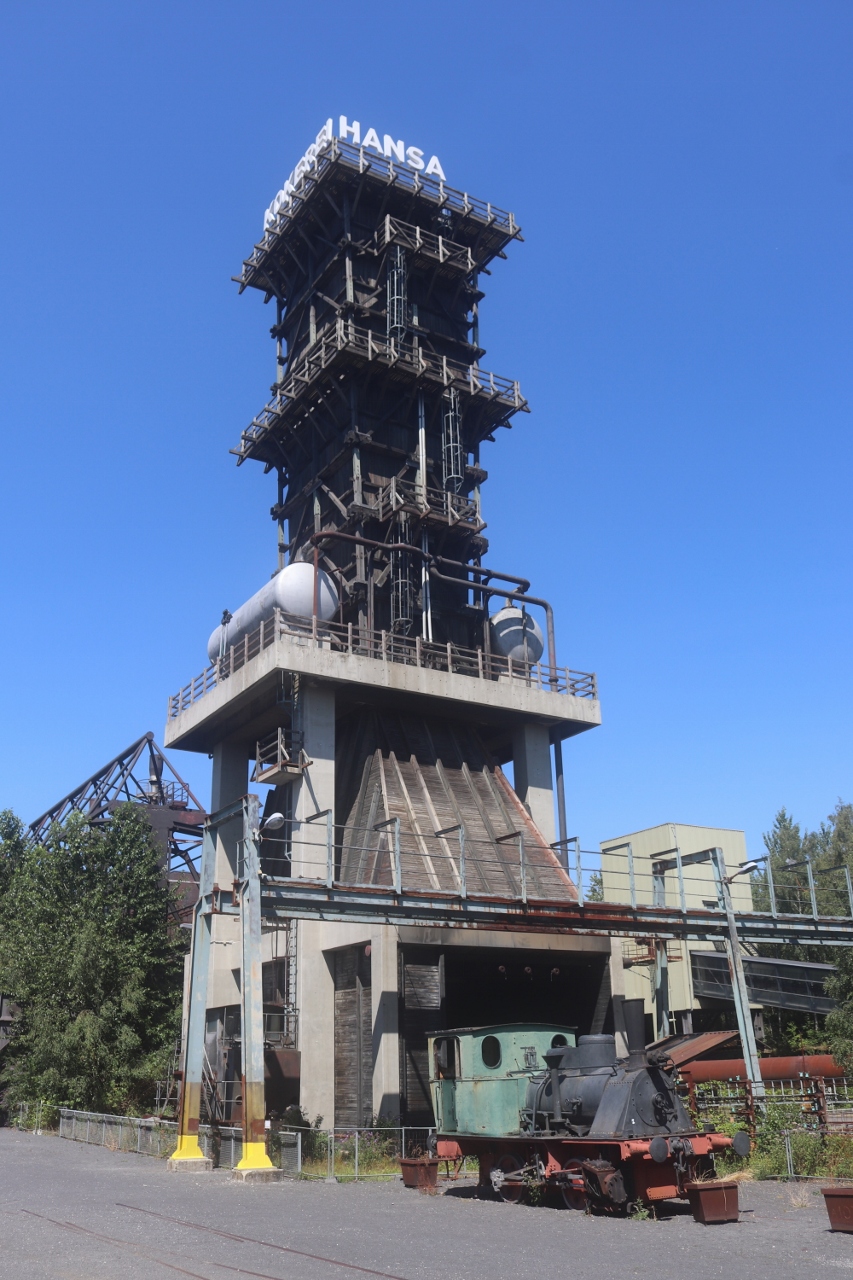
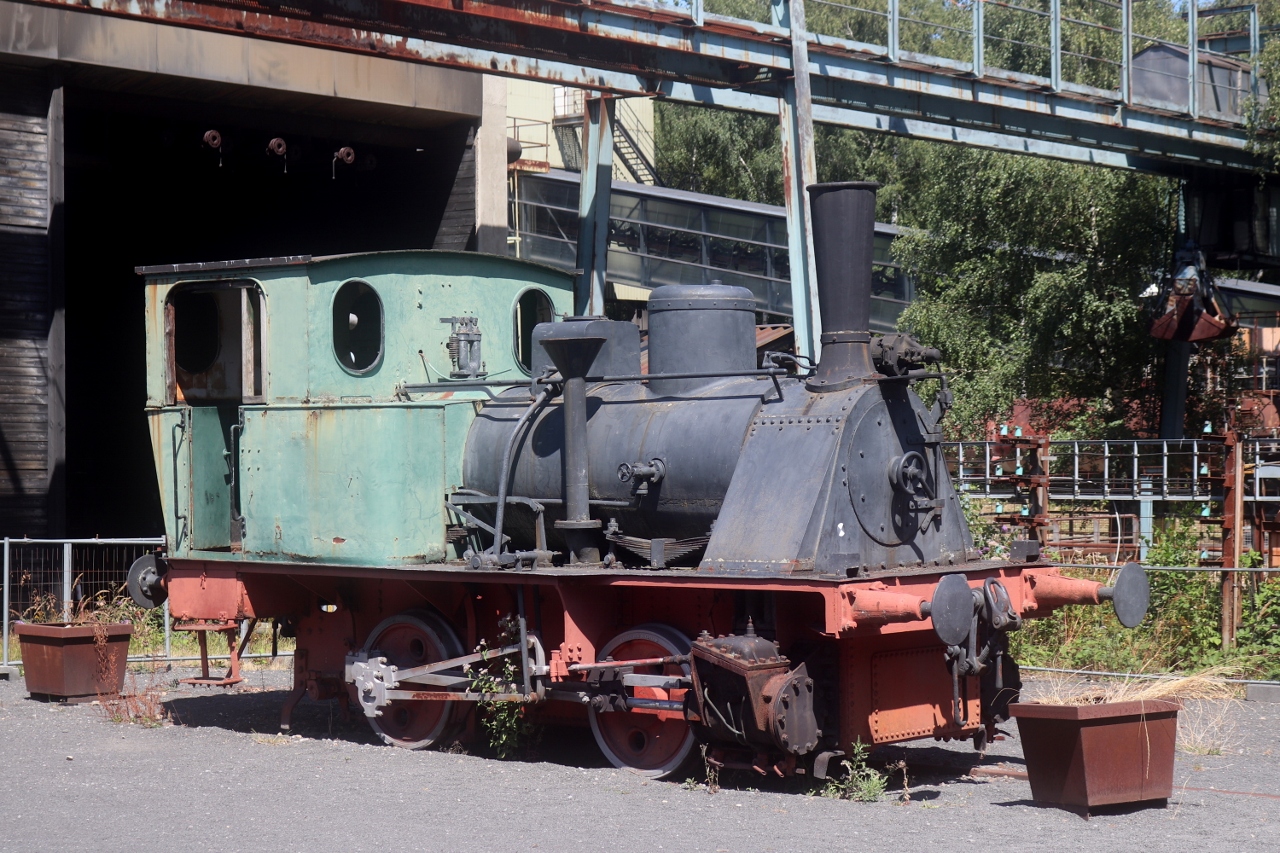
Hansa Kokerei, Dortmund
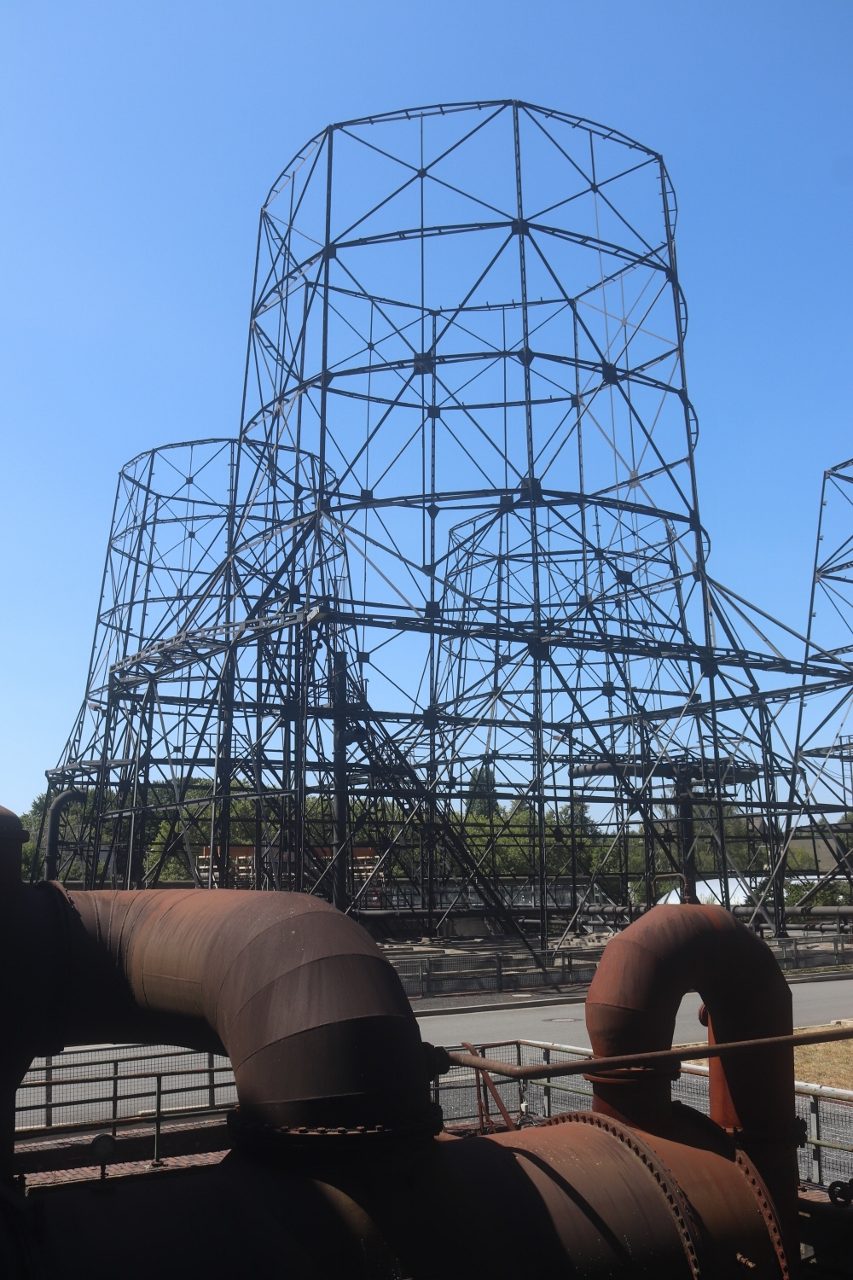
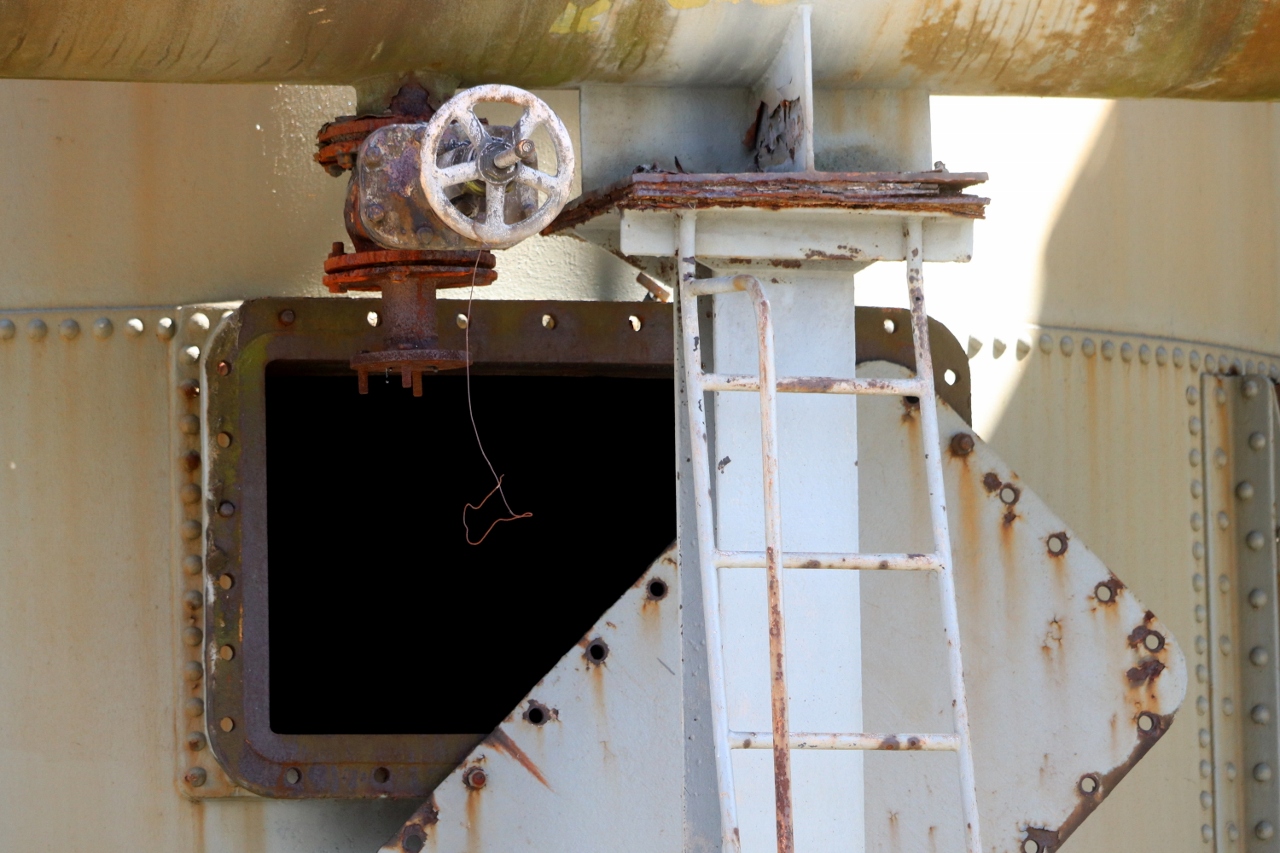
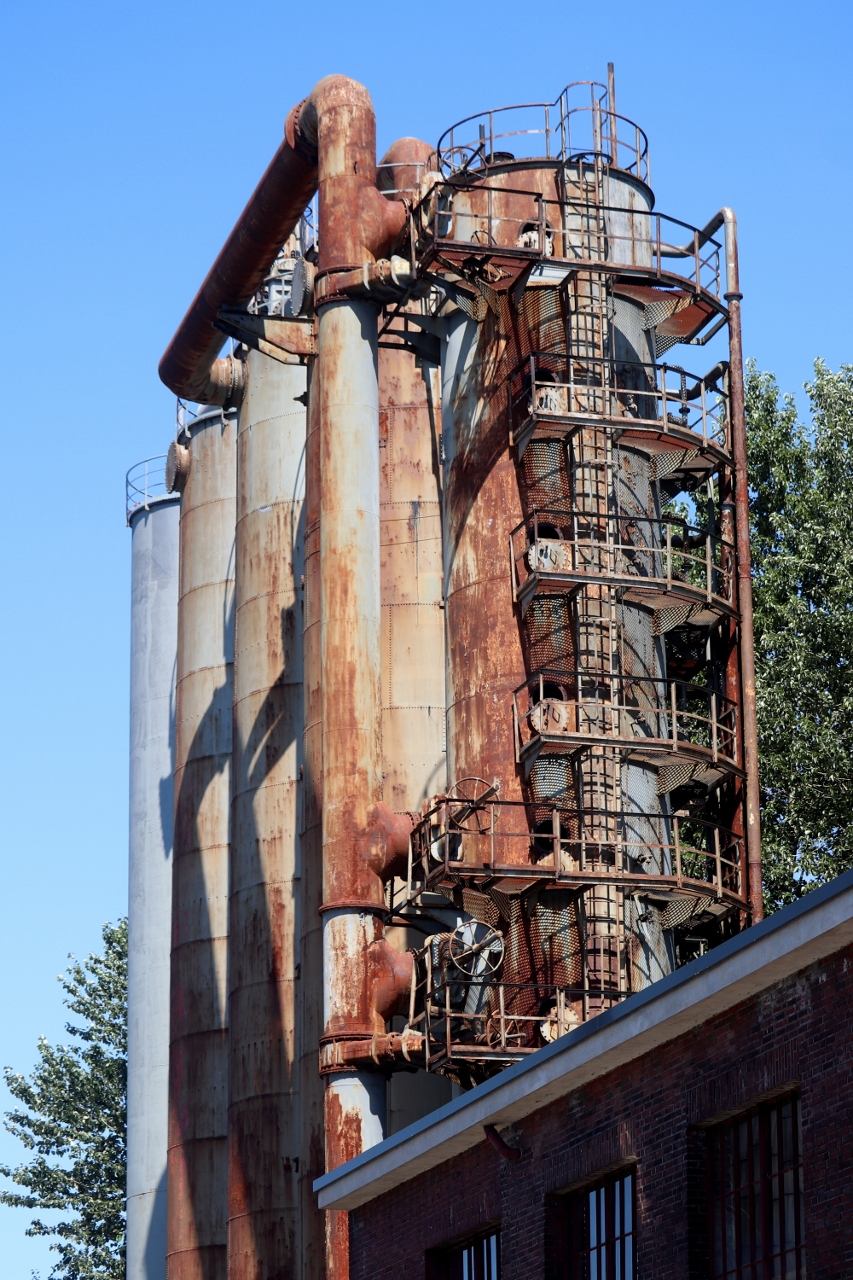
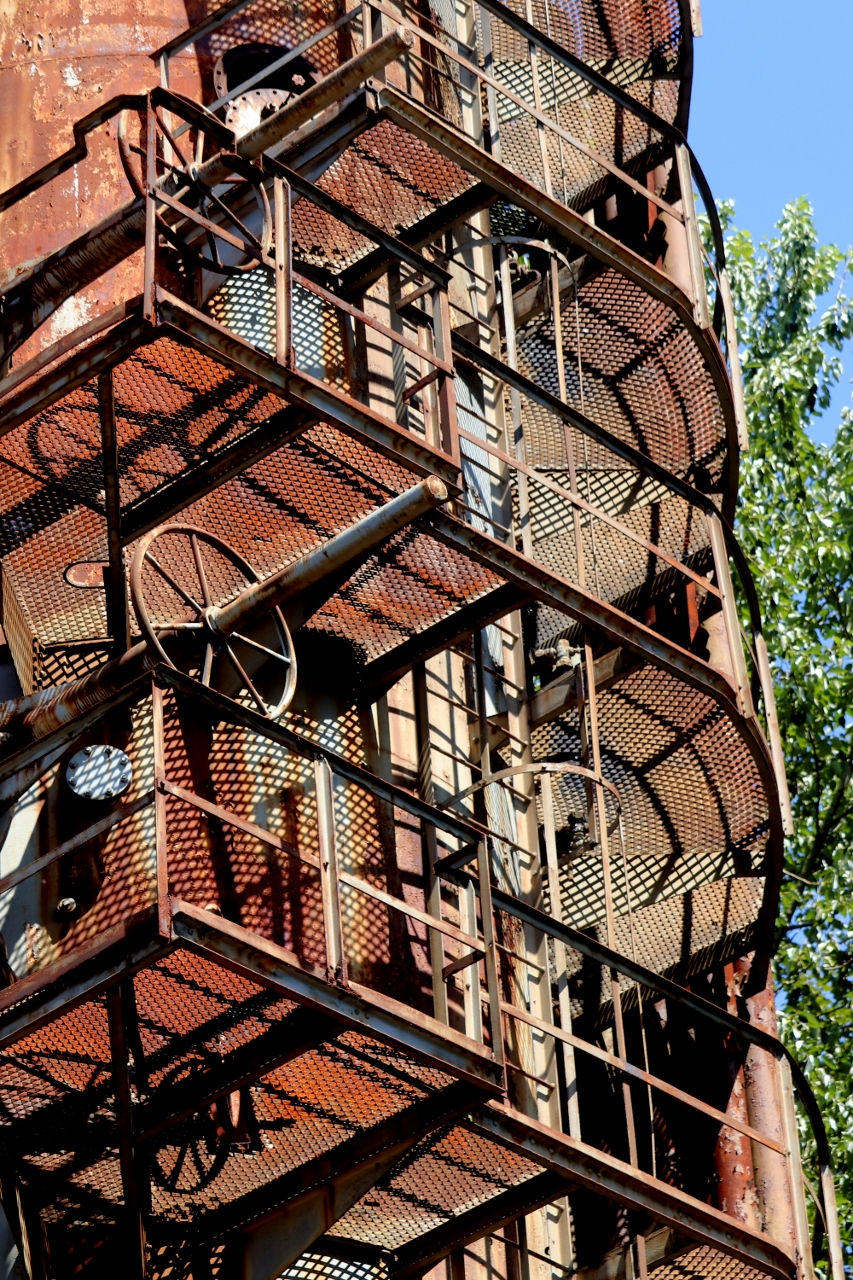
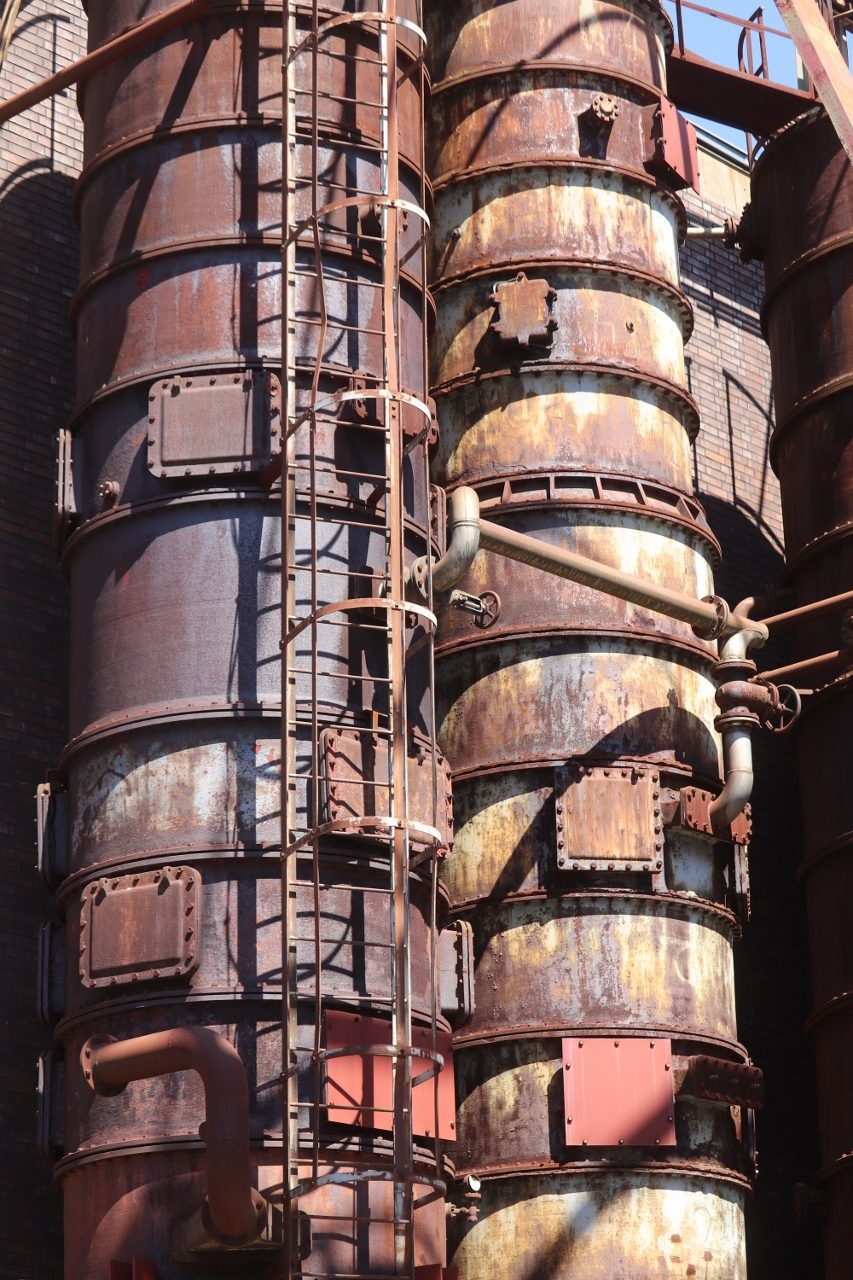
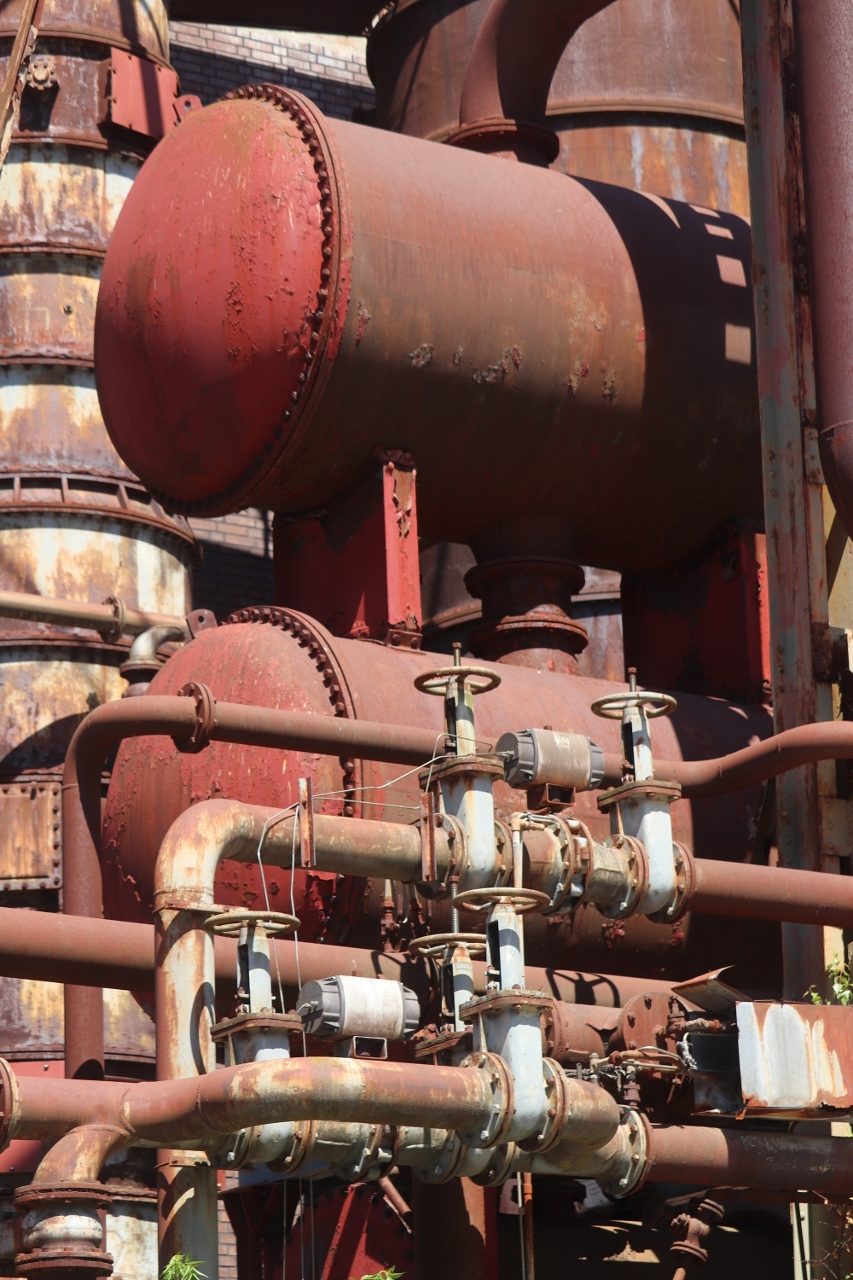
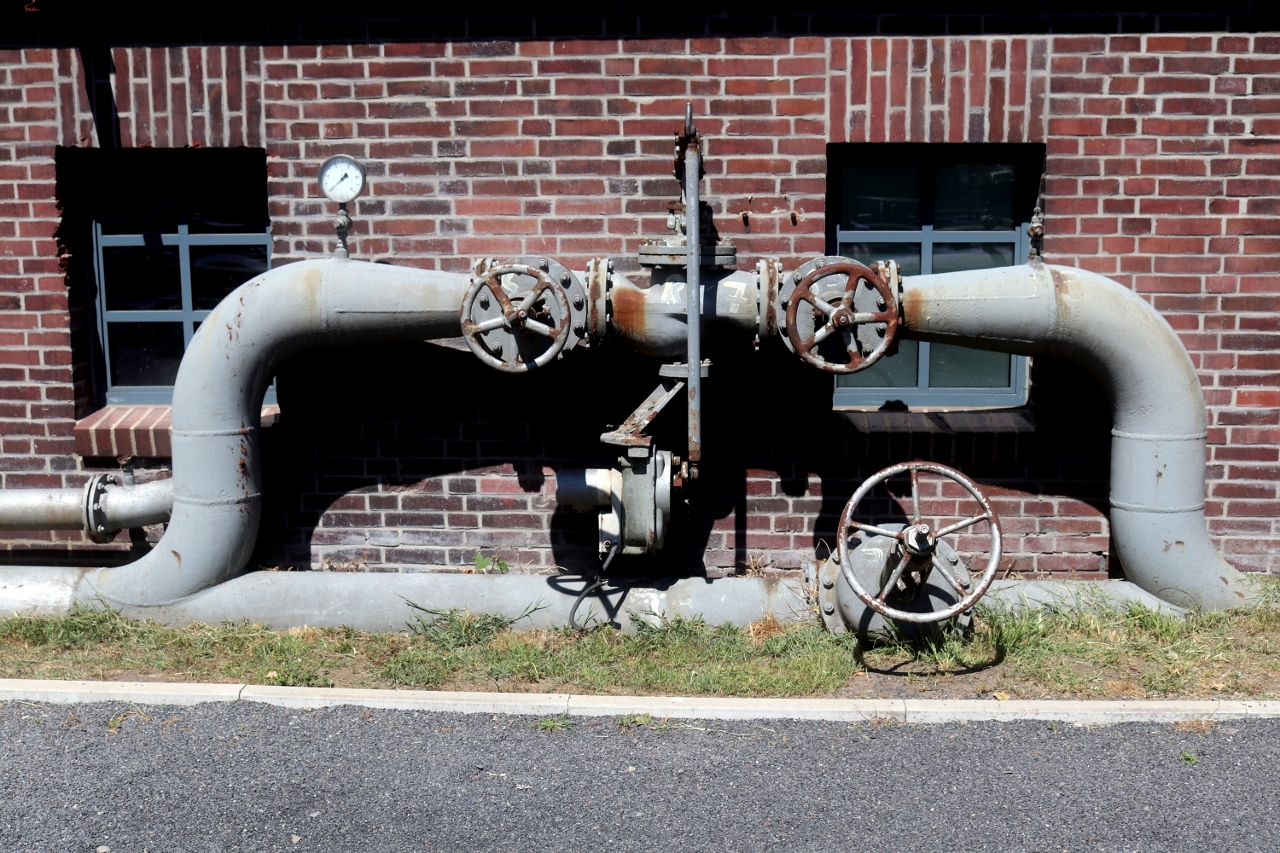
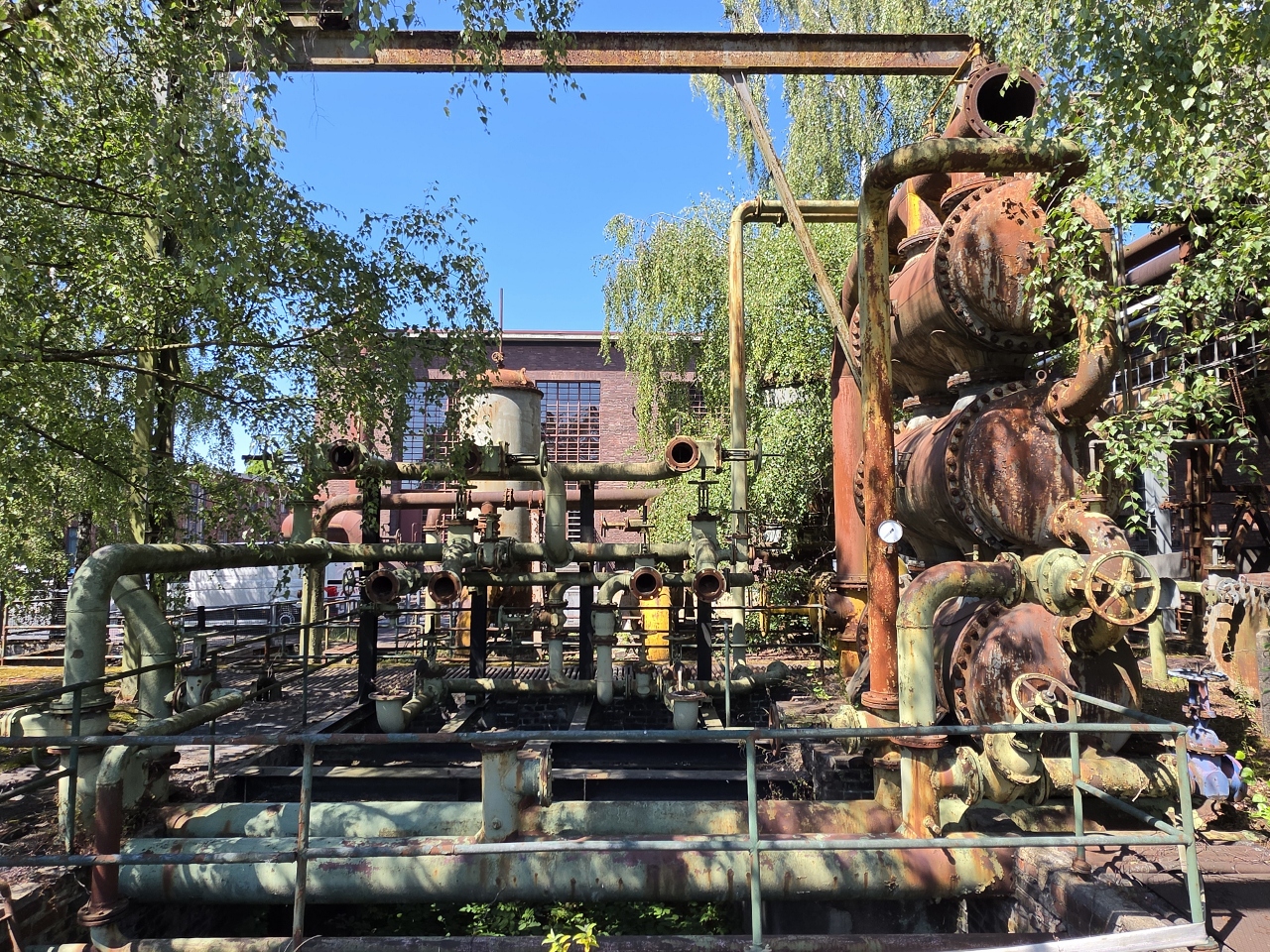
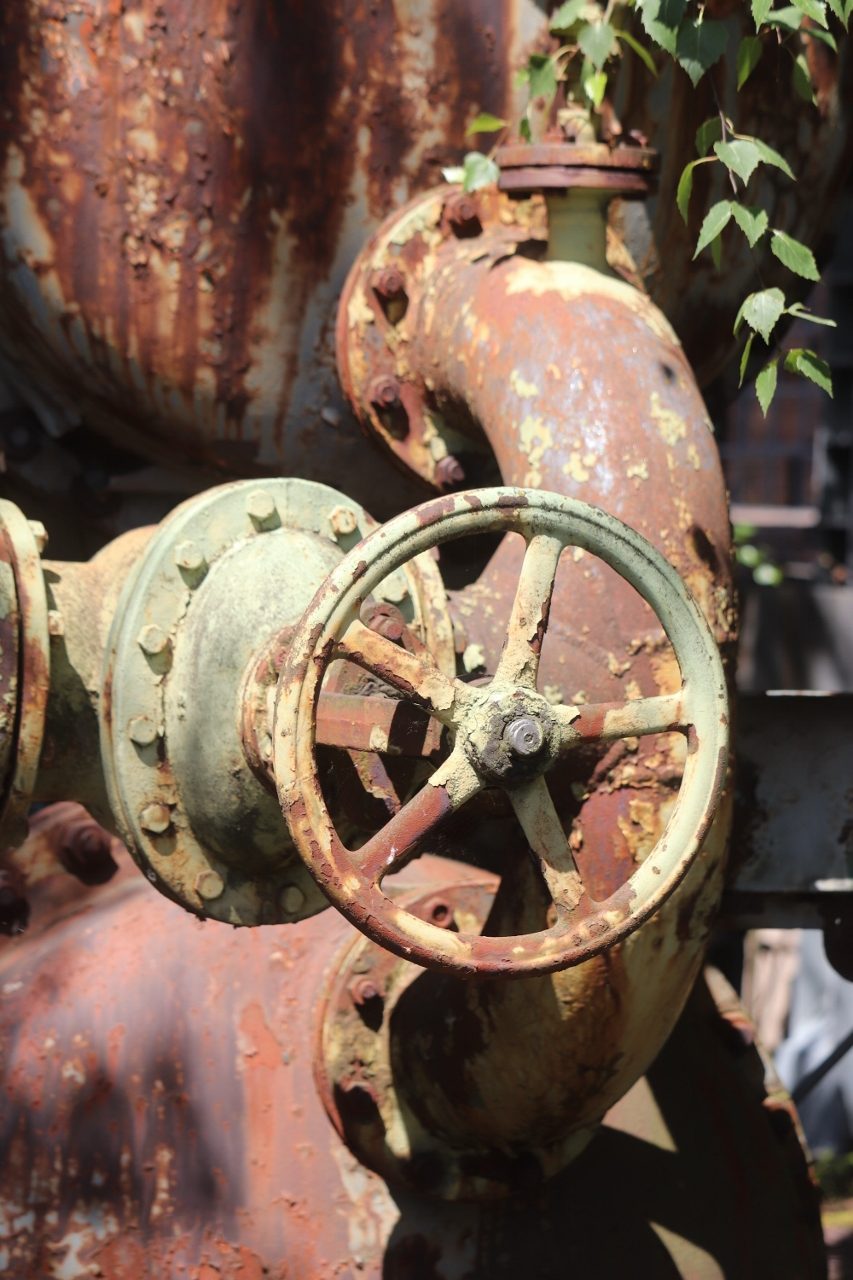
When it comes to rust buckets, one could do worse than visiting the Hansa Kokerei, described as one of the most atmospheric and least patched-up of the major sites, since a lot of it has been deliberately left to nature rather than fully renovated.
It was built in 1927–1928, and further expanded in 1940-1941, as a large, centralized coking plant, supplying nearby Dortmunder Union ironworks. It was gradually shut down between 1986 and 1992. Since 1998, most of the plant’s structures have been listed as protected monuments in Dortmund’s heritage register. The site is now used as an event venue, hosting concerts, fashion shows, and parties, as well as a museum, part of the ‘Route der Industriekultur’.
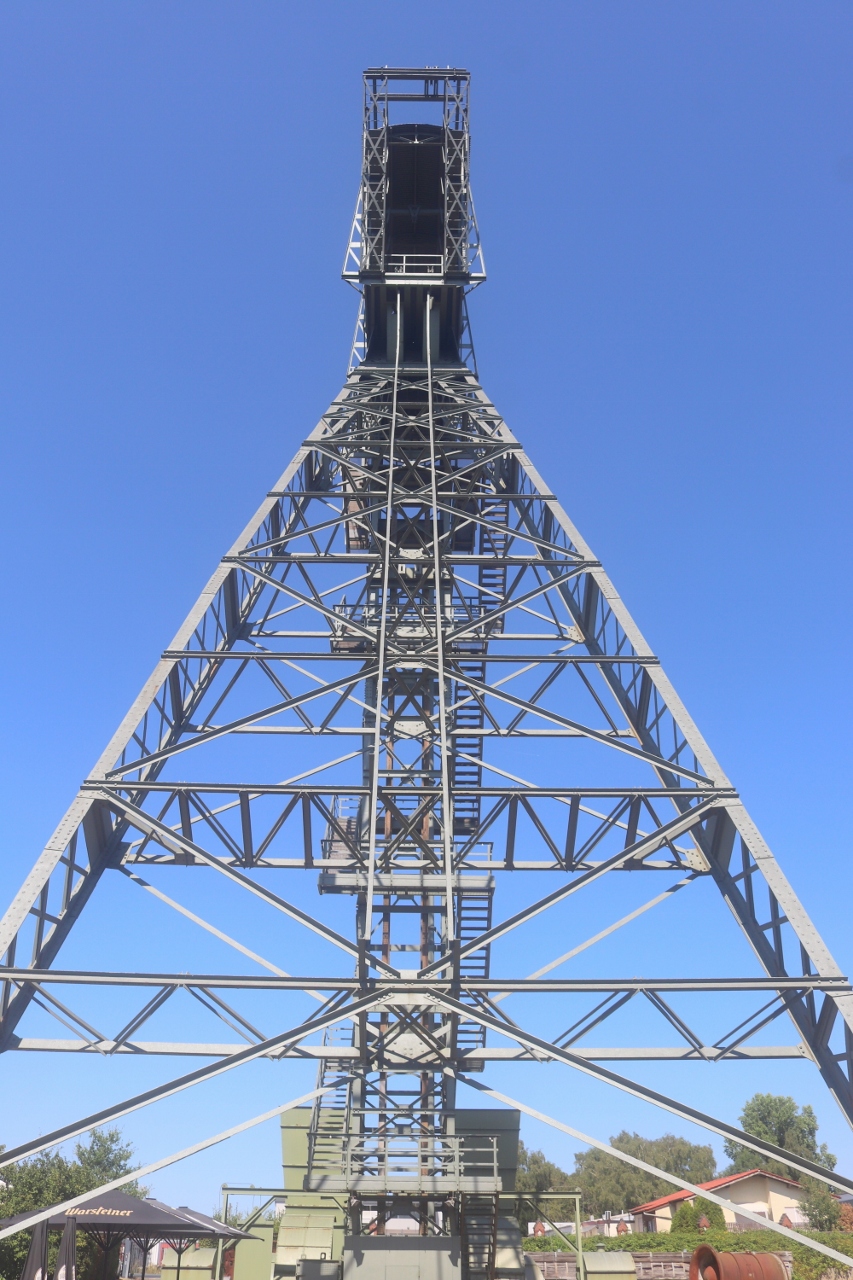
Industriemuseum Zeche Zollern, Dortmund
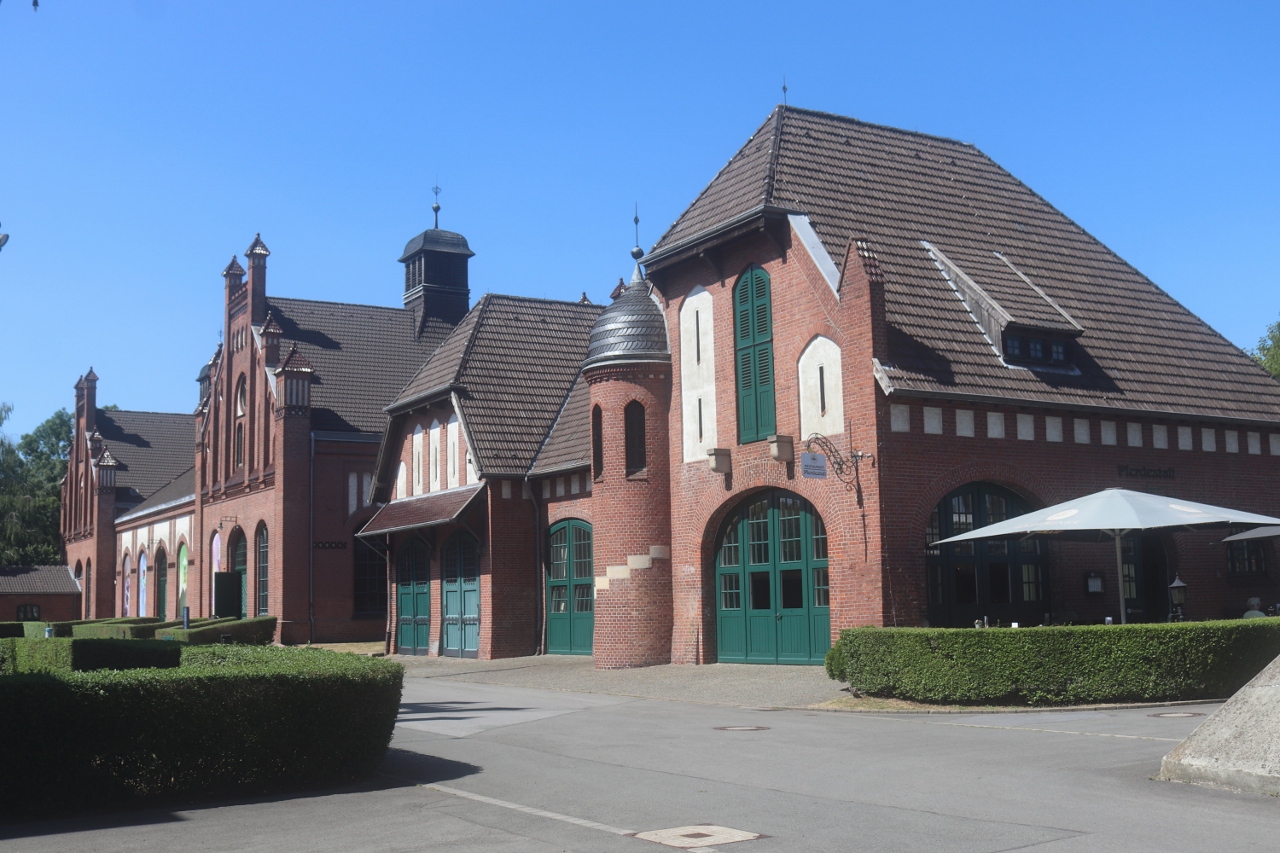
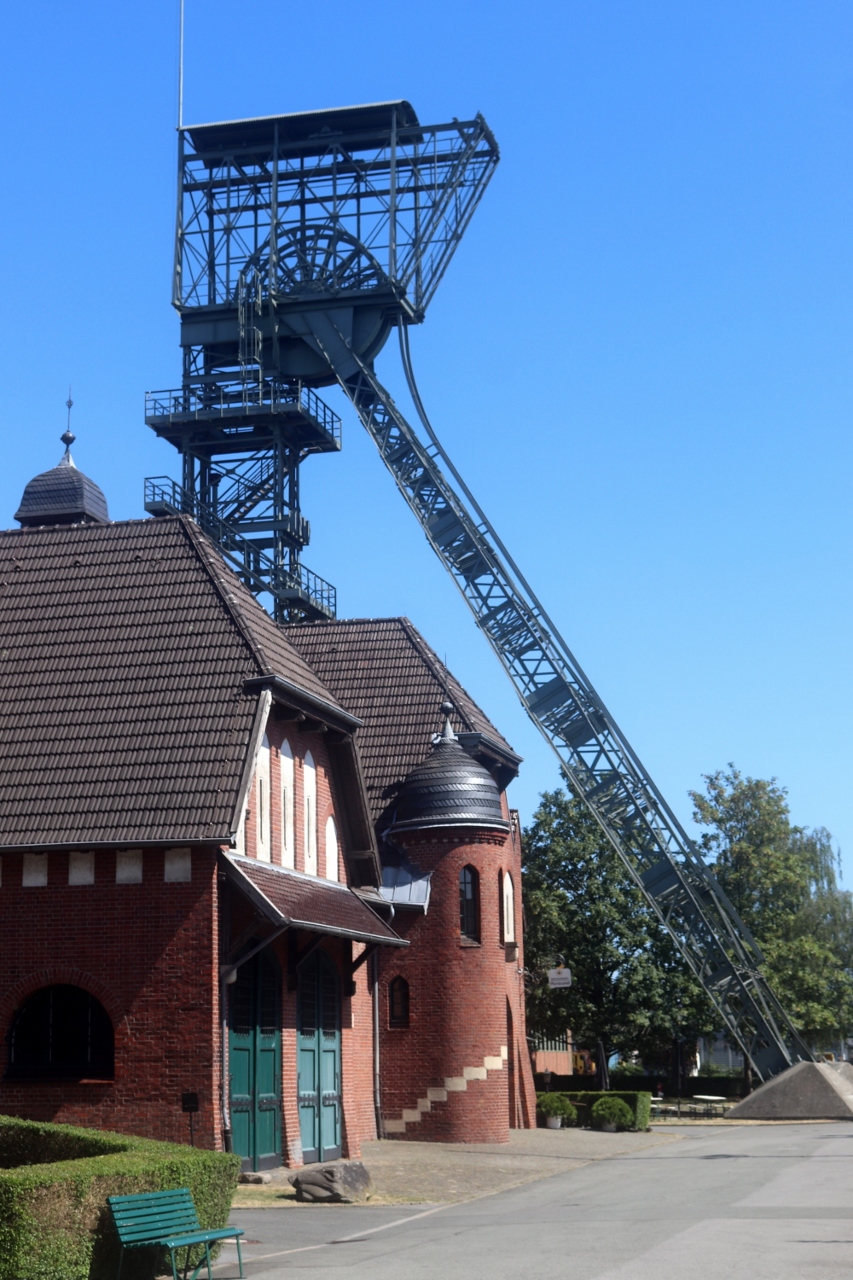
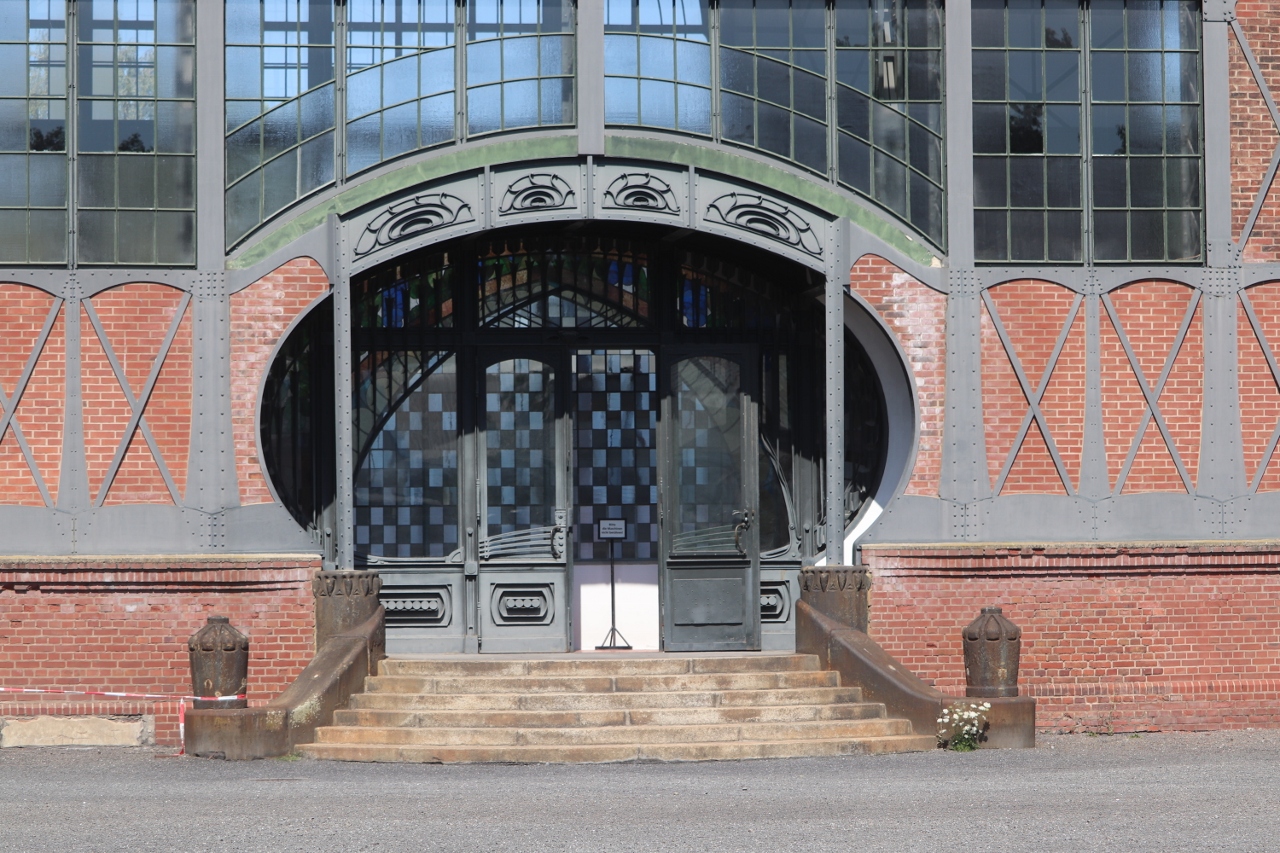
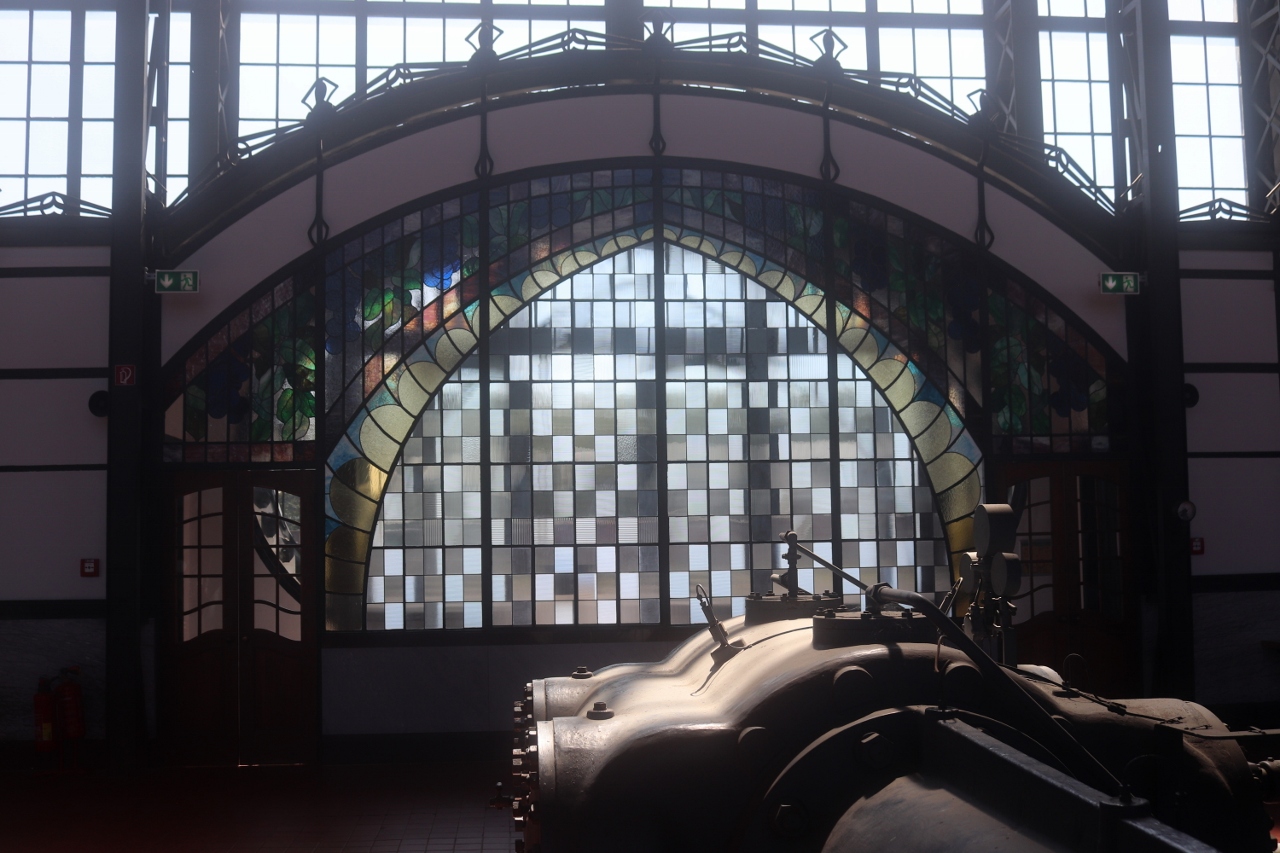
The Zeche Zollern was built around the turn of the 19th C, as a showcase mine. Ornate brick facades, opulent gables and corner turrets, all arranged around a green courtyard, at first glance look more like an aristocratic residence than a coal mine. The buildings were completed in solid brickwork by architect Paul Knobbe, in 1903–1904. The style bridges Gothic Revival and Art Nouveau (Jugendstil), reflecting the transitional aesthetic of the industrializing in the early 1900s. The most iconic single element is the Maschinenhalle’s Jugendstil portal, a steel-and-glass entrance with colourful stained glass now considered a genuine icon of Ruhr Industriekultur.
Coal extraction proper began already in 1898 and continued into the 1960s. After the mine closed, there were actual plans to demolish the entire complex to make room for a highway. But here, too, citizens organized to fight for its preservation, focused especially on saving the Maschinenhalle. And they succeeded, in 1969, a development now regarded as the starting point of industrial monument preservation in Germany as a whole.
Halde Rheinelbe, Gelsenkirchen
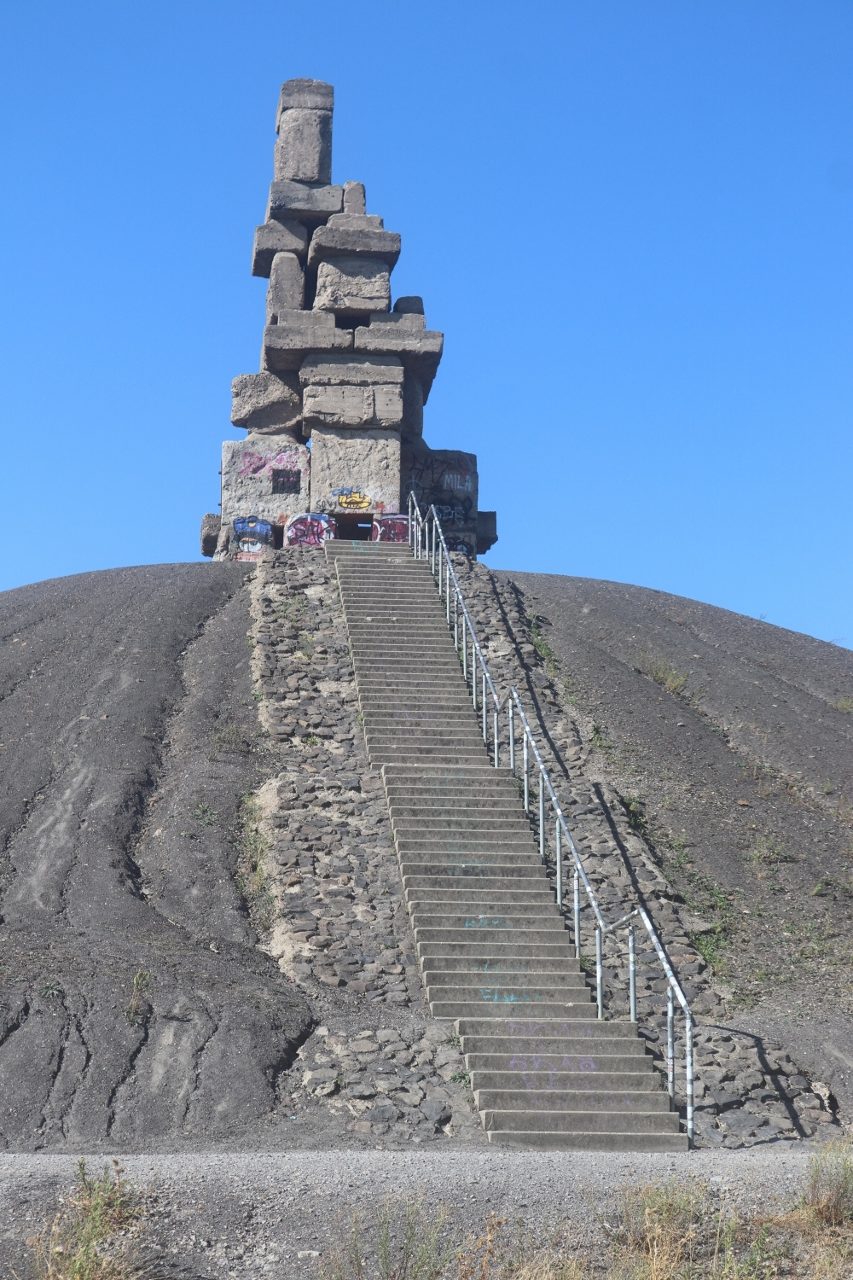
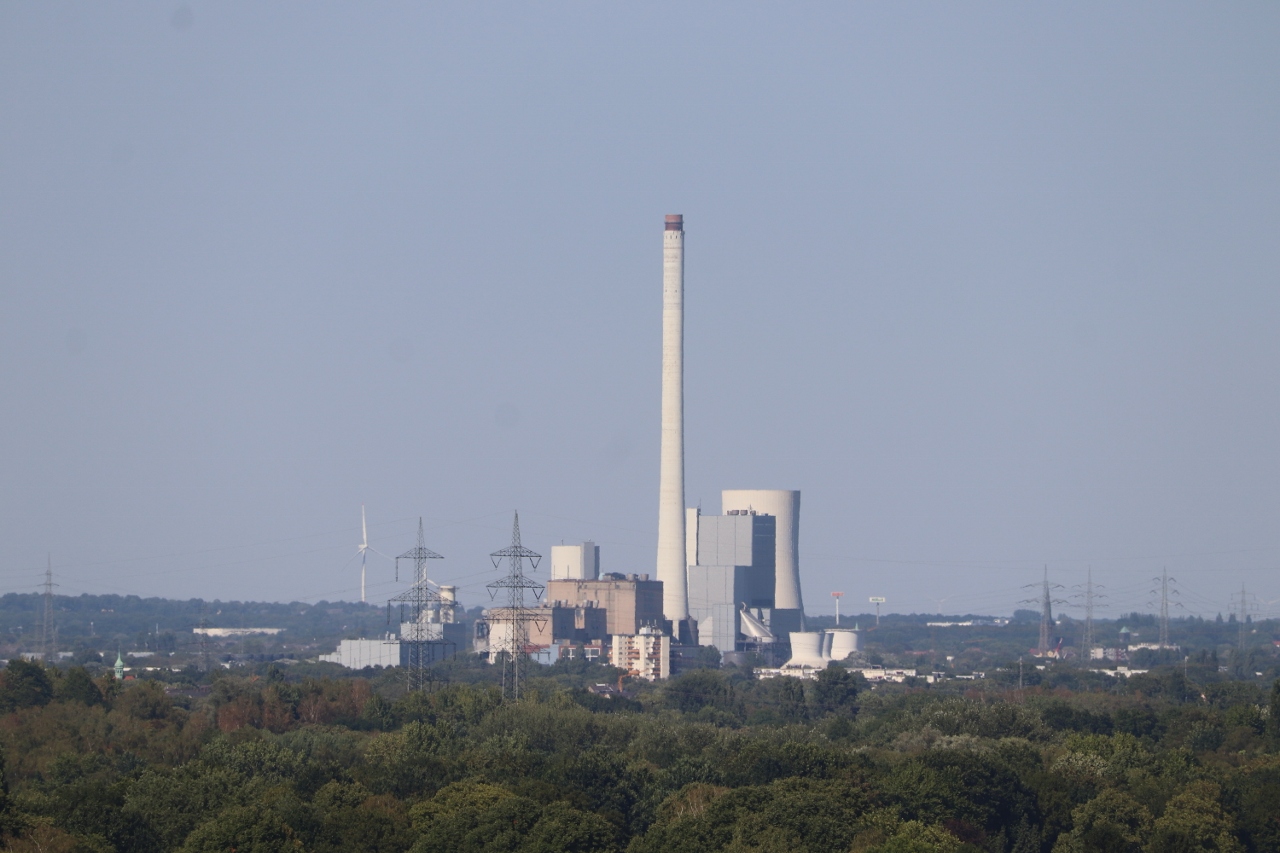
This waste mountain received its rock from the nearby Zeche Rheinelbe. The mine’s rock waste piled up here, and the tip itself was already lying disused from the late 1920s onward, at some 106 m in height.
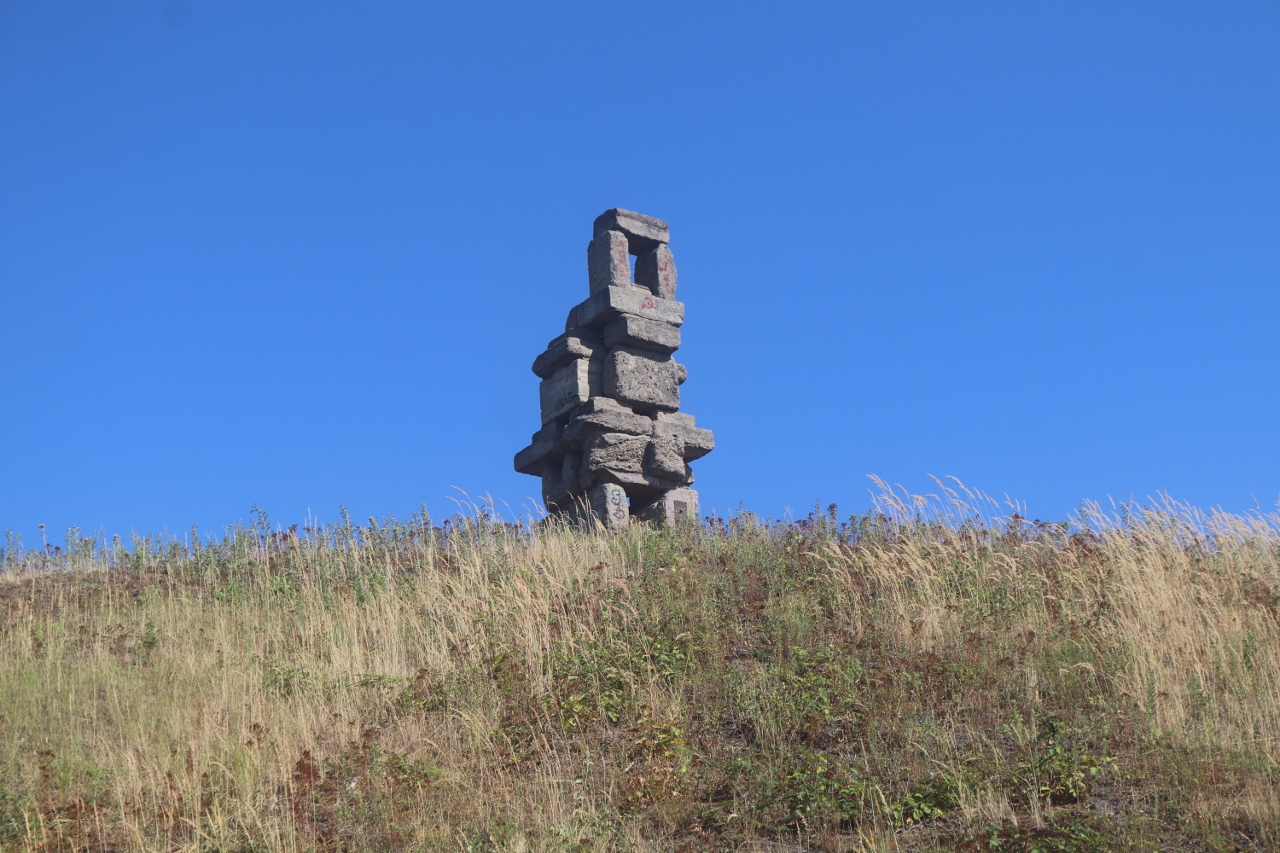
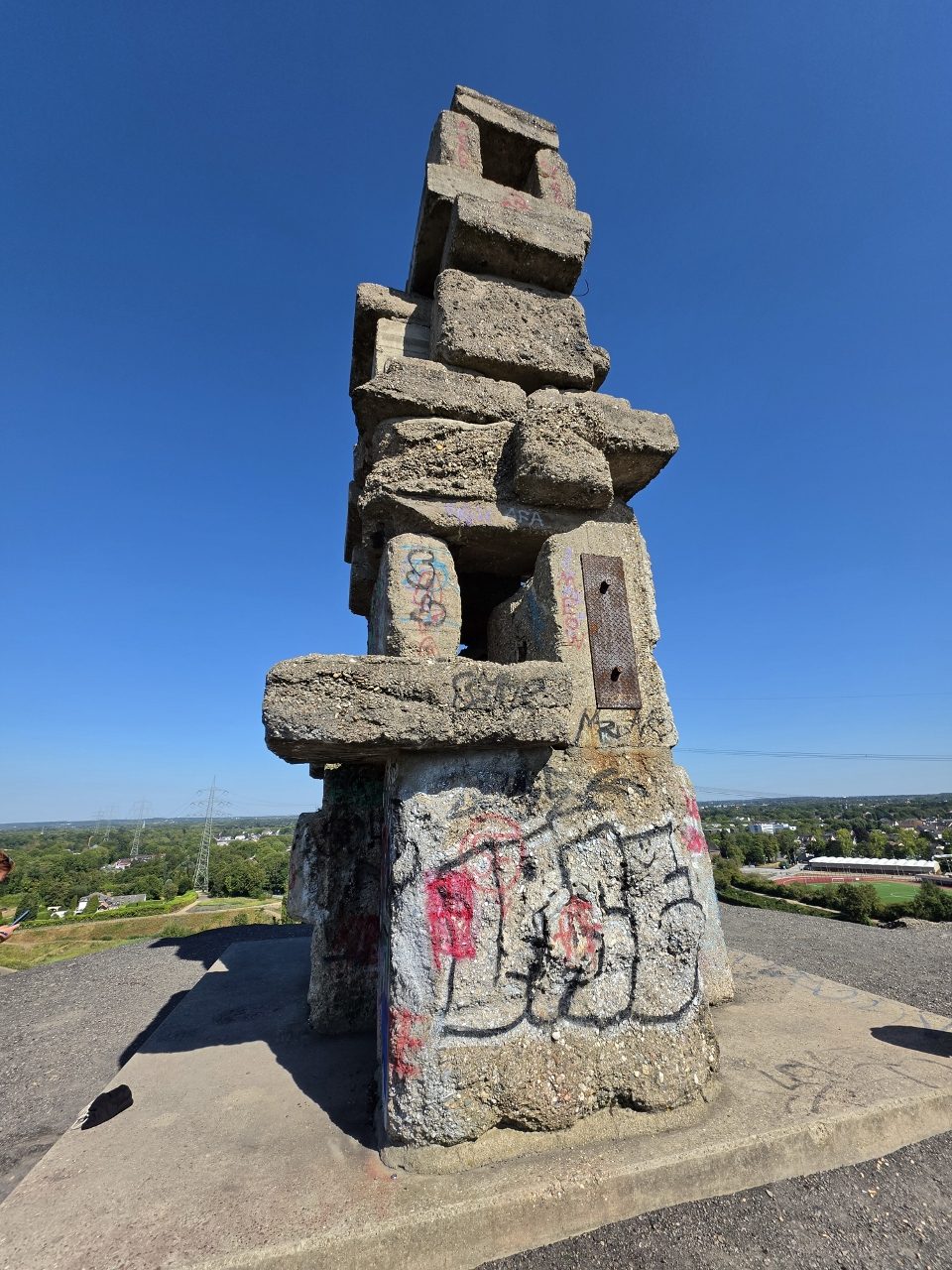
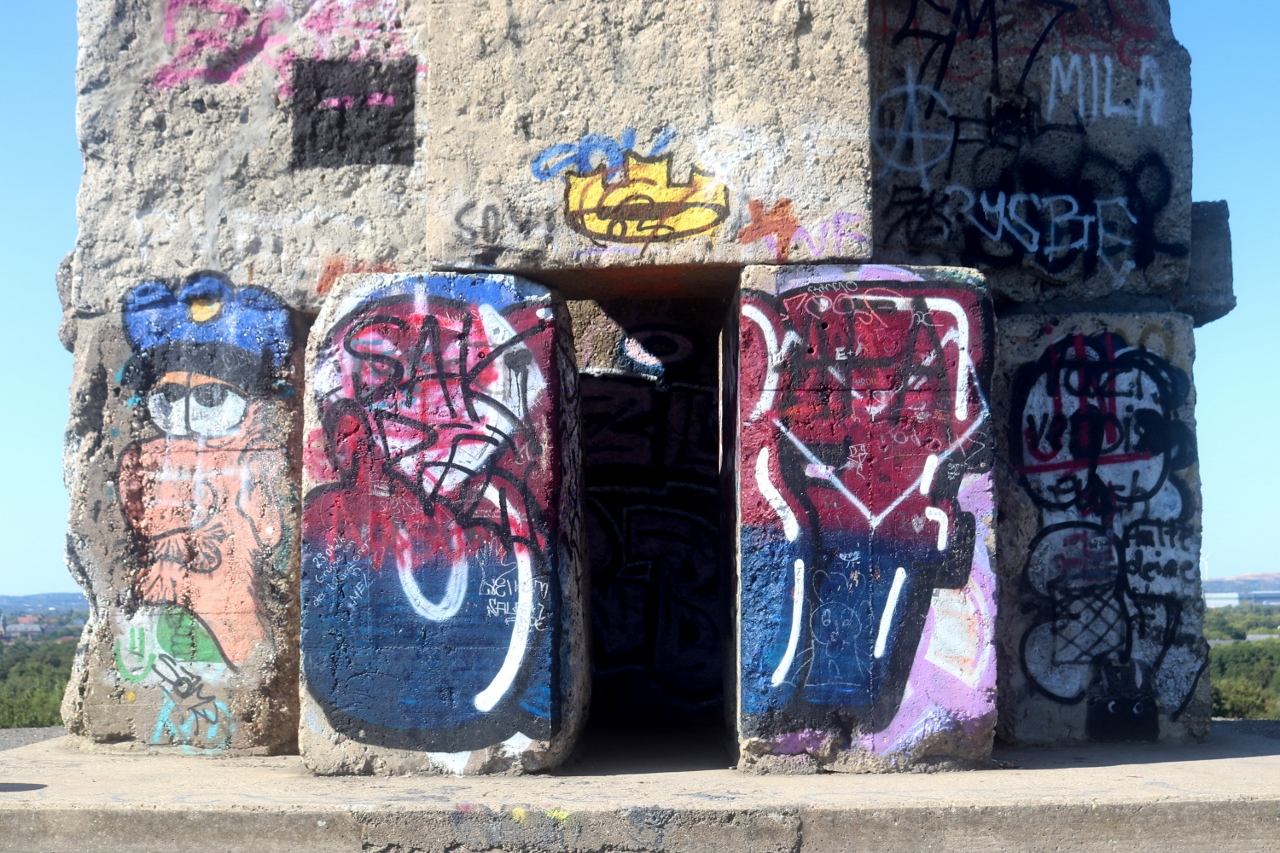
On the highest point of the ‘Halde’, artist Herman Prigann stacked 35 concrete blocks — sourced, with some irony, from a demolished mining building that actually stood in Dortmund rather than Gelsenkirchen (a detail locals apparently enjoy pointing out) — into a roughly 10–12 meter-tall formation. Each block weighs up to 18 tonnes. He called it Himmelstreppe (Heavenly Ladder, or Stairway to Heaven). Unlike some of the other land art works, you cannot climb it to the top, but even from the base of the construction you have a great view over the surrounding landscape. But what is it with all the graffiti, that apparently needs to be an integral part of these works in Germany?
Watertower, Mülheim an der Ruhr
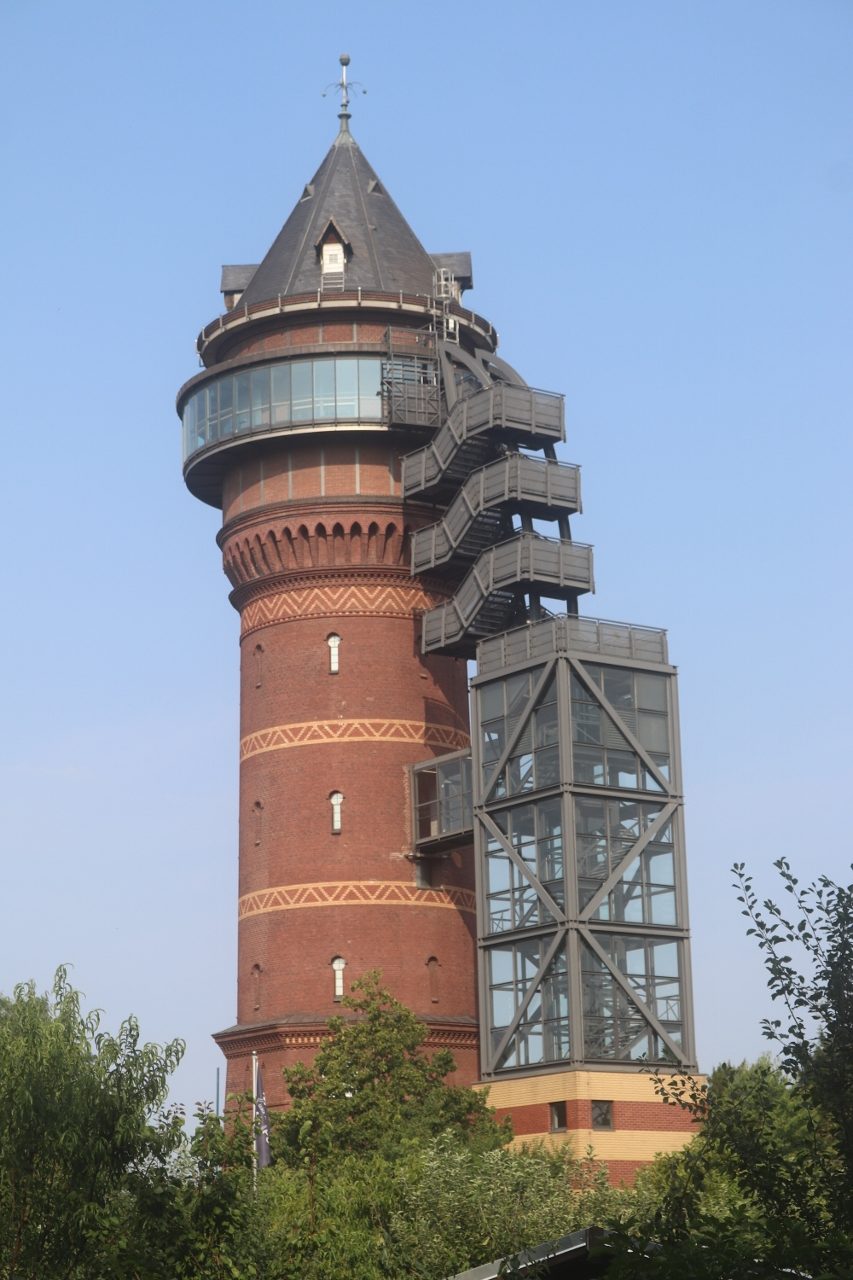
The Watertower, or Waterman, in Mülheim was built 1892/93 by August Thyssen to supply water for his iron rolling mill. It’s about 50 meters tall and originally held 500,000 liters. It supplied Mülheim and later also Bottrop, mostly as industrial process water — first to Thyssen, later to Mannesmann. It was also used for a long time as a residence, and stayed in operation until it was decommissioned in 1982.
It is now a multimedia museum, but we only glimpsed it from the outside.
Tiger & Turtle – Magic Mountain, Duisburg
The last attraction is a bit different, and is associated with a former zinc works. The plant went insolvent in August 2005, leaving behind a highly contaminated site full of slag material. The city of Duisburg decided against commercial reuse and instead built the Angerpark; heavily contaminated soil went to special disposal sites, less contaminated ground was built up and sealed with a special 2.5mm-thick plastic lining, and the slag material itself was piled into what became the Heinrich-Hildebrand-Höhe — a roughly 50-meter-high rise, about 20 meters above the surrounding terrain.
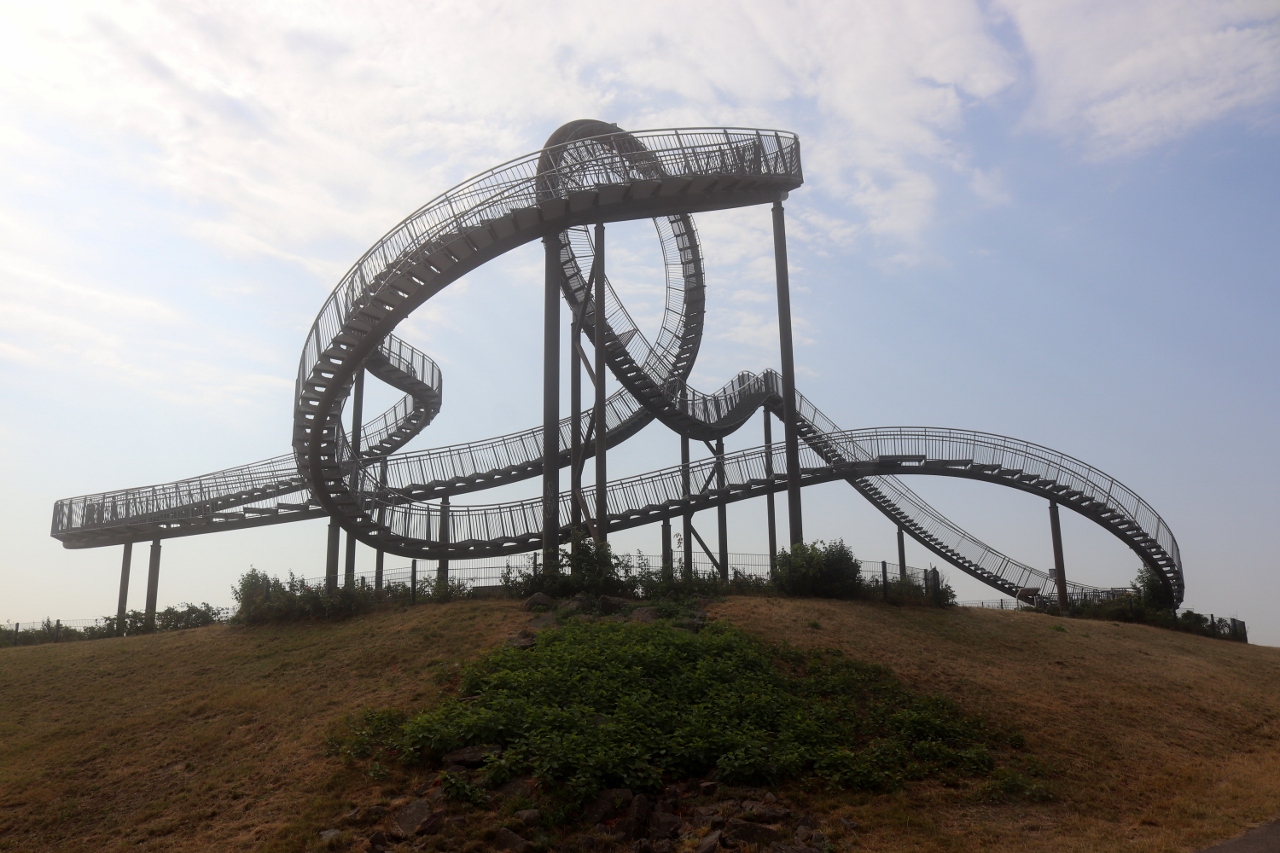
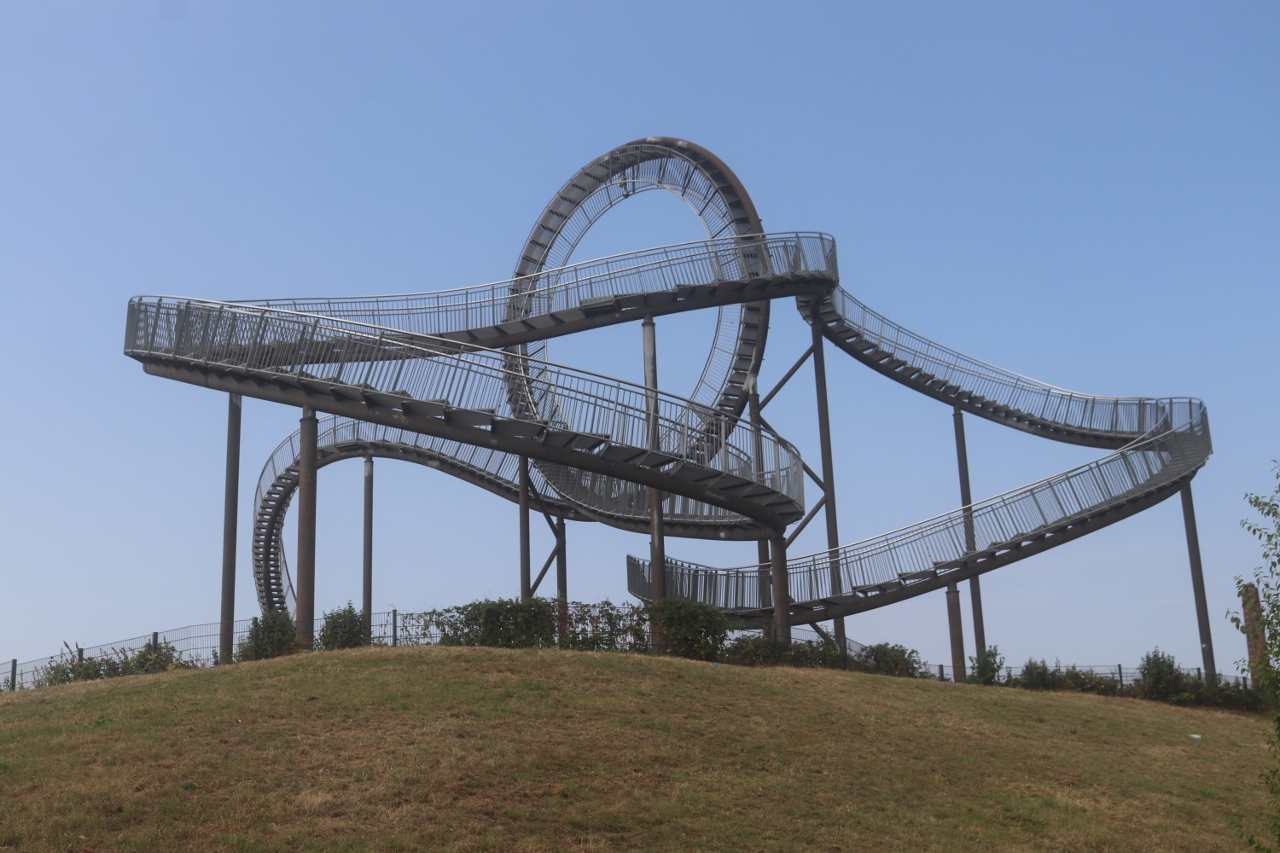
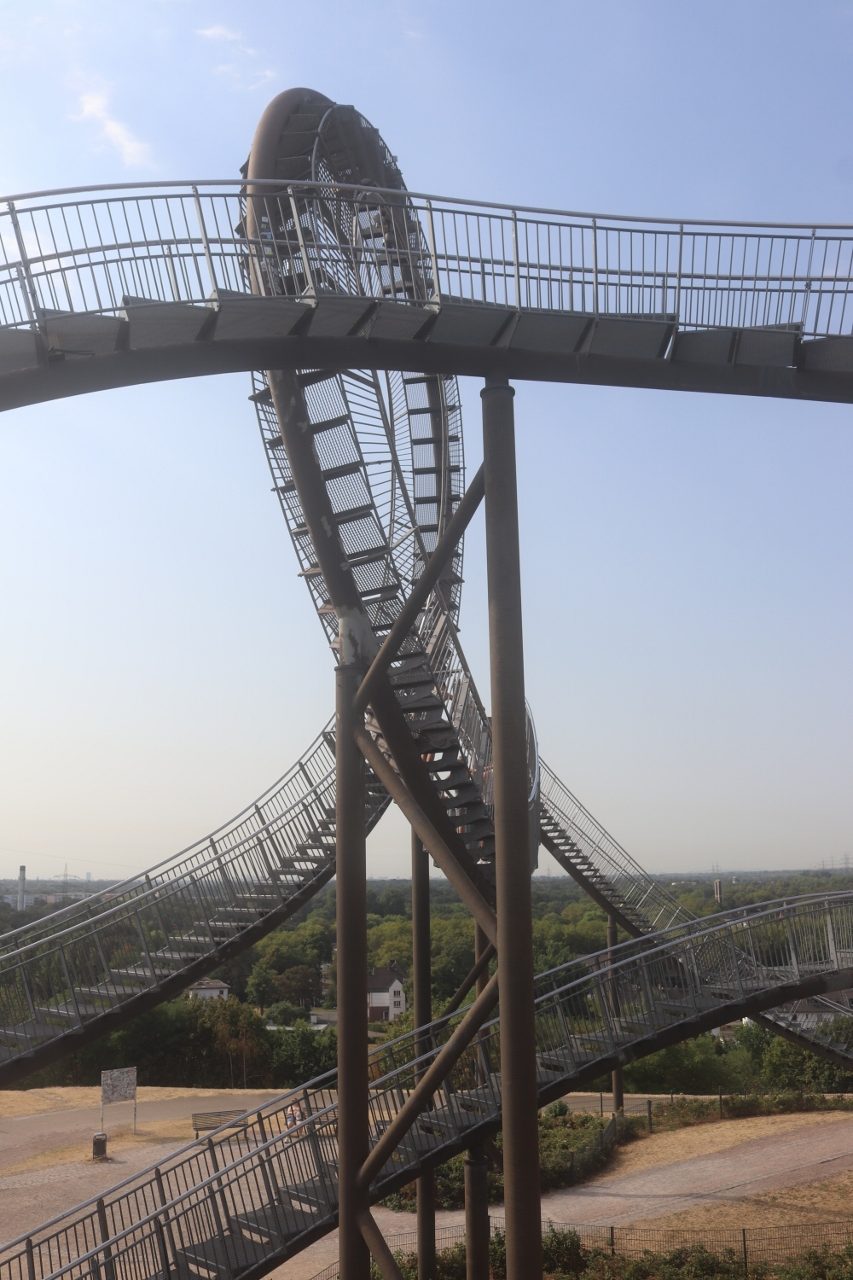
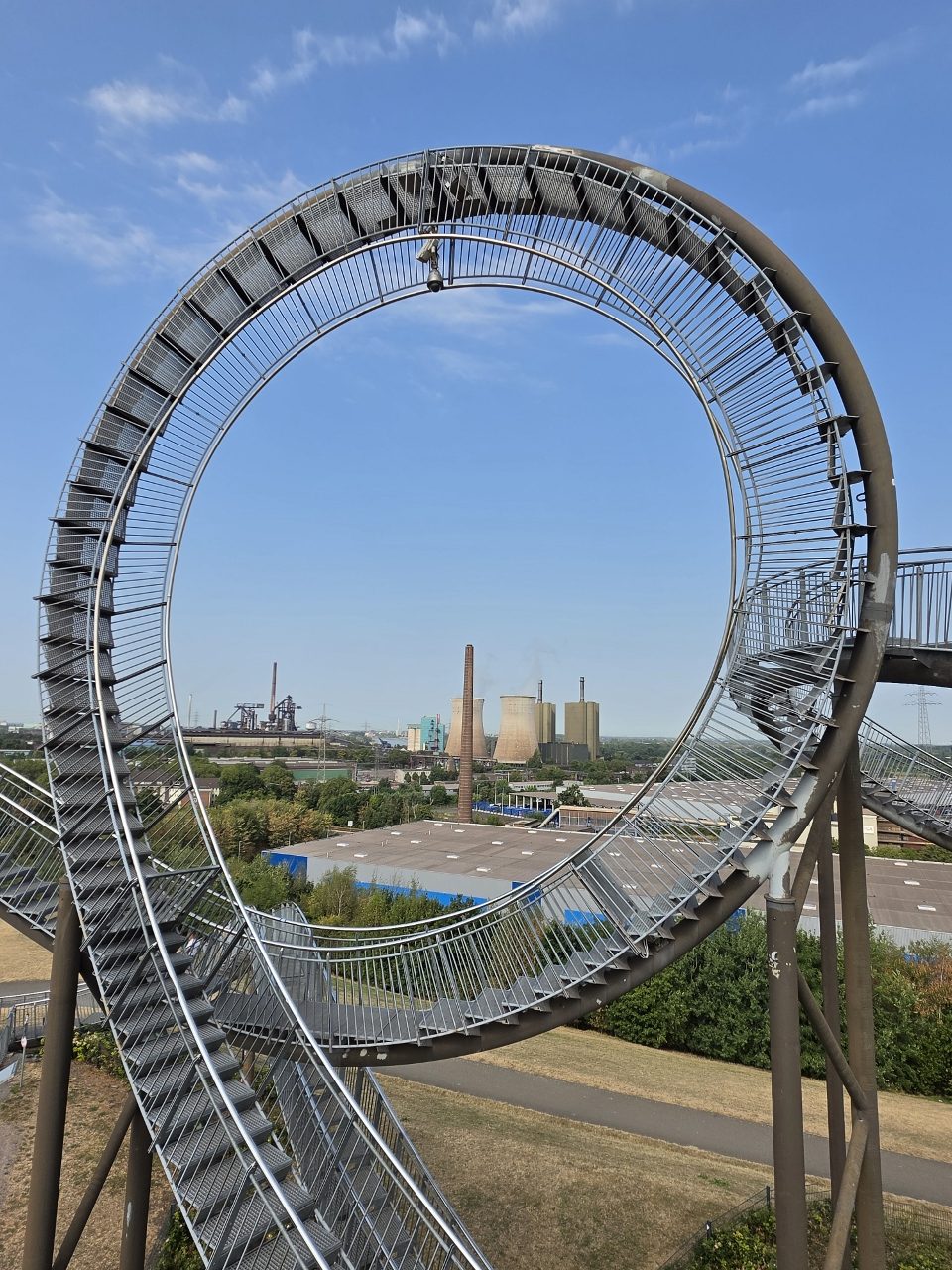
The Angerpark itself opened in 2008, and a year later Duisburg ran an international artist competition to design a landmark for the newly created hilltop. The winners were artist duo Heike Mutter and Ulrich Genth (both from Hamburg), who created a walkable sculpture in the shape of a roller coaster, titled “Tiger & Turtle – Magic Mountain.” Made of galvanized steel, the sculpture stands 20 meters tall, with a footprint of 40 by 41 meters. You can walk up to a height of 13 meters — only the full loop itself is off-limits (obviously)
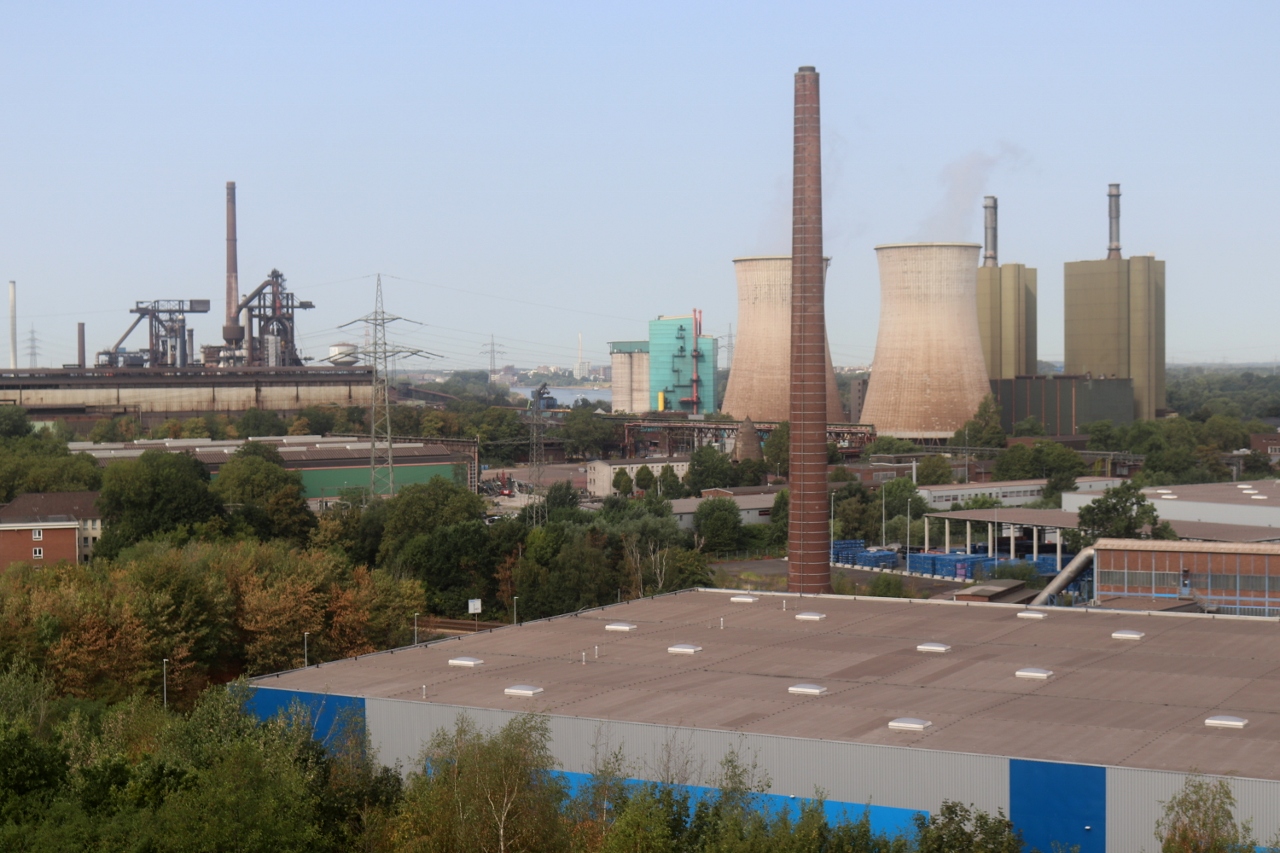
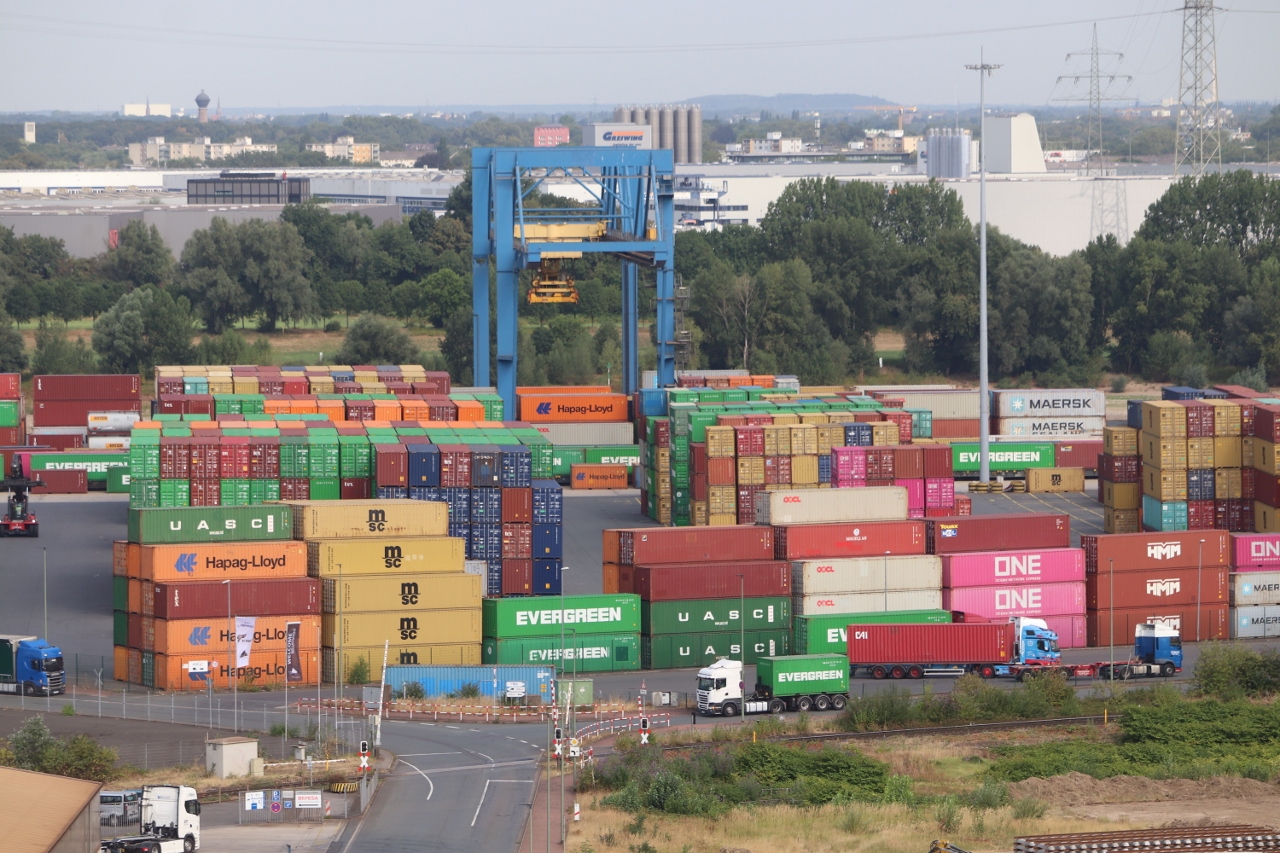
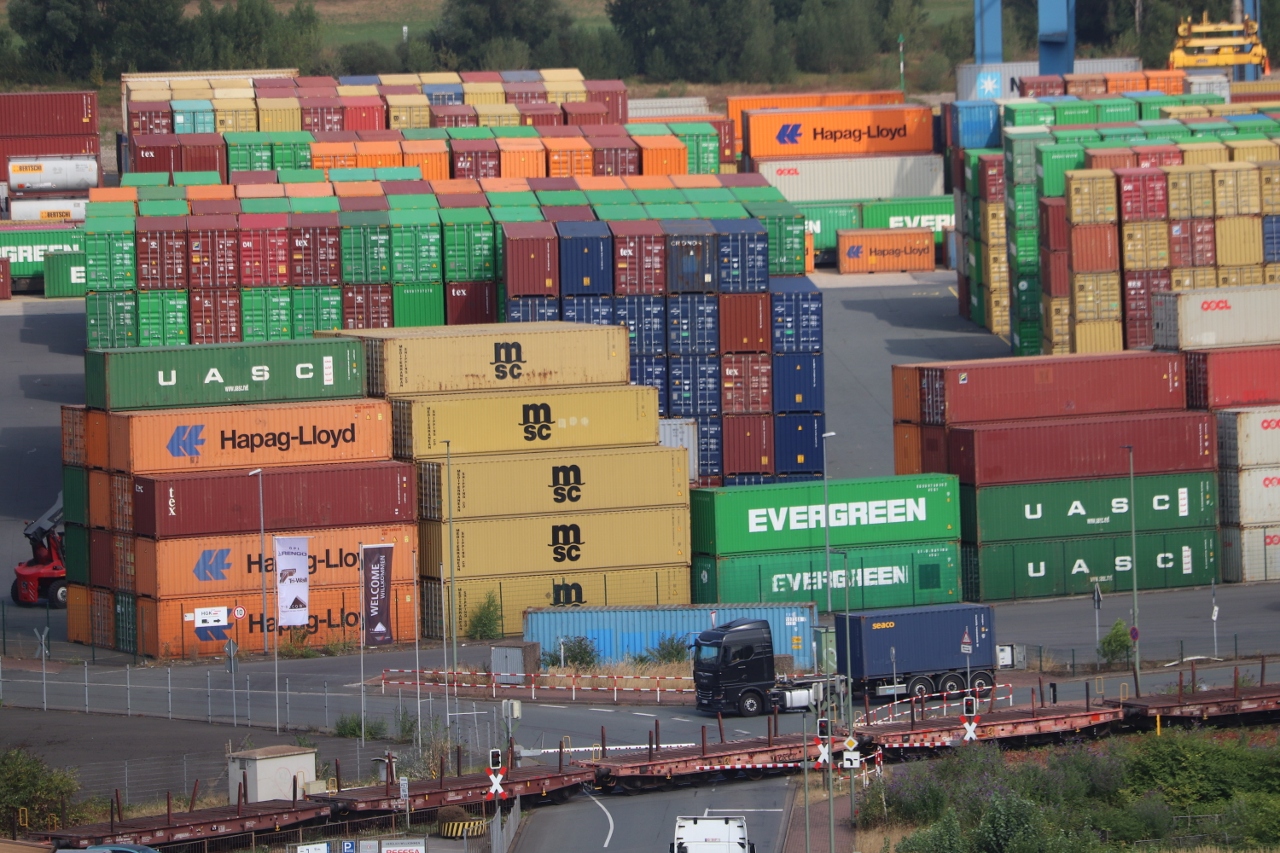
The container terminal
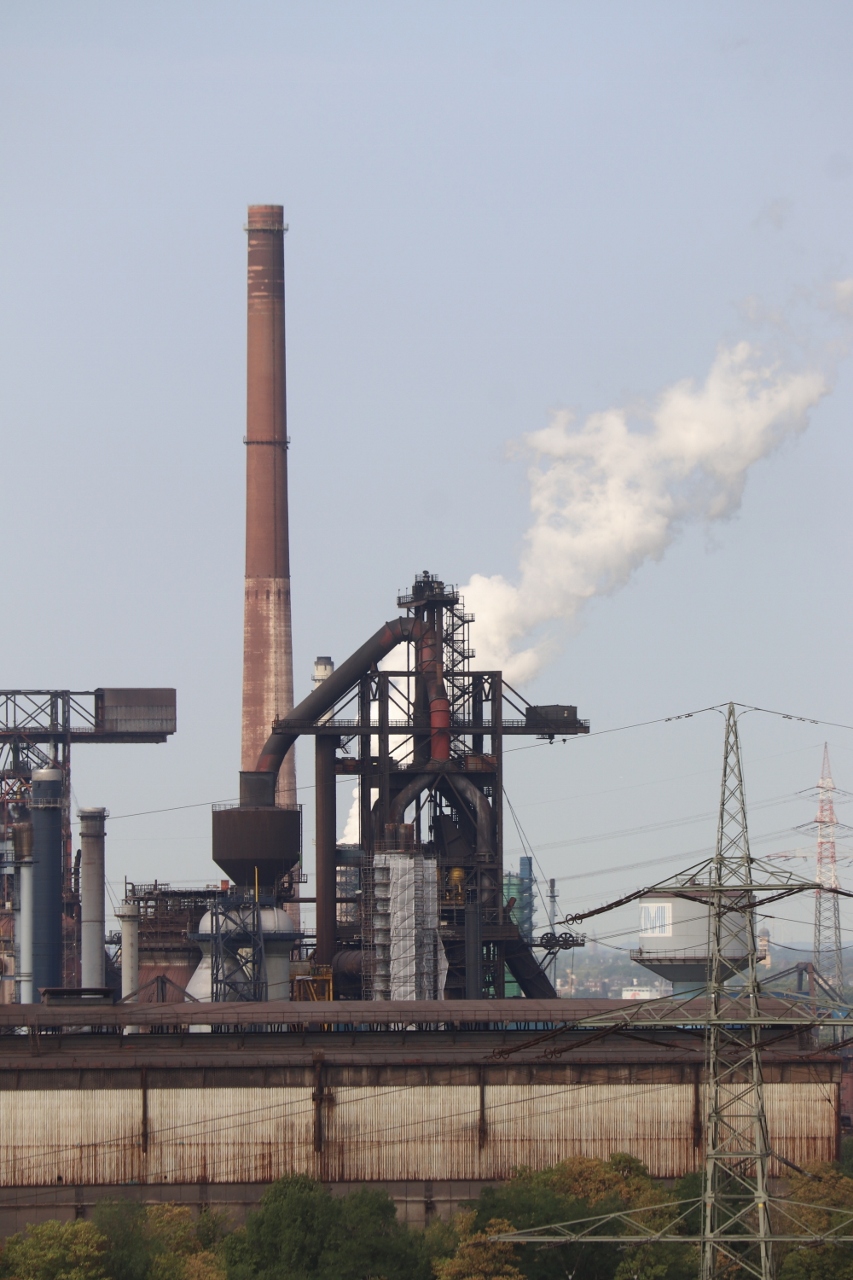
From the Magic Mountain we have a view over a whole new type of industrial activity, independent of the coal, cokes and steel factories. A large container terminal is a colourful, modern work site, perhaps more typical of the economic reality of the Ruhrgebiet in the 21st Century.