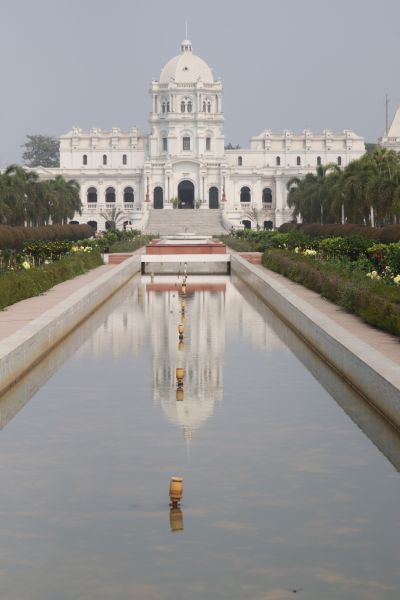
Ujjayanta Palace, the main tourist attraction in Agartala
We have established ourselves for a few days in Agartala, capital of the Northeast Indian state of Tripura. There is not an awful lot to do here, but we take a few days, to recuperate from hectic Bangladesh. Not that Indian cities are not hectic, but our small guest house, where we are the only guests, is an oasis of peace.

one of the side buildings to the palace in Agartala, seems to be a motorbike parking
Agartala
Agartala’s main claim to fame is the Ujjayanta Palace, the former royal palace of the princely state of Tripura. It was built by Maharaja Manikya in 1901, as a replacement for an earlier palace devastated in an 1897 earthquake. It is a huge, and magnificent building, extravagant to say the least, fit for a royal – except that the princely state of Tripura, as so many small princely states after Indian independence, merged with India in 1949. Inside is a museum, which is less interesting. Most of it is about the state Tripura, the other NE states, and the liberation war of Bangladesh, which obviously affected Tripura – surrounded on three sides by Bangladesh – quite a lot; not only refugees came across the border, but also the freedom fighters established bases here. Not all of the English explanation on this episode is necessarily correct, I believe.

the main front of the palace
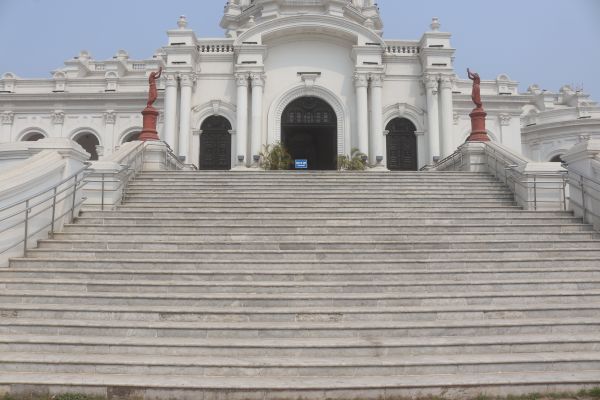
and the stairs leading up to it

two of the many windows from the palace veranda

a Hindu ceremony at a ghat near the palace, a colourful encounter

Gedu Mia’s mosque

and a detail of its attractive roof structure

the iman, or the caretaker, I don’t know, but he kept filming the foreign visitors from our arrival to departure

a girl, distracted from the Koran classes inside

the mirhab, nicely decorated but not very old, of course
On the other end of the centre is Gedu Mia’s mosque, built in the same style – domes, tiles – as the Star mosque we saw in Dhaka. Apparently, Gedu Mia made a killing on an airport contract in 1942, which he invested in the mosque, not very old, thus. We are invited in whilst Koran classes are going on, which obviously distracts the kids, but not the caretaker, who happily continues to video our visit.
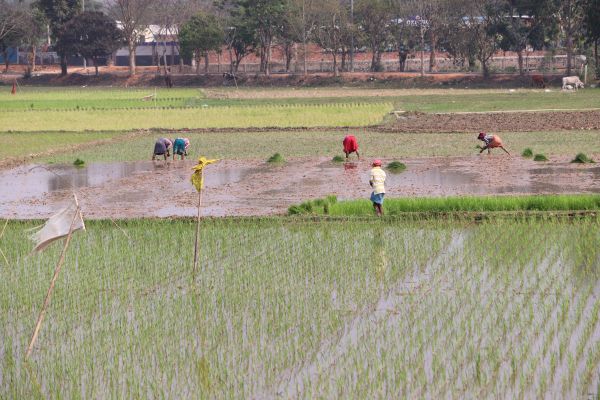
outside Agartale, rice farming in full swing

the boat towrads the Neermahal palace

two of the palace towers
Neermahal
The Neermahal palace is an hour’s drive outside Agartala, is inspired by a similar palace in Udaipur, in Rajasthan, and equally built on an island in a large lake. It was completed in the 1930s – imagine, that is less than a hundred years ago! – and although not as extravagant as the example in Rajasthan, it is still quite some palace, even though it is now empty. We take a short boat ride to the island, with 40 other tourists, all local, and are given 40 minutes to explore the palace, wander through its empty rooms and climb to the roof for the views.

a few stalls are selling refreshments

and she is one of the sellers
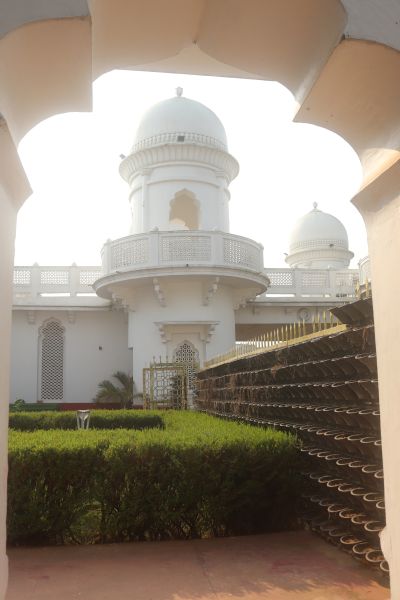
one of the arches in the palace, walking from a room into a coutrtyard

at one end, several small towers, decorative rather than defensive, I reckon
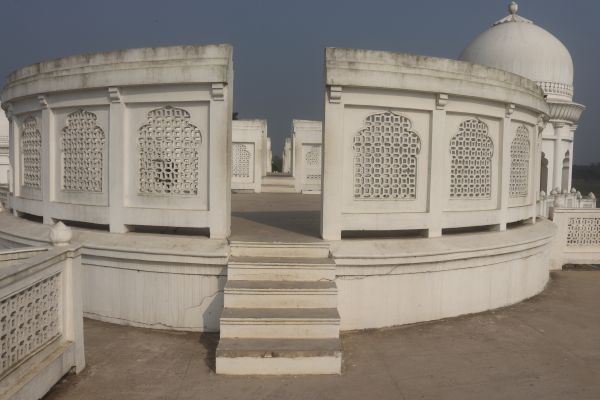
and on the roof, several seating areas, one after the other
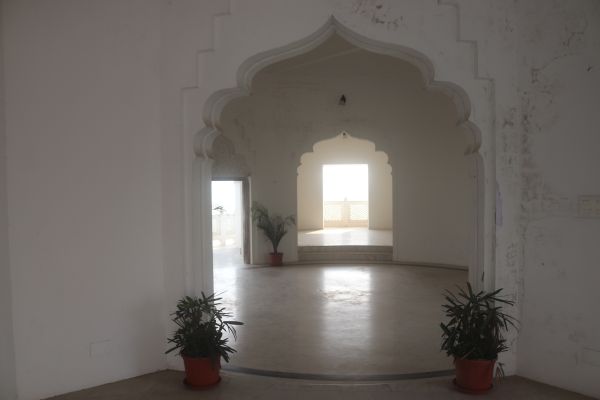
the inside of the palace is empty
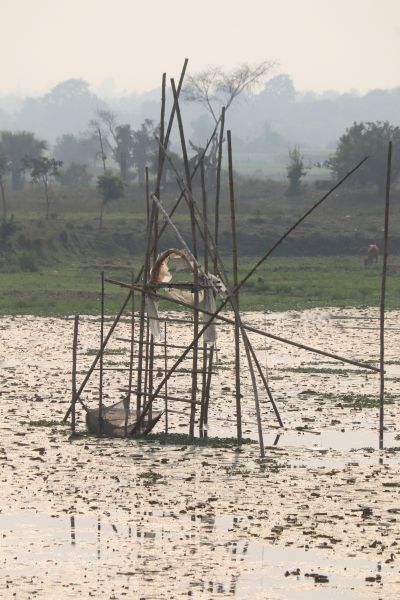
on the lake outside the palace, fishing is the thing to do
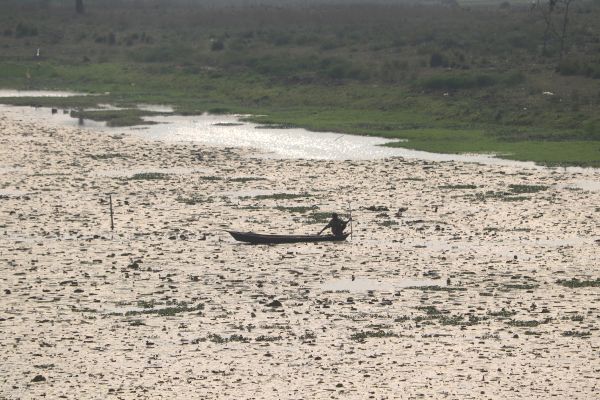
if not with nets, then with a small canoe checking the nets

and the birds, of course

in Udaipur, an unusual bridge across the Gomati river
Udaipur
Nearby is Udaipur, not to be confused with its Rajasthani namesake, known as the city of temples. Apparently, there are 51 of them, dedicated to different Hindu deities. We cannot see them all, of course, but we have selected a few old ones, the most famous one being the Bhubaneshwari temple. Which is a bit of a disappointment, it having been heavily restored. A better bet is the Gunavati group of three small temples, looking much more authentic – but squeezed on a small area, surrounded by buildings, so difficult to get good pictures. A third small structure, close to the Bhubaneshwari temple and without a name, is nice, obviously old, and apparently, judging from the empty bottles, a meeting place for drinking.

the Bhubaneshwari temple in Udaipur, heavily restored

perhaps the only original part is the cupola at the top
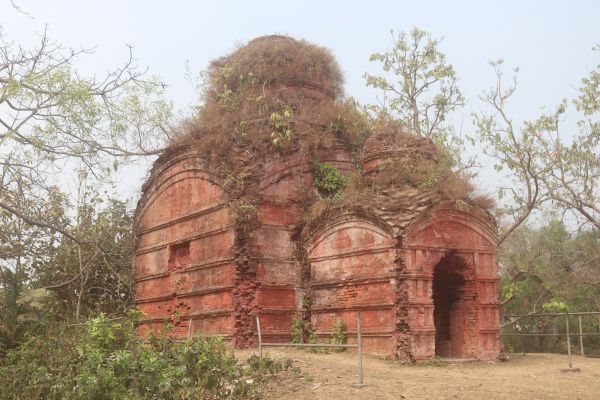
an unnamed little temple, far mor original, near the the Bhubaneshwari temple

the Gunavati group of three small temples, in a very small park
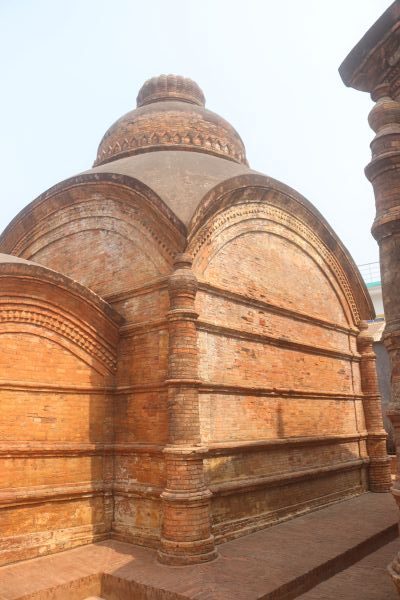
looking a lot more authentic
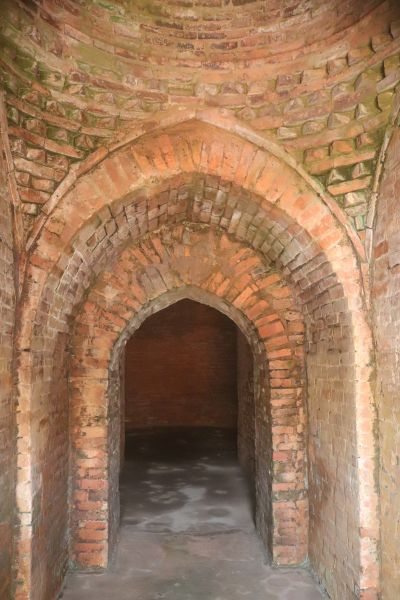
and from the inside, an intricate brick structure

the Tripuri Sundari temple, a more modern structure
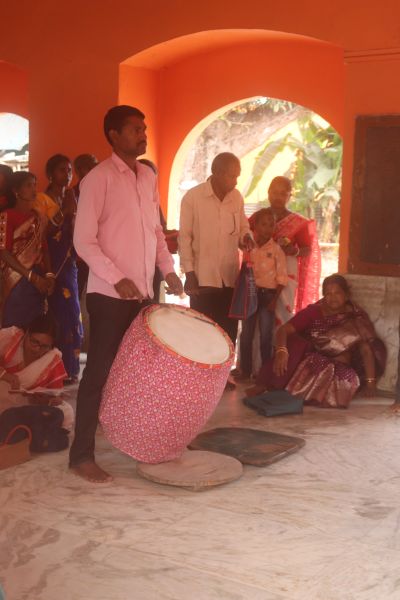
the drum being played inside
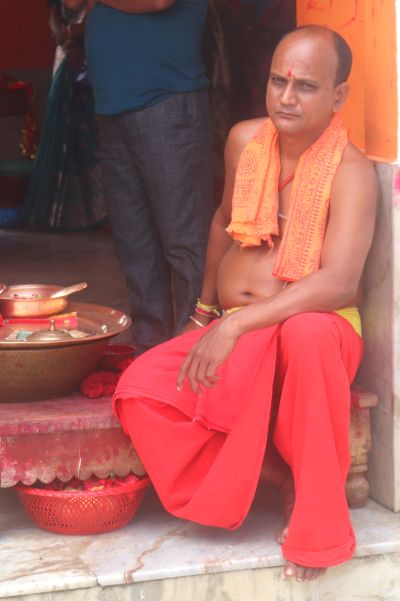
and the one doling out the bindis outside
The most important temple is the Tripuri Sundari one, originally constructed by Maharaja Dhanya Manikya Debbarma in the 15th century. The current buildings are new, nothing special, or it must be the enormous orange base that is being constructed to welcome even more pilgrims in ;the future. Donations put to good use? Today, perhaps an auspicious day, it is very busy. Lots of people, many dressed up in their best for the occasion, bringing lots of offerings, in the form of food, flowers, and quite a number of goats. Everybody taking selfies, and quite a few also take pictures of me. And I of them. Great atmosphere, though, and even mildly spiritual.

some of the bells of the temple

one of the pilgrims of the day

they come at any age

and in any type of dress, really

many people carry offerings to the temple
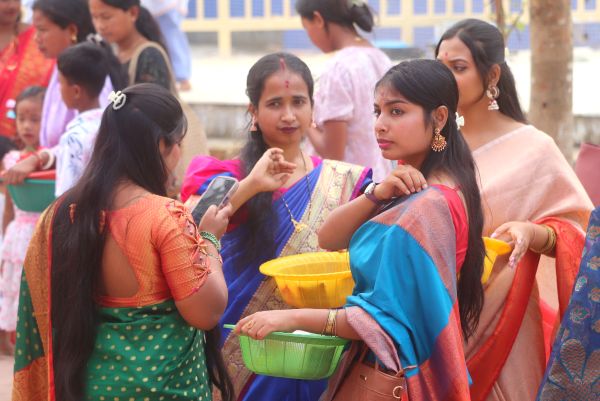
and are dressed at their best
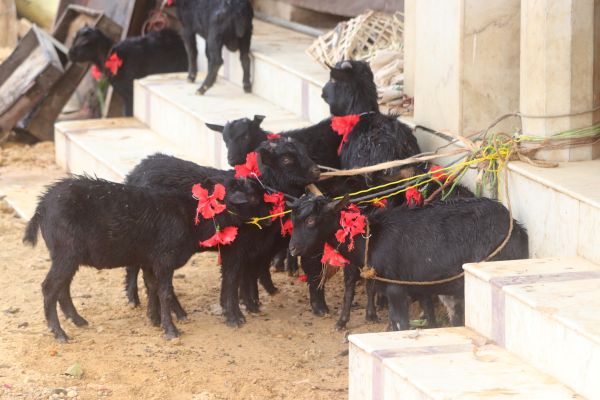
some of the offerings have been tied to a pillar

the Gomati river, at the start of our little boat trip
Chabimura
Past Udaipur is Amarpur, in itself nothing special, but for its nearby Hindu rock carvings from the 15-16th C. Some of the large sandstone rock outcrops along the Gomati river at Chabimura have been shaped into the face of deities, the most pronounced one that of Goddess Durga. As so often, the process of getting there is actually far more fun. We share an open boat with three youngsters, very friendly local boys, accompanied by a tourist board official, and plop-plop with a gentle pace downstream, first past some minor carvings, and ultimately to Durga herself. Accompanied by dense jungle on both sides and the occasional birds. With a brief stop at some small caves, and then back again. Really pleasant little river trip.

some of the minor rock carvings along the river

which are actually quite accomplished
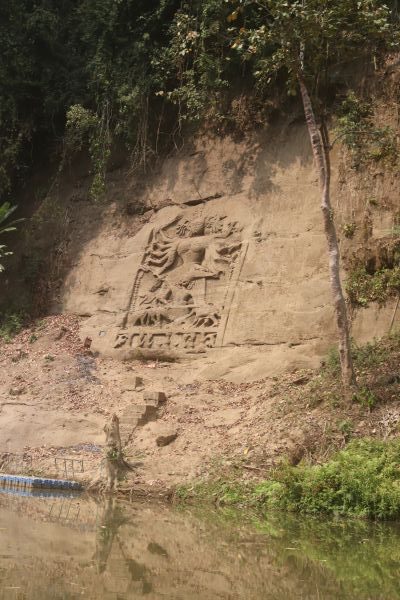
further downstream is the Goddess Durga
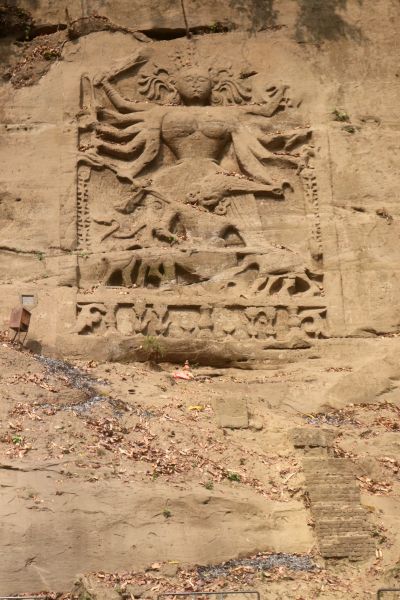
the most important carving here
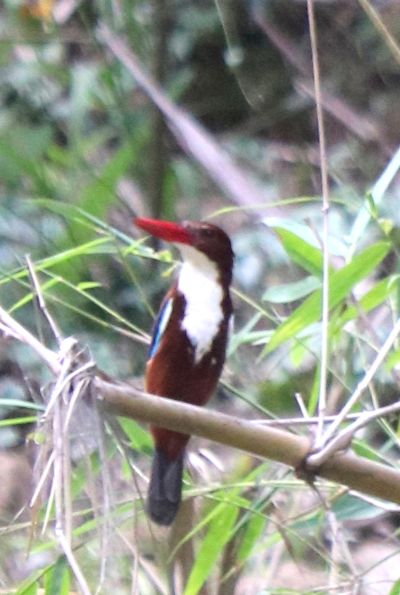
and look, there she is again, the king fisher

the bottle shop, well defended against the mob
Back in Agartala I manage to locate a liquor store – getting alcohol in India is only marginally easier than in Bangladesh. A variety of dubious whiskies are kept behind a metal grill, as if to protect the bottles from an assault of the mob. Perhaps that’s exactly what they are afraid of. A bottle of beer can be had from the fridge outside, though. First drink since we started the trip over two weeks ago!

our train to Kumarghat, ready to depart from Agartala
We leave Agartala by train, one of the great conveniences of India, with its extensive rail network. A huge engine is going to pull an incredible amount of wagons – we are in number 15, and there are at least another 7 or 8 behind ours – to Kumarghat, our next destination.

murals in Agartala,
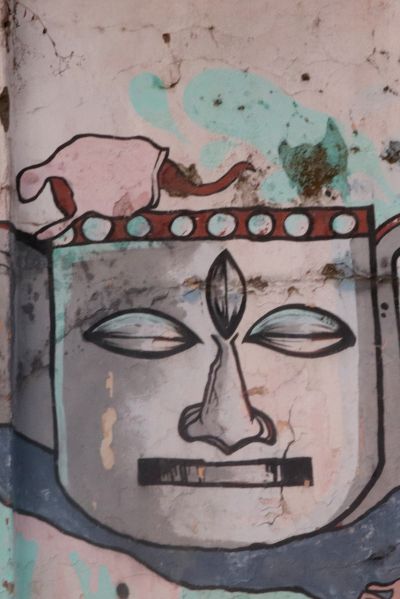
the significance of which only become clear on our next destination
