
Majuli Island villages are mostly bamboo-type houses in a verdant green environment, sometimes spiced up with colourful laundry
Majuli is the biggest riverine island in the world (although there is some competition with an island in Brazil, depending on exact definitions). But the question is, for how long? At the beginning of the 20th Century the size of the island was over 1200 km2, which has reduced to under 400 km now, due to erosion by the Brahmaputra. There are surveys that suggest that the island may disappear in its entirety in the next 15 or 20 years – although efforts are underway to counter erosion by planting large forests.

to counter erosion from the Brahmaputra, sand bags have been stacked against the river banks

no motorways on Majuli, mostly narrow roads
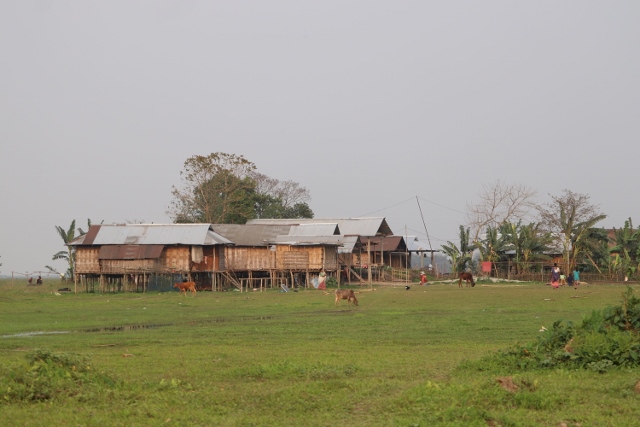
bamboo houses on stilts, in the green expanse of the island

ploughing done the old-fashioned way

the entry to the Auniati Satra, the oldest Hindu temple on the island

mostly a humble temple, except for the altars

made of silver, richly decorated
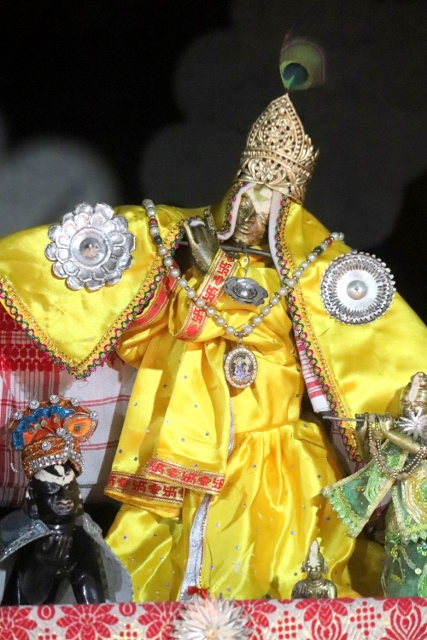
occasionally brightly dressed, too
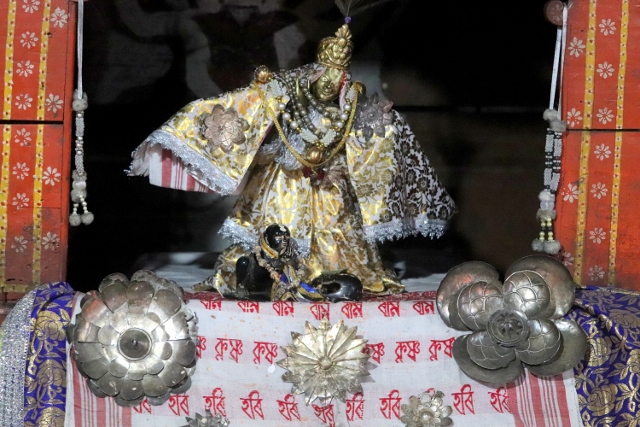
and silver sculptures representing deities

with mythical figures like this well-endowed horse
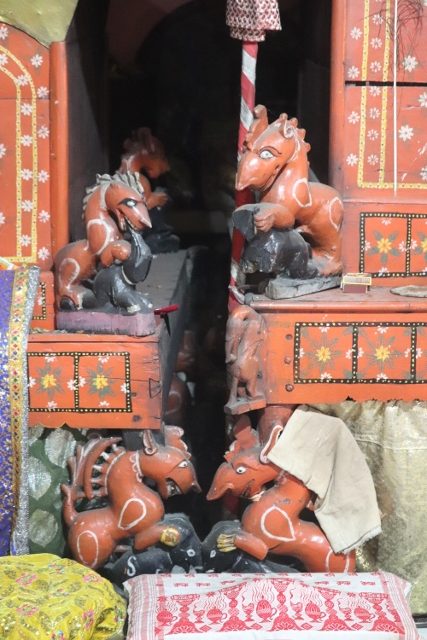
the edges of the altars have been decorated, too

and this is one of the characters who hang around the satra
the Auniati Satra
One of the things that sets Majuli apart is the number of satras on the island – a satra is a Hindu monastery. There are now 32 of them, and we visit the oldest, the Auniati Satra. Which looks different from the Hindu temples we have seen so far, much more humble; perhaps this is a function of the dominant string of Hinduism on the island, the Assamese Vaishnavite culture. The temple itself is fairly small, and the only extravagance is what we would call the altars, the central one carried out in silver, the side ones in wood, with well sculpted and decorated deities inside.
The monastery is populated by approximately 400 monks. They are accepted by the monastery between the ages of 5 to 10, no earlier, and no later. Imagine sending your child here so young! He has a month to decide whether he likes it, or not; also, at a later stage, you may choose to leave, but that means that you will never be accepted back again. Many stay forever. One of the seniors we talk to, and have tea with, is 79 years old, and arrived here at the age of 7.

another idea of how high the water might rise in monsoon times

a bridge across low-lying land, to keep dry feet in the rainy season
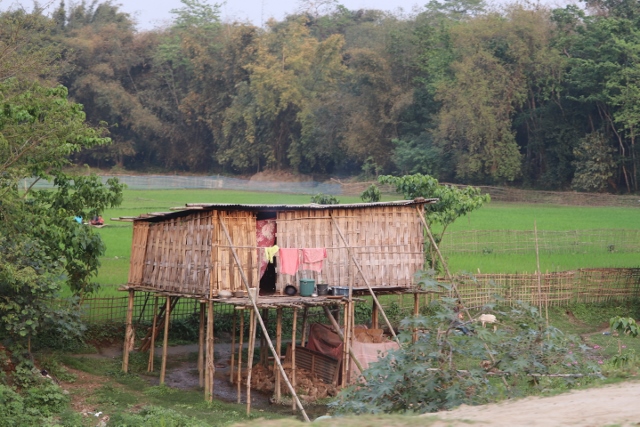
a house on stilts, illustrating how high the water may come

this village has replaced the bamboo stilts with concrete poles

but the rest is still traditional bamboo weaving

inside, the various utensils

one of the weaving women,

of which every village has a few

many of the houses have fishing equipment stored, too

and other nets are just drying along the riverside

the people of Majuli are extraordinarily photogenic
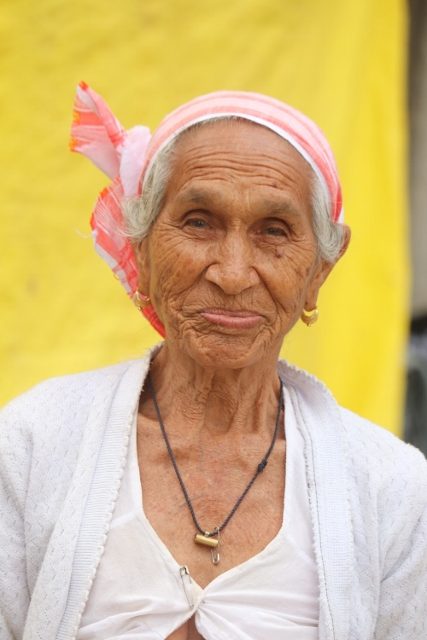
and the love to be photographed!
the villages
The island is occupied by several tribes, of which the Mishing are the largest. Their houses are on stilts, initially from wood or bamboo, but now increasingly from concrete. Many of the houses are still traditional, in that the main section is made of bamboo mats; thatched roofs are very rare nowadays, corrugated iron is the preferred roofing. Walking around the village, from hand loom to hand loom – weaving is a big thing here, although not really commercially pursued -, everybody has this beautiful smile, very relaxed, not embarrassed by visitors, on the contrary. We are back in a welcoming environment, what makes the Ziro experience stand out as unusual. All the more so, because the Mishing are also adherents to the Danyi-Piilo belief.

the village elders keeping an eye on things

wooden windows

another village, same structures, bamboo and concrete

and a wooden door, too, better than bamboo
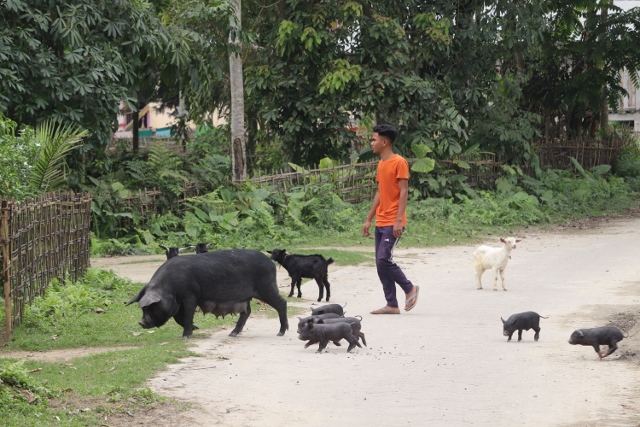
pigs, and the young ones, roaming around freely

another one of those bridges, in need of repairs

some of the kids, equally photogenic
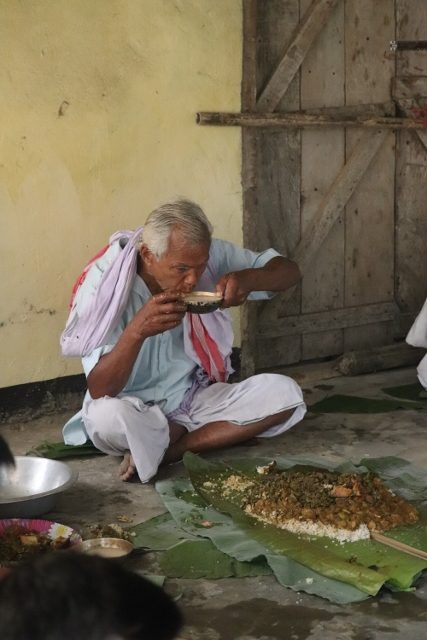
the men eating separately, but note the mountain of food!

the kids, too, enjoying a huge meal

and the women, they have been cooking, but note the size of the pans!

in this village the kitchen utensils stored outside
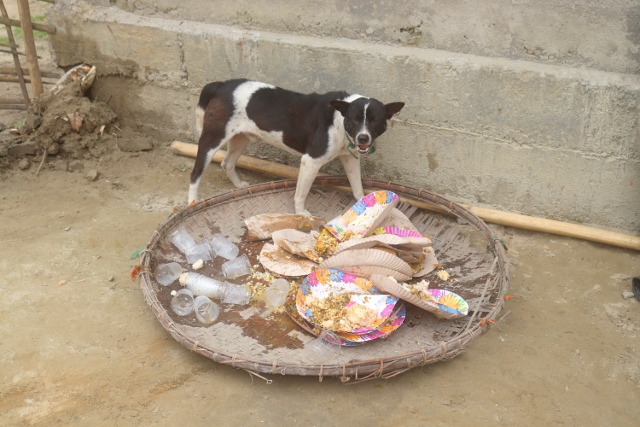
even the dogs are heaving a feast

a few more portraits

just because they have such beautiful faces

and not only the women
The Diori village, populated by the second-largest tribe on the island, is equally pleasant, and not that different in type of accommodation. More hand looms, and an impressive amount of pigs that freely roam around. Some of them didn’t survive: we stumble upon a celebration, apparently for the 9th generation, where the villagers consume enormous amounts of rice and pork. Really, enormous amounts. Which is the idea, showing prosperity and abundance. The men are eating in one room, the children are comfortably seated against a fence, the women are just cooking, it seems. And the dogs are having a feast on the left-overs. Of course we are invited to join, which we politely decline, but not without being subjected to more rice wine. Lovely people, all of them.
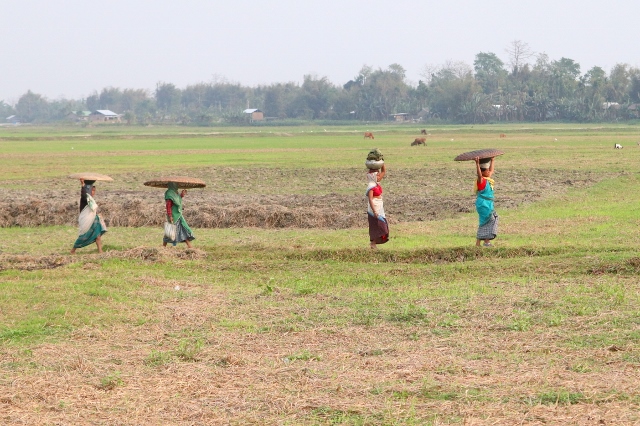
the women on their way to work

pots protected by baskets

or by a jacket
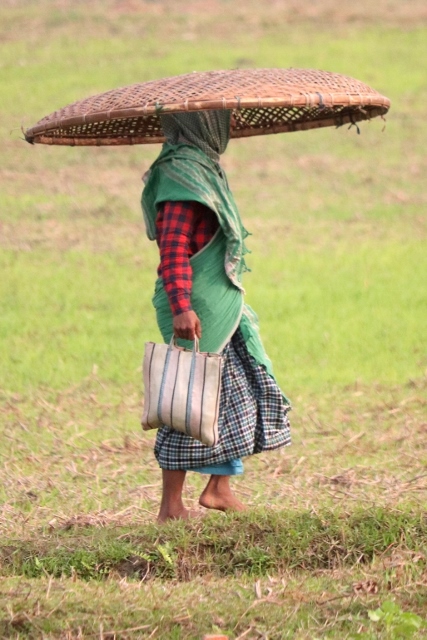
or basket without pot, also possible

buffalos form part of the cattle stock

a water-rich island is a feast for bird watchers

kingfishers brighly-coloured

and there are more birds, as well

like these ones, of which I don’t know the English name

and this is a white ibis

in a small town, a drum maker
the livelihood
The main economic model on the island is rice growing. I read somewhere that they cultivate no less than 100 different types of rice, from extremely soft to brown- and red-coloured. But for now most of the paddies are dry, awaiting the monsoon in June and July. For now the water is extremely low, actually; come the monsoon, most of this will be flooded, with the roads hopefully just about staying above the water level. And the people will have to find a place for the cattle, the cows and the buffalos, that now graze the paddies. But they are used to it.

with a veritable collection that would not misstand in our own house
There are several other commercial activities on the island, of which the pottery and the mask making are the most impressive ones.
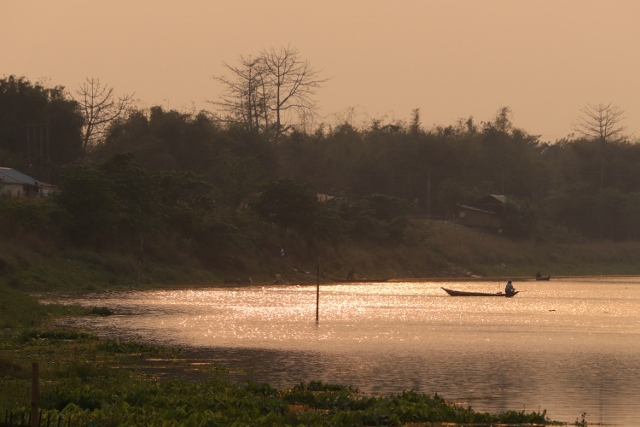
sunset, with fisherman
