
Not having a bucket list means that our travel plans are unpredictable, yet quick to evolve. Bangladesh? No, but when the opportunity presented itself, well, why not? We didn’t have anything planned for the travel dates proposed by the travel club with whom I also traveled to Syria, last year. In a small group; group travel is not our ideal, but probably the most efficient way to travel to Bangladesh. Two weeks only. But, once we are there, why don’t we continue to the North East of India, and area we had wanted to visit during our three years in India long ago, but never managed. So, after the usual planning excercise, a short two week trip turned into two months. Another extraordinary travel experience, with lots of variety in natural beauty, architectural highlights and cultural diversity. From hot and steaming sea level Bangladesh to high up in the Indian Himalayas, still freezing cold in March and April.
In two parts. First, a bit of introduction, and Bangladesh
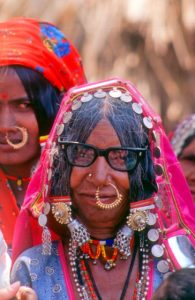 01. the Kukiland plan
We never even considered going to Bangladesh, what on earth would we be doing there? But opportunist as always, when I received this email announcing a two week trip to Bangladesh, from the same organisation that arranged the highly successful trip to Syria last year, I asked my customary travel partner – on a cold and miserable day in December – what she thought about it. And she said: “why not?”.
02. the confusion
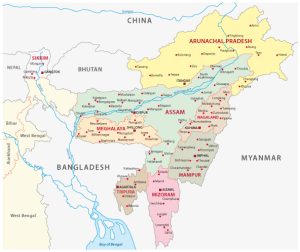
Or so I thought, when I started to put the India part of the trip together at the end of 2024. Only to learn that, on December, 20 of that year, the Indian government decided to reintroduce the permits again for the states bordering Myanmar. Mizoram, Manipur and Nagaland (Arunachal Pradesh always needs a permit, but is now an established process, so relatively easy). Hmmm. Enthusiasm was ebbing away, again.
03. the visa
Ah, visas. The aspect of any journey that I hate most. Not to generalize, mind you, and there are exceptions, but in quite a few embassies and consulates the attitude towards travellers is not the friendliest, not the most inviting. And if they send you to a website for online application, prepare yourself!
the preparations
04. the preparations
The visas are ready within a week. We can pick up our passports from VFS Global, no need for an appointment. This time we are outside again after ten minutes. That’s one, the Indian visa. We drive on to the Bangladeshi embassy, also in The Hague. Although technically we can only collect visa between 3 and 4 in the afternoon, we are let in, by the same friendly guy from earlier, and another five minutes later the visas have been pasted in our passports. That’s two. Within half an hour. Piece of cake.
Bangladesh
05. what do we actually know about Bangladesh?
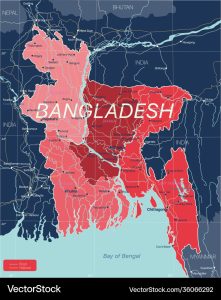
Well, the truth is, I don’t know much. I know it was East Pakistan for a while, and then turned into an independent country in 1971, after a viscous war. A poor country for a long time, annually affected by massive floodings in the delta of the combined Ganges and Brahmaputra, which takes quite a lot of water from the Himalayas and the Indian subcontinent to the Gulf of Bengal. The world’s preeminent garment production centre, where young women and children are being slaved around in unsafe factories until these burn down, with horrific results.
06. Bangladesh’s development
It wasn’t only the politics that challenged Bangladesh. Already before its independence, it was a poor country, and whatever was economically generated, was siphoned off by West Pakistan, at the time. The nine months Liberation War didn’t help, and besides, Bangladesh’s location at the mouth of several big rivers, like the 3000 km long Brahmaputra and the only mildly shorter Ganges, that together form an impressive delta in front of the Bay of Bengal, makes it prone to frequent floodings – the average elevation in most of the country is no more than 10 m!

Dhaka
07. arrival in Dhaka
The first objective, albeit not stated previously, has been achieved. We have transferred from a miserably cold, freezing Netherlands to the pleasant evening temperatures of Dhaka, the capital of Bangladesh.

Saidpur
08. Saidpur
The Bangladesh part of our trip, the next two weeks, has been organised. We will be traveling around the country in a small group, seven in total (of which some will be dropping off already at various stages before the end). To every corner, really.
Our first destination is Saidpur, in NW Bangladesh. We use this as a base to undertake several excursions, the first one to Tetulia. This is the northernmost point of Bangladesh popular with local tourists, who can not only look into India from an observation tower (??), but also enjoy a fun park with some horrendous sculptures.

the temples
09. the temples
There are a few major historical sites in this part of Bangladesh, and we drive from Saidpur to Rajshahi to visit some, covering a range of religions in the process.

Rajshahi
10. Rajshahi
Rajshahi is just an overnight place, there is little of interest, except for the archaeological Varendra museum, the oldest museum in the country, which is closed. A tourist map with ‘Old Architecture’ leads to an area where there are old, derelict houses, but little in terms of architecture.

Sylhet
11. Sylhet
We have moved from the NW to the NE of the country, and landed in Sylhet, billed as the most touristic location of Bangladesh. Except that Sylhet itself doesn’t have many interesting sites itself, the most famous one being the shrine of Hazrat Shah Jajaj.

Barishal
12. Barishal
We leave the north behind, and now move to the south of Bangladesh, first the SW corner, essentially the main part of the huge delta.
We were supposed to take an overnight boat from Dhaka to Barishal, an adventure in itself, and something I had been looking forward to. Unfortunately, the boat that we had been booked on wasn’t going anywhere anymore, apparently because the company running it was liaised with the wrong political party, and thus was now blocked from operating. That is how things works here.

Khulna
13. Khulna
Some you win, and some you lose. Our stay in Khulna was going to cover no less than two Unesco World Heritage sites: the Sundarbans and the so-called 60-dome mosque.
Cox’s Bazar
14. Cox’s Bazar
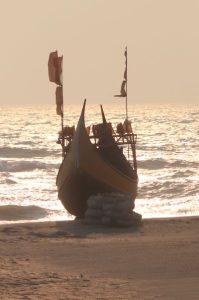
We have moved to another corner of Bangladesh, the southeast, where we have established ourselves for a few days in Cox’s Bazar. Named after captain Hiram Cox, a colonial Britisher who created a settlement here in the 18th Century. There are two things of which Cox’s Bazar has the biggest in the world, the beach, and the refugee camp.
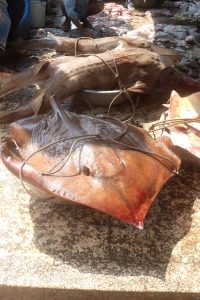
Cox’s Bazar fish market
15. Cox’s Bazar (2)
The original plan was to fly, by helicopter, from Cox’s Bazar to Saint Martin’s Island, a small coral island some 9 km south of Teknaf, in front of the Myanmar coast. This place is becoming a bit of a tourist destination, although I have no idea why, there is very little to do, it seems. Unfortunately, from 1 February 2024, i.e. three weeks ago, the government has imposed a 9 months tourist ban on the island, so the trip is off. Instead, we take a speedboat to Maheshkhali Island, north of Cox’s Bazar.

Dhaka
16. Dhaka
To be honest, Dhaka is not an attractive city. And there is not much in term of touristic highlights either. But by dismissing Dhaka this way, you actually miss the point. You have to experience Dhaka, go outside, meet the people, taste the local street food, hear the continuous noise from traffic, and smell the sewerage, the rotting vegetables outside the markets, and the stench coming from the Buriganga river. And see Bangladeshi life unfold in front of your eyes, sometimes grey and decaying, but mostly colourful, the cloths of the women, the vegetables in the market, the painted and decorated rickshaws.

Bangladesh’s parliament building in Dhaka
17. Dhaka (2)
As I said earlier, Dhaka doesn’t have a lot of tourist sites to visit, yet, we manage to squeeze in several stops in our one-day tour. On the evening of our arrival, almost two weeks ago, I mentioned that there was even some mildly attractive modern architecture around. I hadn’t seen the Parliament Building yet!

Panam Nagar
18. Panam Nagar
Panam Nagar, or Panam City, was the 15th C capital of what was called the Bhati region, obviously predating Bangladesh – although de people here refer to it as the old capital. It flourished during Mughal times, but declined in the 17th C, when it lost its status as a capital city. In the 19th C wealthy Hindu traders revived the town during the British colonial period based on cotton fabric trade. But the Partition of India in 1947, and further riots in 1964, led to the abandonment of Panam Nagar, which is now just an archaeological site.

one of the traffic participants in Bangladesh
19. a bit about the roads in Bangladesh (and their users)
I already described some of the driving experience in Dhaka, or rather, the non-driving, mostly creeping forward experience. Much of the congestion, I have decided after observing, comes from the range of vehicles being used.

the road to the border
20. the road to the border
Our last road experience was the one to border, no, to the Akhaura landport (you have an airport, a seaport, so why not a landport?). It took us 4,5 hours to cover the 125 kms. Through an area which was not very pretty, with lots of industry – mainly rice processing factories.

the national colours
21. some general observations on Bangladesh
First a few observations I haven’t managed to include in earlier posts. There is an incredulous amount of pharmacies in this country, wherever there are people, big town or small village, you’ll find a string of pharmacies. In Khulna, just outside our hotel next to the market, I counted no less than nine, and all had quite a few customers waiting. Are these people so sick?
Continue here to Part Two, about North East India.


