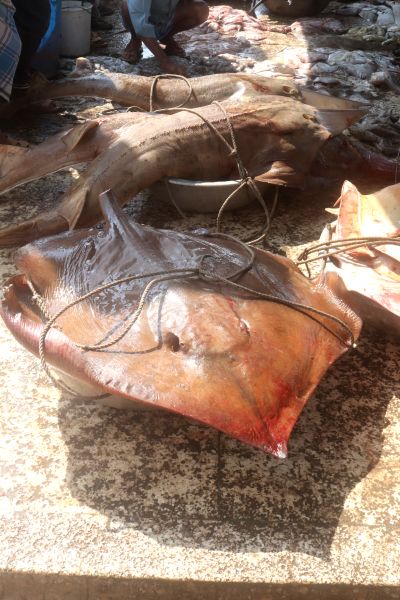
catch of the day in the Cox’s Bazar fish market, one of many manta rays
The original plan was to fly, by helicopter, from Cox’s Bazar to Saint Martin’s Island, a small coral island some 9 km south of Teknaf, in front of the Myanmar coast. This place is becoming a bit of a tourist destination, although I have no idea why, there is very little to do, it seems. Unfortunately, from 1 February 2024, i.e. three weeks ago, the government has imposed a 9 months tourist ban on the island, so the trip is off. Of course, according to our guide there is a whole different reason. Saint Martin, also claimed by Myanmar, is strategically located and is coveted by the US, to establish a military base here, to counter Chinese influence. We may soon see troops landing there, who knows.
The Temples

entry on Maheshkhali Island, clearly a tourist destination
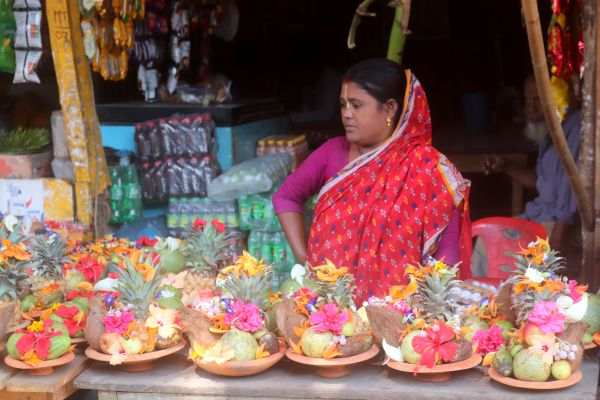
you don’t have to bring your own offerings to the temple, you can just buy them here
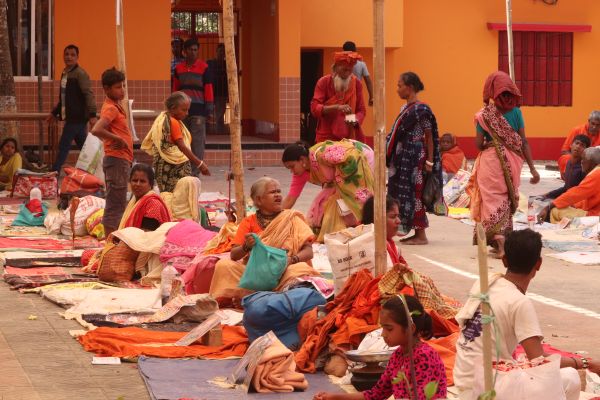
the forecourt of the Adinath temple
is where the hangers-on congregate

some quite a character
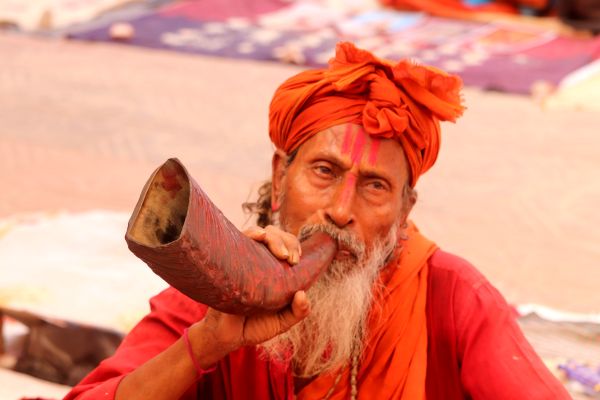
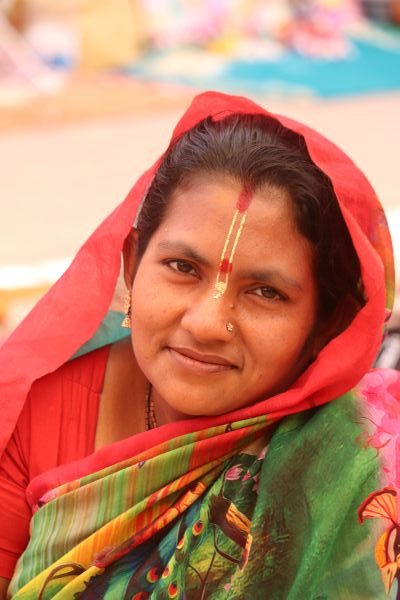
others too, and very aware of themselves
Instead of a helicopter ride to Saint Martin, we take a speedboat to Maheshkhali Island, north of Cox’s Bazar. Where we visit another Hindu temple, the Adinath temple; the temple itself is not very interesting, but it attracts a lot of colourful people, like Sadus and other temple hangers-on, but also the Hindus visiting the temple, often dressed up for the occasion.
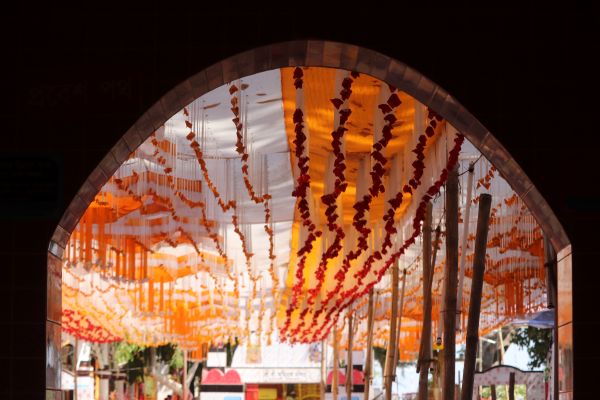
through the entrance, the roof of the forecourt

and another small temple, with this lion, is located on a nearby hill

from where there is also a nice view on a betelnut plantation
A nearby Rakhine community, in the program, turns out to be a street in a small town, with lots of Rakhine people, indeed looking different, originally Buddhists from Myanmar. The odd old wooden house is worth photographing, just about. The best part of the trip is actually the speedboat, and the way our boat competes with many others, also carrying tourists, for a birth at the jetty, and for getting away again through the fleet of incoming boats.
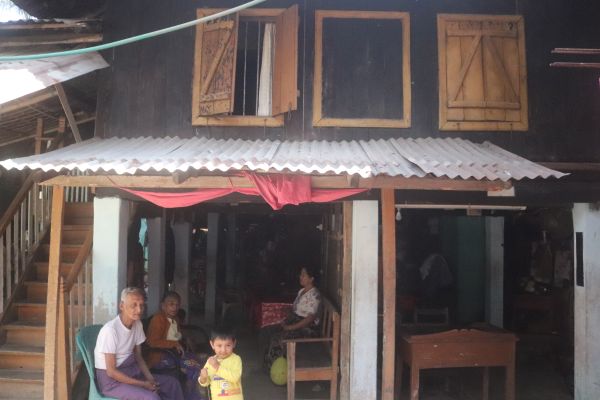
the old wooden house of a Rakhine family
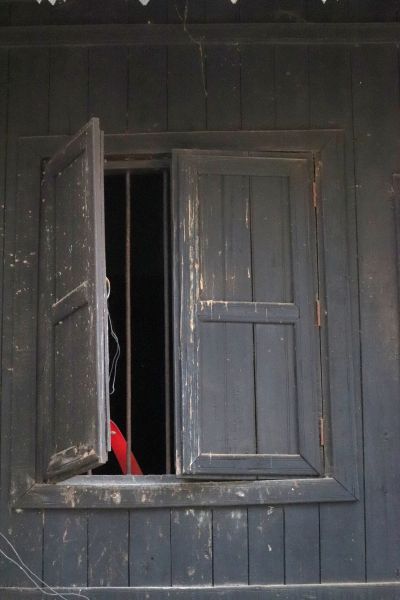
and a wooden window, nearby
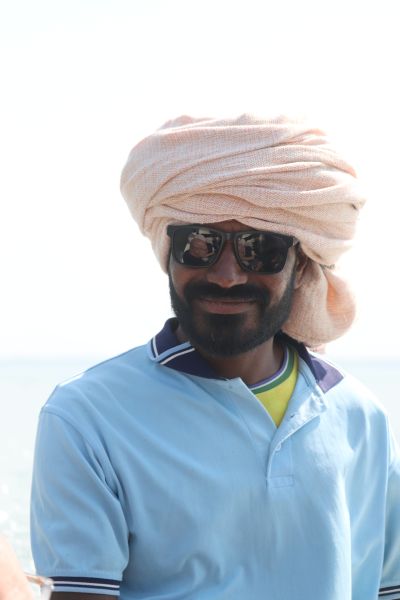
and our boatsman, very good at manouvering, and very cool
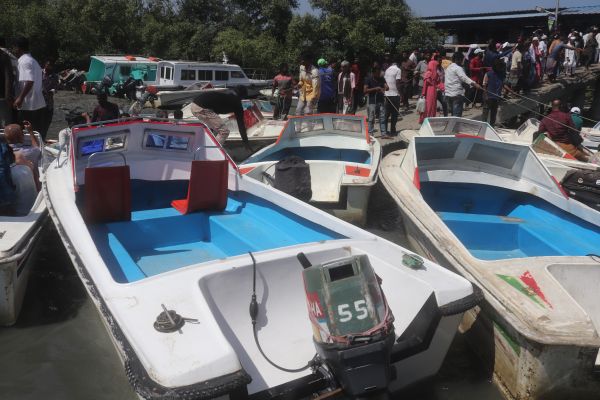
the chaos with the speedboats, trying to find a birth or just trying to leave
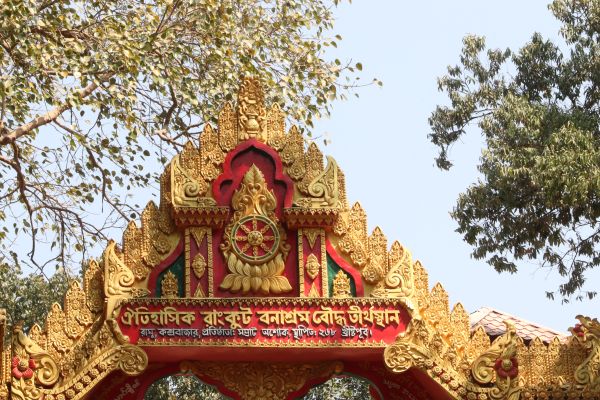
entrance of the Rangkut Banasram Buddhist monastery
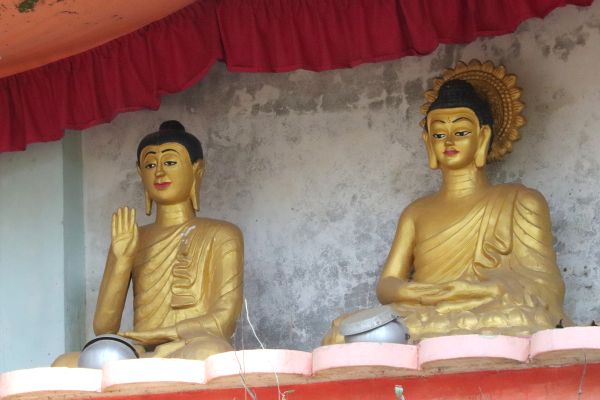
the Buddha sculptures in the forecourt

quite a few of them, in fact
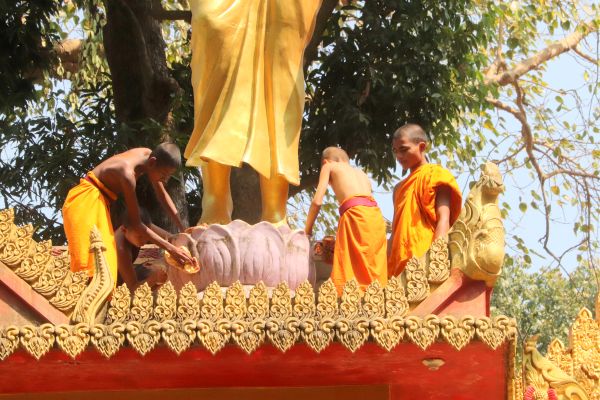
novices washing the feet of the Buddha
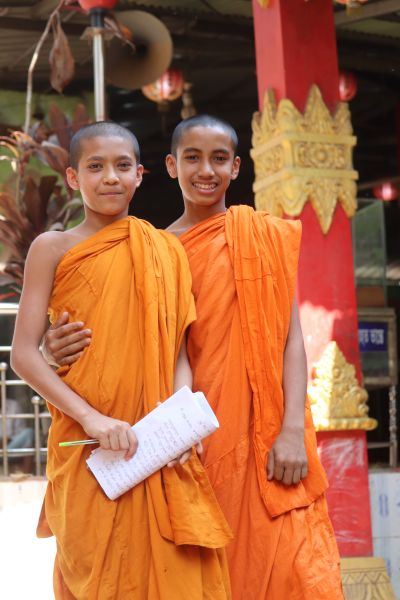
and proudly posing for the photo
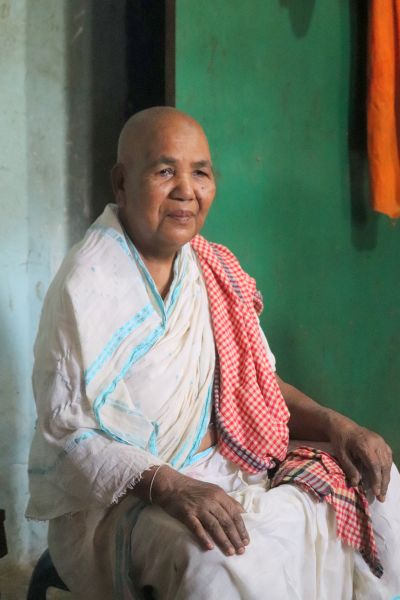
not sure who this is, obviously an important man in the monastery
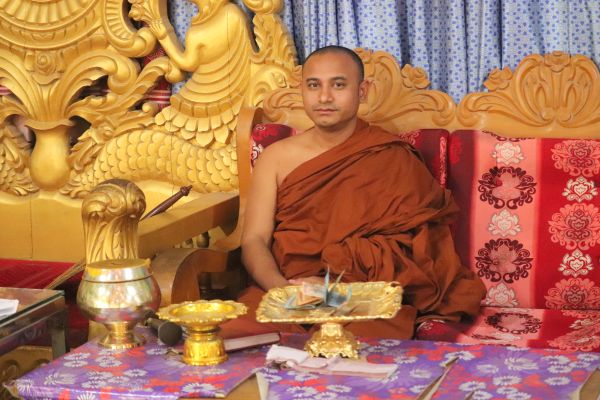
and this guy is collecting the money of the pilgrims who come to prey
Not far from Cox’s Bazar, back on the mainland, is an ancient Buddhist monastery, the Rangkut Banasram monastery, claimed to have been established in 268 BC by emperor Ashoka the Great. The present buildings are obviously from more recent date, and the monastery is clearly an active institution, with monks and apprentices walking around in their orange robes, the boys busy washing the Buddha sculpture. There is a sense of spirituality here, perhaps more so than at the Hindu temple on Maheshkhali Island.
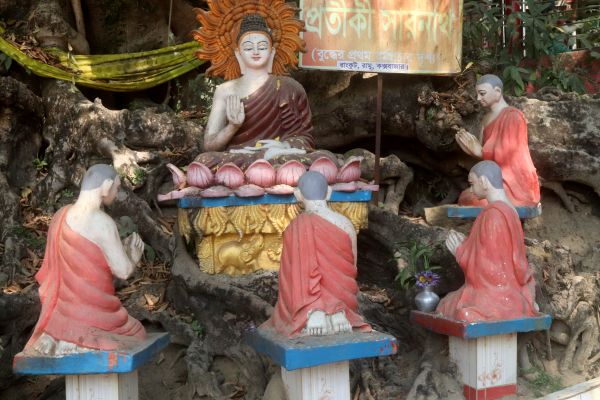
the temple comes complete with a tacky set of sculptures, reminiscent of the last supper

fresh fish at the Cox’s Bazar market
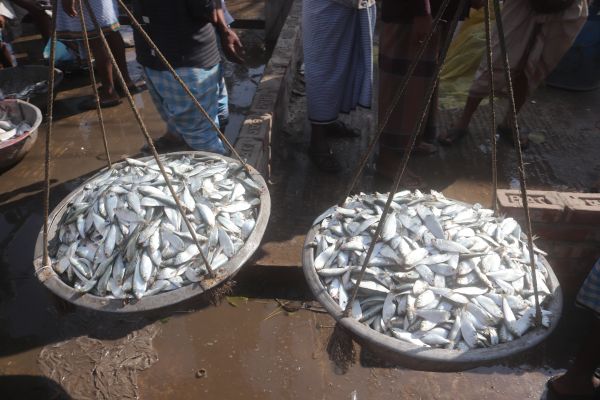
where the catch is being carried onshore, to be weighted
The Fish Market
But the highlight of Cox’s Bazar is undoubtedly the fish market, early morning, when the fish is being landed and carried onshore. There is each and every type of fish one can imagine, in a whole range of sizes, topped by the huge manta rays that are carried by two men. The fact that this is a protected species hasn’t dawned here yet, or if it has, it is being ignored – I saw about 15-20 of them in the market, and that is just today.

huge blocks of ice, ready to be shredded
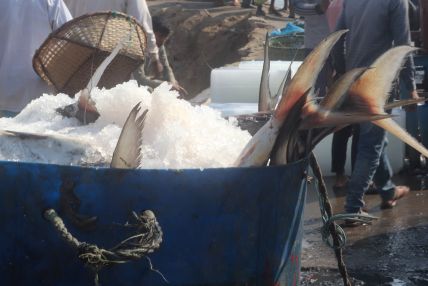
and used to keep the fishes cool as long as possible

the largest of the manta rays I saw in the market

carried onshore by two men

they are such beautiful fish, and apparently not even that tasty
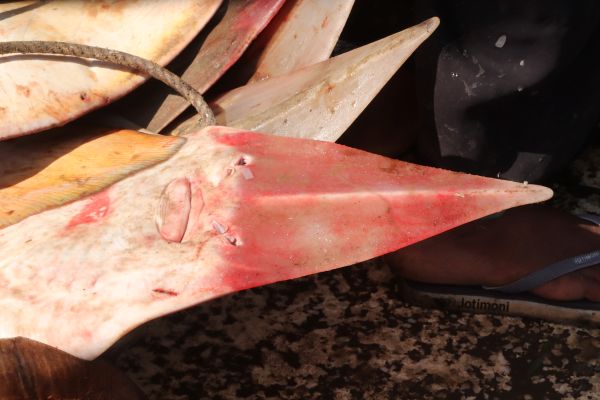
fishes have faces, too
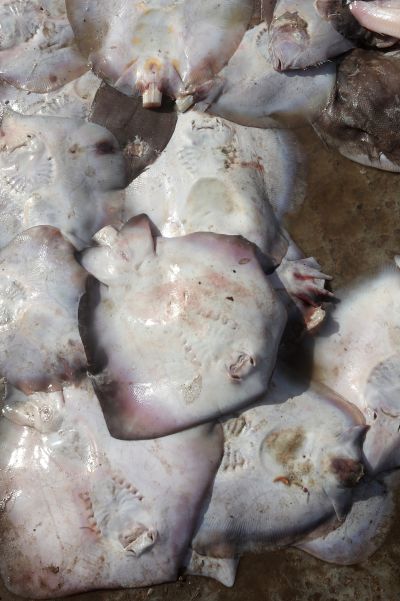
just like these ones
A great variety of other fish is also being traded, in heaps on tarpaulins, or in buckets, still alive. It is only at the very end of the market that we find a few lobsters, crabs and other shell fish. Not interesting for most Bangladeshis, they focus on fish instead. And once again the question arises: why does this not penetrate to the hotels and restaurants? A missed opportunity. For us.
and then, finally, to Dhaka
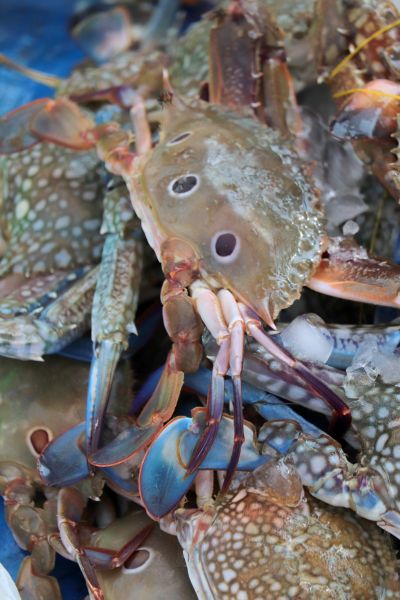
and what about the face of the crab?

found next to the lobsters, at the far end of the market
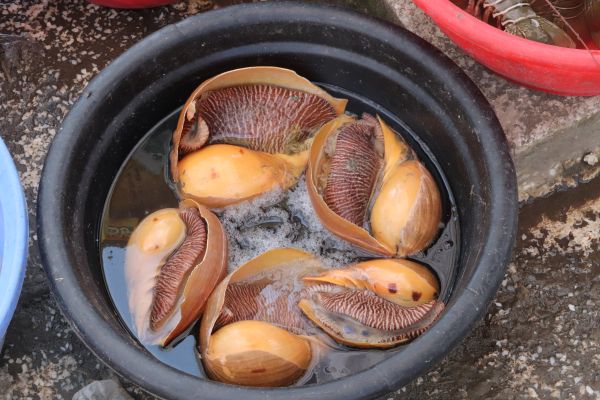
and this resembles what we know as lambi, from Haiti

another fish, asking why me?

and this one, too, is rather surprised by his fate
