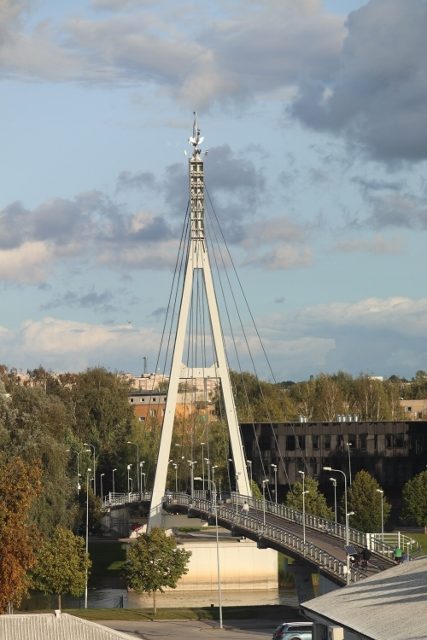
the stylish Turusild footbridge in Tartu
All the way to Tartu, towards the east and quite close to the Russian border, the weather remains miserable. We bypass Parnu, a fairly important town at the Gulf of Riga, part of the Baltic Sea, and reputedly also a popular local tourist destination; we couldn’t find much of interest to us, here.
We briefly stop at Vijandi, and in the rain we walk up to the local castle ruins. The castle was established in 1225 by the Livonian Brothers of the Sword, a German Catholic military order that was instrumental in the Livonian Crusade of the early 13th century, a Grman initiative to convert the Baltic tribes to Christianity. This created Livonia, a fairly short-lived political entity that covered most parts of present-day Estonia and Latvia. It also established Germans as the ruling class in the Estonia and Latvia, a situation that, despite subsequent power struggles involving Russians and Swedes, continued to far into the 20th century, as the so-called Baltic Germans. Livonia collapsed again in the 16th century, between competing Russian, Danish and Swedish interests. The castle collapsed a little later, in the 17th century, as a result of the Polish-Swedish wars – just to indicate that there is so much European history that I have no knowledge of, whatsoever (well, a little, since today). Nowadays, the ruins are part of a nice public park, and form the décor of an open-air stage.
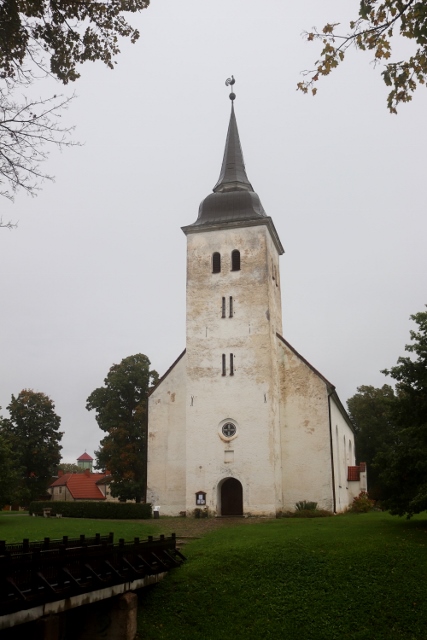
the church in Vijandi, next to the castle ruins
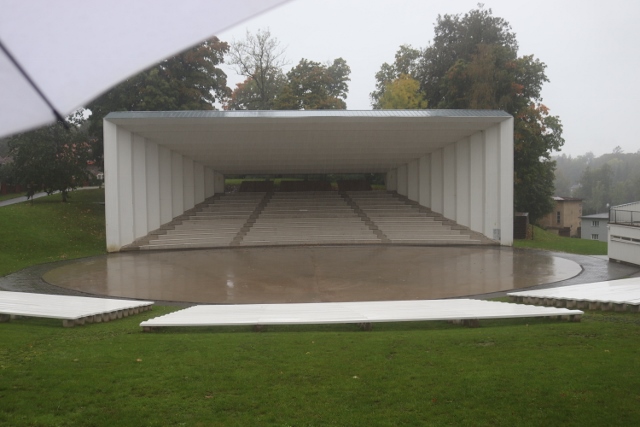
the stage of the open-air theatre in the castle park
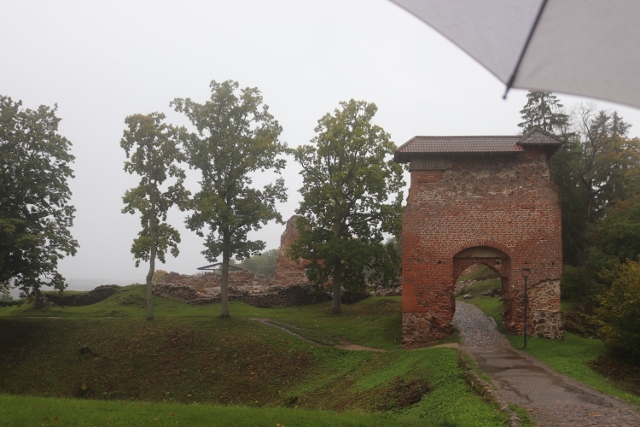
there is not much left of the castle
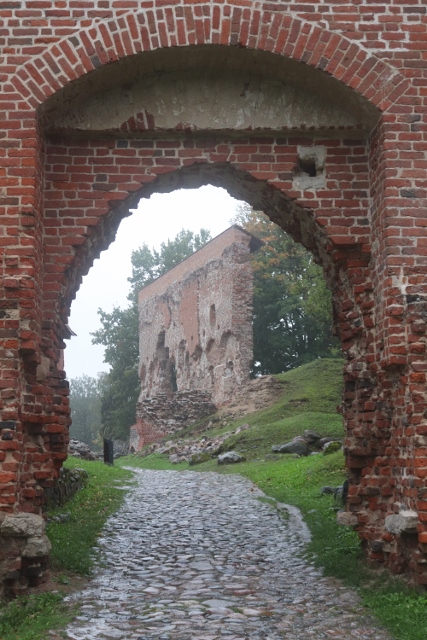
except for part of the entrance gate
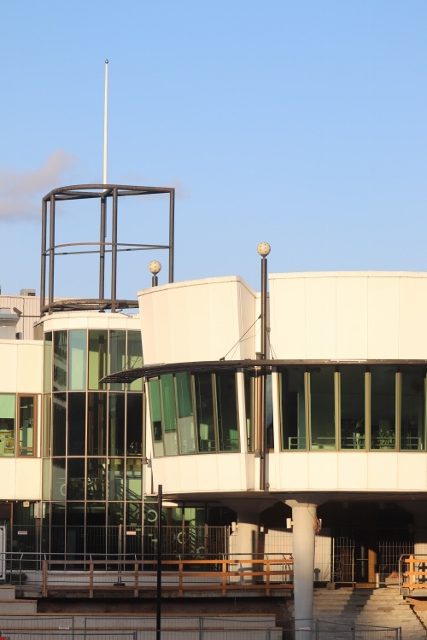
an interesting building in Tartu, now a restaurant
Tartu itself is a cute little town, even though – with almost 100,000 inhabitants – it is Estonia’s second largest. It is Sunday, the weather has improved again, but the town looks abandoned. Even in the big Saint John’s Church, where morning service is in progress, there are fewer than 15 people. And wherever we go, it doesn’t get much busier, despite this being home to the oldest and most renowned university of the country.
Encouragingly, Tartu will be European Cultural Capital in 2024.
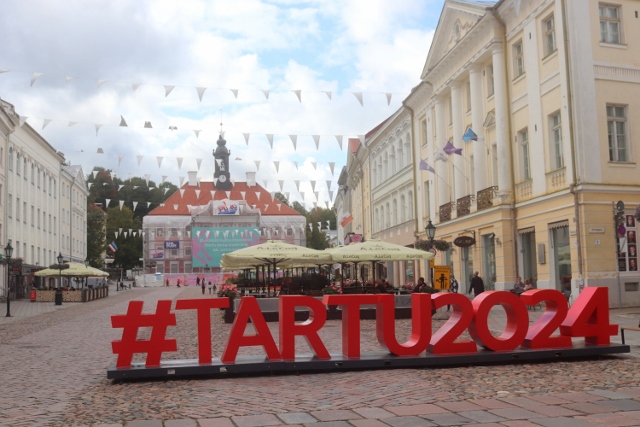
and the whole square, in the back the town hall being refurbished ahead of Taru becoming European Cultural Capital in 2024
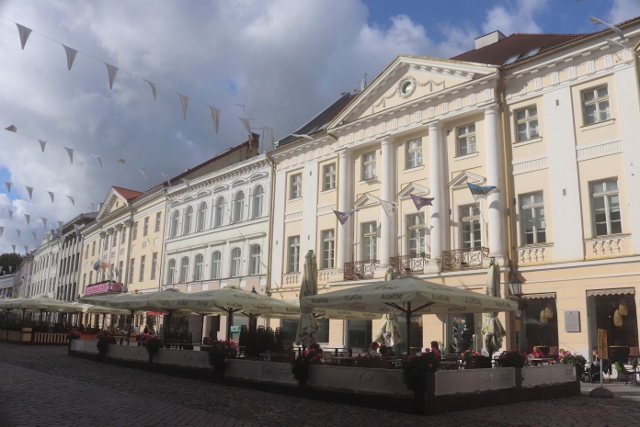
one side of the main Townhall square in Tartu
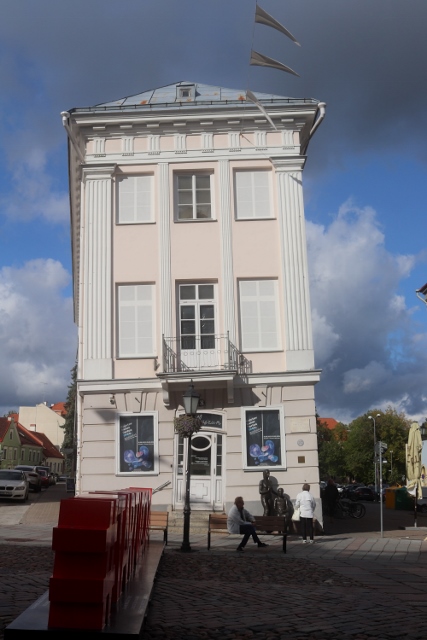
the Tartu Art Museum, more tilted than the Tower of Pisa
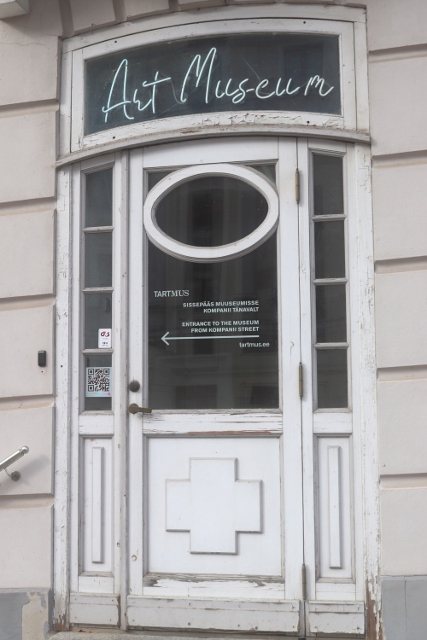
although the door looks pretty straight to me
In anticipation of 2024, the Town Hall is being patched up, and the most famous sculpture, that of kissing students, has been temporarily removed. Saint John’s Church is in good shape, a red-brick church has been rebuilt after several wars, the latest being WWII. The church is remarkable because of the handmade terracotta figures that have been incorporated, originally more than 1000, although now only some 200 are left – and most, especially on the outside, are copies.
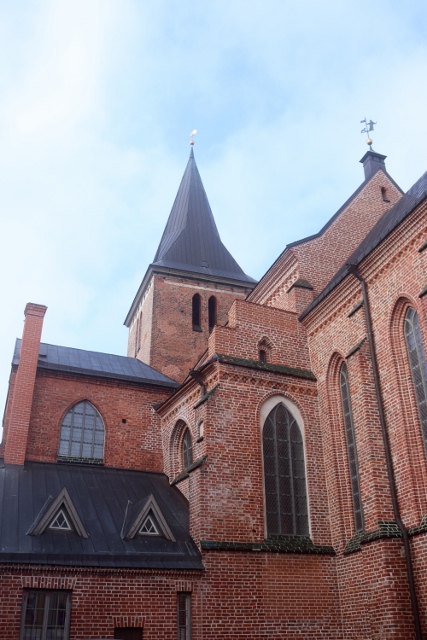
the massive, brick Saint John’s church
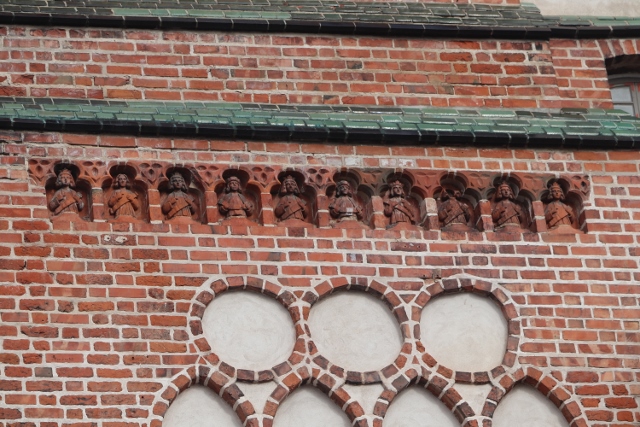
and some of the terracotta figures, all copies in this case
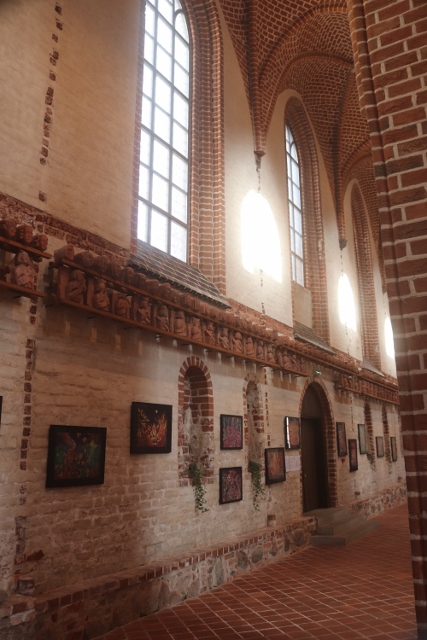
inside, too, lots of terracotta, and brick
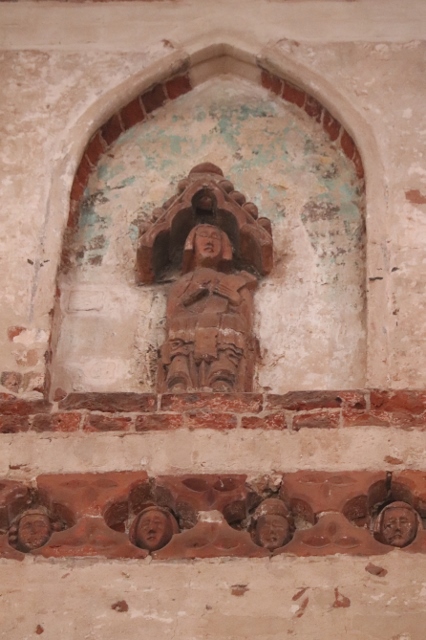
and who knows, is this still an authentic figure
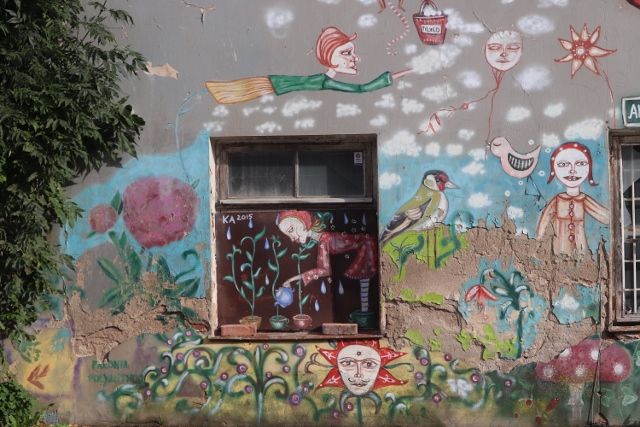
graffiti on a house wall in the Supilinn neighbourhood
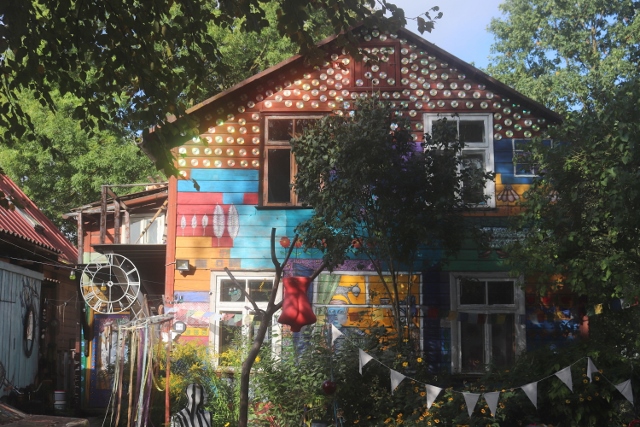
an artist’s colony in Supilinn
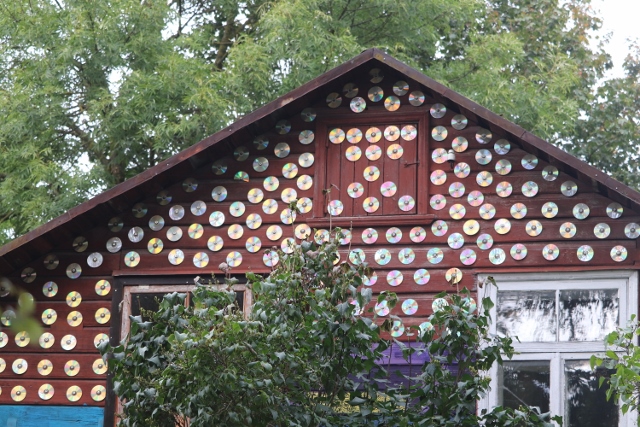
with original wall decorations
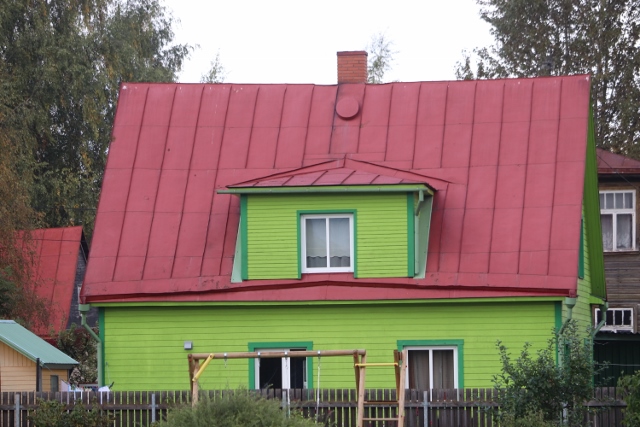
some of the colourful wooden houses now have a corrugated iron roof
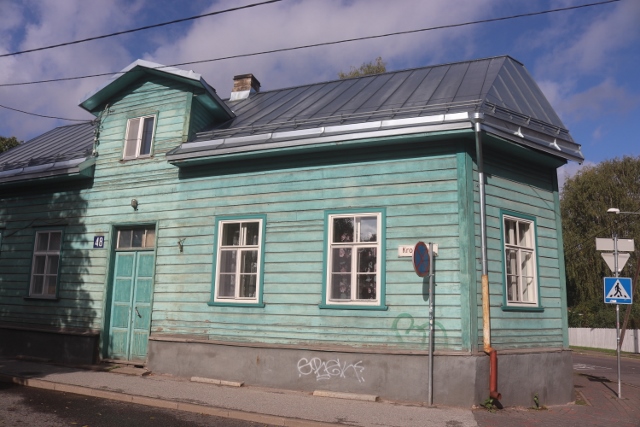
more wooden houses
We are drawn to Supilinn, which means Soup Town, an originally working-class neighbourhood just beyond the old city, which is famous for its wooden houses – there they are again. But like Kalamaja in Tallinn, the houses have mostly been patched up, look well maintained, solidly upper-middle class by now. Perhaps with the exception of the occasional arty courtyard, or graffiti wall, which gives the area a slightly more bohemian feeling, bit only very locally. For the rest it needs to come from the different colours in which the houses have been painted.
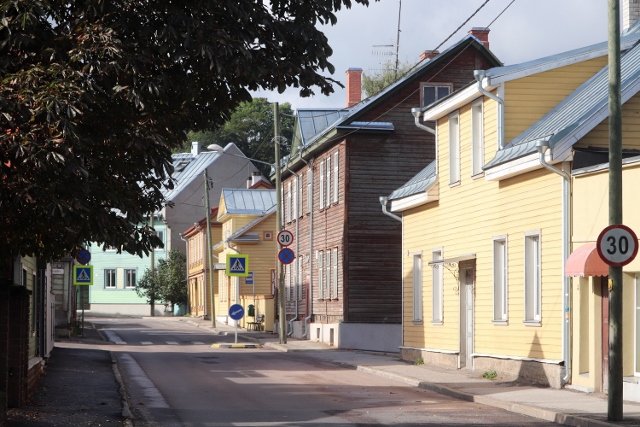
and a whole street-full of them, but neat and well maintained
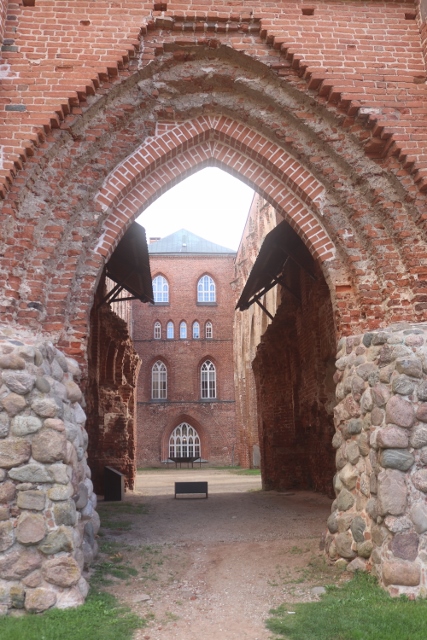
the ruins of the Tartu Cathedral, on Toome Hill
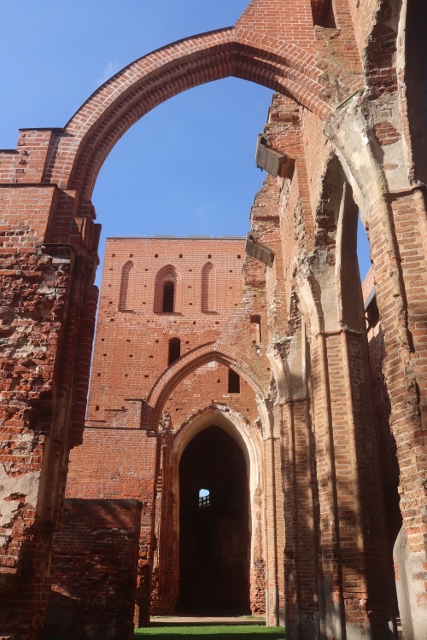
another view of the cathedral ruins
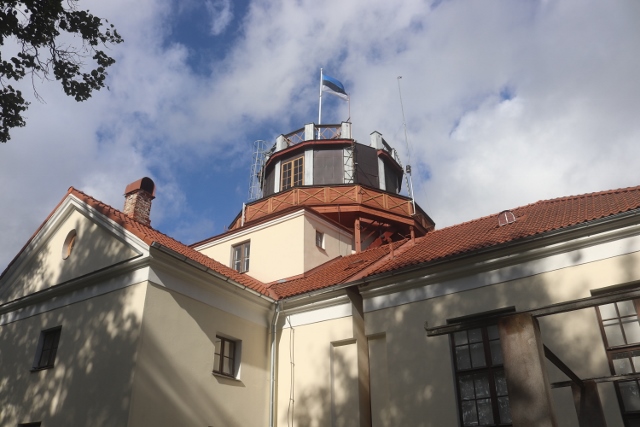
the observatory, also on Toome Hill
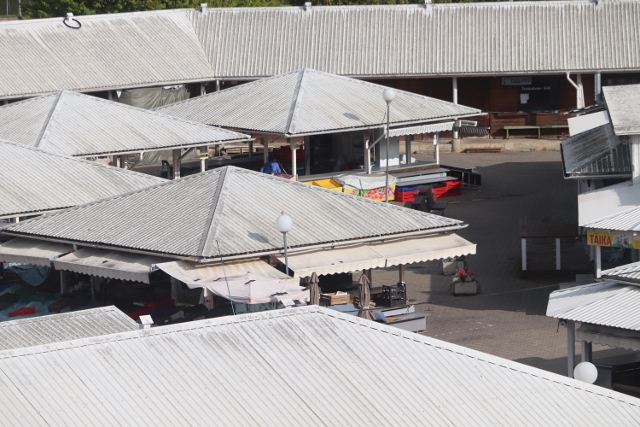
the corrugated iron roofs of the market, not very busy on a Sunday

some market buildings decorated with graffiti, again
The highest point in town is Toome Hill, where the remains of another 13th century cathedral create a dramatic sight in an otherwise pleasant park – the people here know how to create nice parks. There is an old observatory, a nice building, there are some likable sculptures, another art museum (see here for a selection of works) – proudly housed in a building that is more skewed that the Tower of Pisa, or so the brochure tells us -, a strikingly modern museum, and the old gunpowder cellars, turned into a restaurant-pub. Plenty to entertain ourselves for a day, although even the pub remains mostly empty in the evening.
Next: into Latvia.
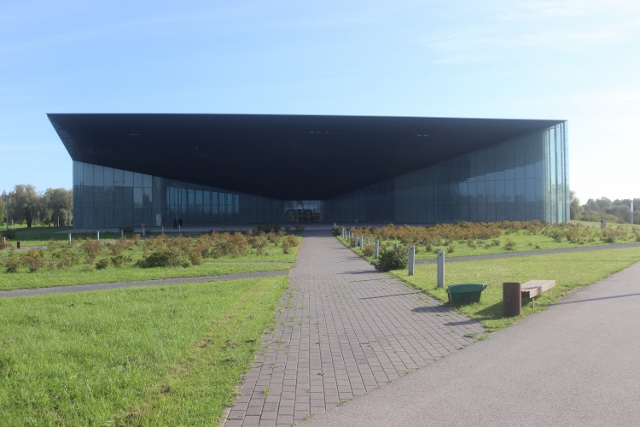
the starkly modern design of the Estonian National Museum in Tartu
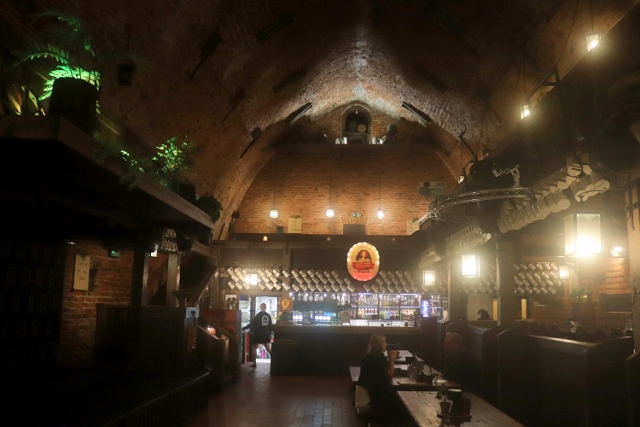
and the interior of the old gunpowder cellar, not turned into a restaurant
