
Still fleeing the rain, we move ever further east, to Zagreb. Another of those places we have been to some 30 years ago – but we don’t remember much, except that it, then, looked a very pretty city. No more, the first impression is of a run-down place, poorly maintained buildings, lots of destructive graffiti. A huge contrast with Ljubljana.
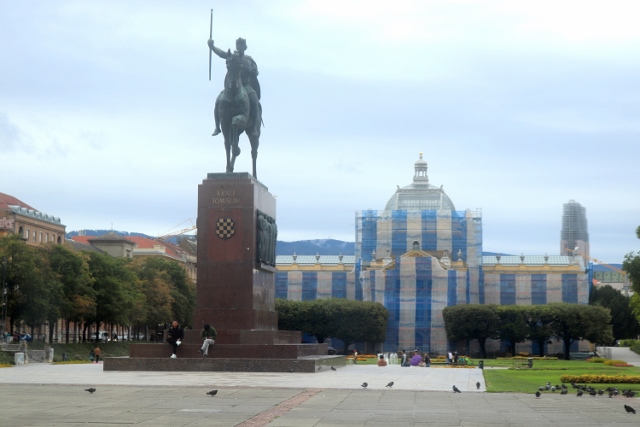
Admittedly, some of the damage to the buildings comes from an earthquake four years ago, in March 2020. A number of iconic buildings, like the Art Pavilion, described as “a stunning, yellow art nouveau–style pavilion”, are hidden behind scaffolding, and lots of the lesser buildings along the streets have parts of the stucco around windows missing; at least some of that may have been the result of the tremors, and of lack of funding for repairs. But it is hard to believe that this is the only reason for the maintenance backlog, some of it looks from a much longer ago.



Exploring the city
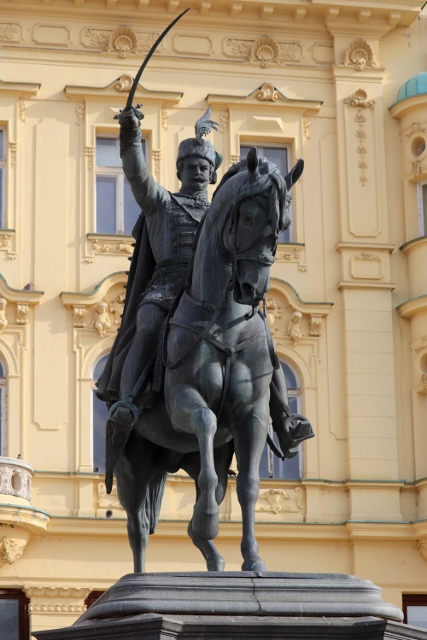
Of course, the weather doesn’t help. It is still miserable, and then most architecture just doesn’t look as appealing as it could. We do resist the rain in order to explore the highlights of the city; we even have, one morning, a couple of hours of sunshine. We start at the Trg Bana Jelačića, the central square named after Josip Jelačić, the 19th-century ban, or viceroy, who led Croatian troops into an unsuccessful battle with Hungary. His equestrian statue, removed by Tito in 1947 to discourage Croatian nationalism, was returned it to the square in 1990; exactly, to promote Croatian nationalism!


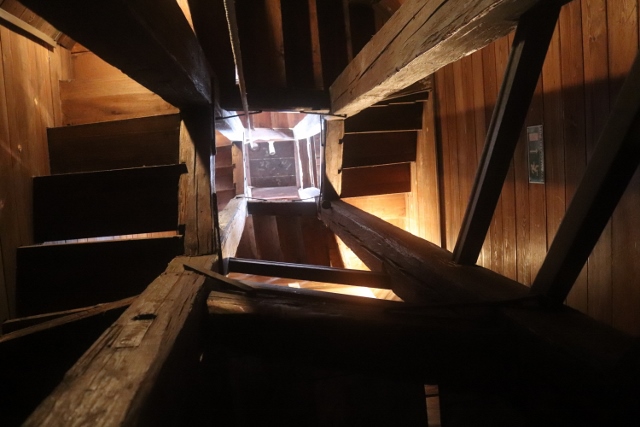

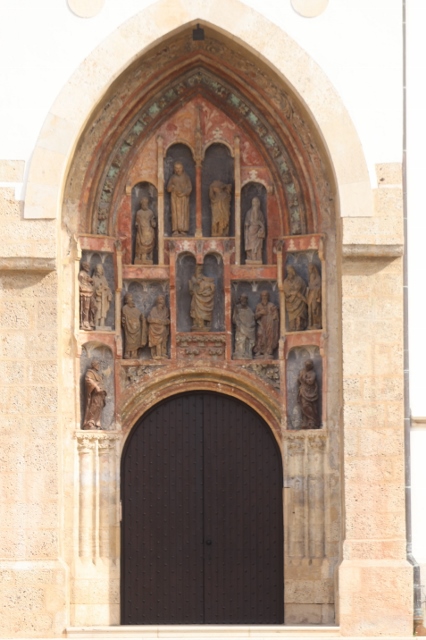


We take the funicular up from the Lower to the Upper Town, and then climb at least an equal distance up to the viewing platform of the13th century Lotrščak Tower, actually not a very pretty tower in its own right, but never mind. But quite a few of the main sights, like the Saint Marko church and the Cathedral of the Assumption of the Blessed Virgin Mary, are cordoned off, presumably also closed for repairs; the cathedral’s twin spires and a large part of the roof is packed away in scaffolding. The Dolac Market, described as “Zagreb’s bustling fruit and vegetable market, is almost deserted; the terraces along the normally so atmospheric Tkalcica street empty. The rain, you know. Oh, and Zagreb does have an extensive collection of murals – the graffiti of the more creative sort -, but once again, at the moment an uninviting activity to explore those.


Plan B: the Museums
But there is always a Plan B. Zagreb is full of museums, which by their nature call for inside activity. Just to mention a few, there is the Museum of Broken Relations – not exactly the place where I want to bring my travel companion -, the Chocolate Museum, the Zagreb 80’s Museum (I hope they don’t play the music of the time…), the Museum of Hangovers, the Mushroom Museum, with over 1300 different mushrooms, the Museum of Illusions…. A rich pick, but even the worst deluge won’t get me to any of those. However, I had selected a few that were more in line with our interests, like the National Museum of Modern Art, the Art Pavilion, the Croatian Museum of Naïve Art, and the Museum of Contemporary Art. Right, the first two are temporarily closed, which leaves naïve art and contemporary art, not a lot to fill two full days.
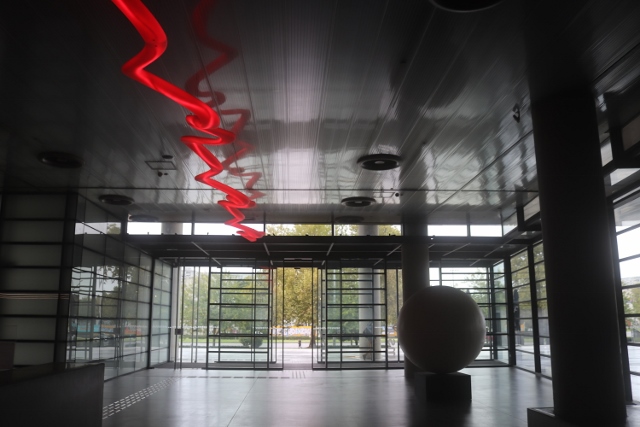
Yet, both are lovely collections. The Contemporary Art museum is a little outside the centre, in a functional, yet attractive building. As so often, some of the collection is beyond me, especially the rather long videos where little is happening. Yet, here we were confronted with a video showing Serbian alt-right violence at various occasions. Shocking, and what a coincidence to see this in a Croatian museum. Luckily, lots of other works were more accessible, if I may call it that way, and especially the Kitchen, an installation by Marko Tadic, where, upon closer inspection, extra buckets had been added to deal with a leaking roof.



The naïve art of the 1960-70s, in the other museum, reminds us of our Haitian years – and our Haitian art collection. But then with a focus on the local scene, like the painting of the funicular we took earlier.


The Cemeteries
On the way out I wanted to see a couple of famous cemeteries, like the vast Mirogoj cemetery designed in 1876 by Austrian-born architect Herman Bollé. The majestic arcade, topped by a string of cupolas, looks like a fortress from the outside, but inside it supposed to be an oasis of peace, with tombs richly decorated by sculptures. It may well be: the cemetery is huge, and we had only entered on a small side plot – when it started raining again. I like cemeteries, but not so much. The second one we found, the Jurvesky street cemetery, was the other extreme. Started in the 14th Century, it was closed down in 1876, and there are no more than a handful of graves left, unreadable, and not very interesting except for its history. Or perhaps on a sunny day we would explore more enthusiastically, that it also possible.
next: into Serbia
