
one of the village dancers in traditional cloths at the Loser festival in Dirang
It happens to be Tibetan New Year, called Losar. And this is celebrated in Dirang for all the villages in the surrounding, many of which have sent their traditional dance groups to the festival. The groups are small, perhaps four of five people each, but all have been dressed up, with costumes, masks, and colourful hats. One group has brought a bull – the costume of a bull -, another two snow lions.
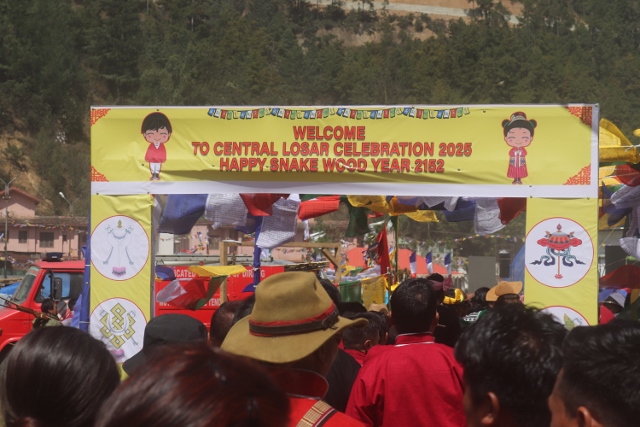
the gate to the festival grounds

the dance groups nicely lined up at the beginning
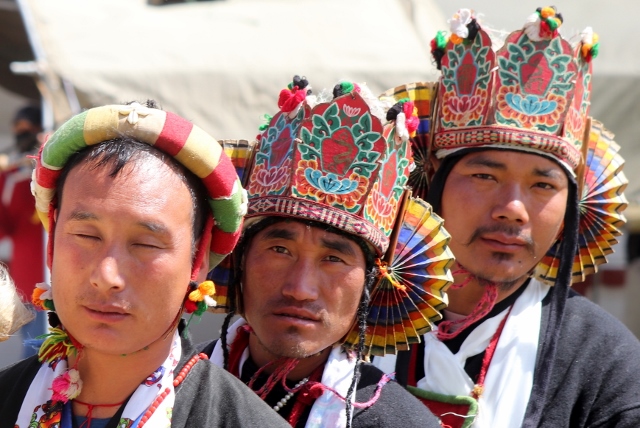
same group, in a bit more detail

one of the two masked man of the group

curious enough to peep underneath his mask at the photographer
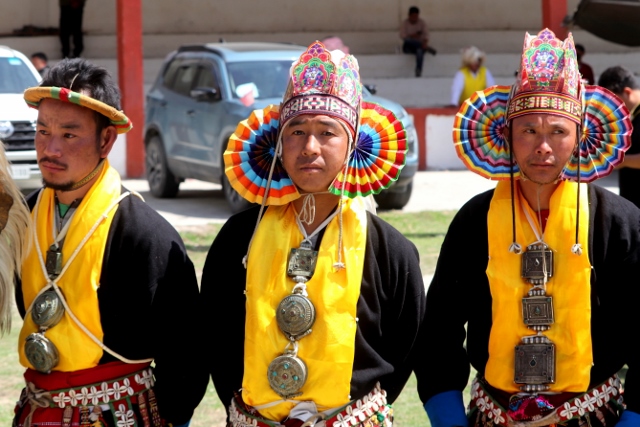
another dance group, but same principle
Everybody is exceedingly friendly and hospitable, nobody treats us like invaders – what we are, of course, showing up at the gate uninvited. But from that gate we are immediately directed towards the dancers.

a masked dancer from another village

the two snow lions entering the performance arena

the VIP enclosure, and some of the VIPs
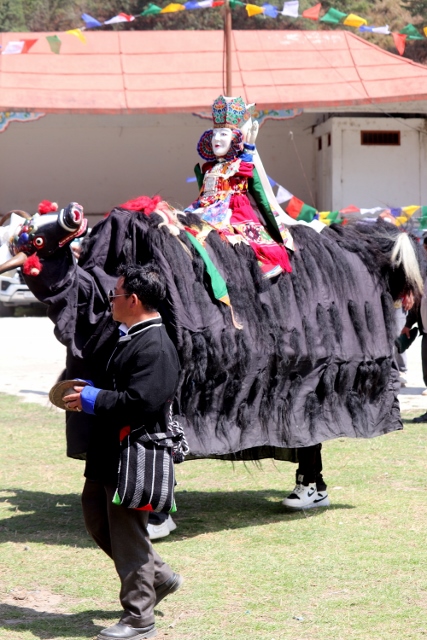
the bull – the costume of the bull – with two pairs of sneakers
We are early, the dances haven’t started yet, but the groups are conveniently lined up, for the photos. We are invited into the enclosure for VIPs; being the only foreigners has its advantages. But after a few minutes we get up again, preferring to walk around. Talking to the many people who have dressed in traditional cloths, and are proud to show off; or the people at the various food and drink stalls, which, I think, are not commercial enterprises but the stalls of different clans, where people from the village gather again, after having completed their performances. Also, witnessing the Buddhist ceremony, for which the yellow-hatted monks have come to the festival ground to perform prayers, chanting and offerings, which are being received by the many important people. Who have also made an effort to dress up, it looks.
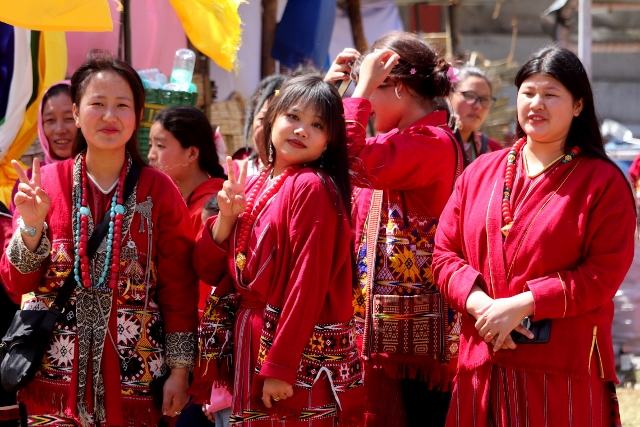
the women showing off their traditional dress

which is indeed very colourful
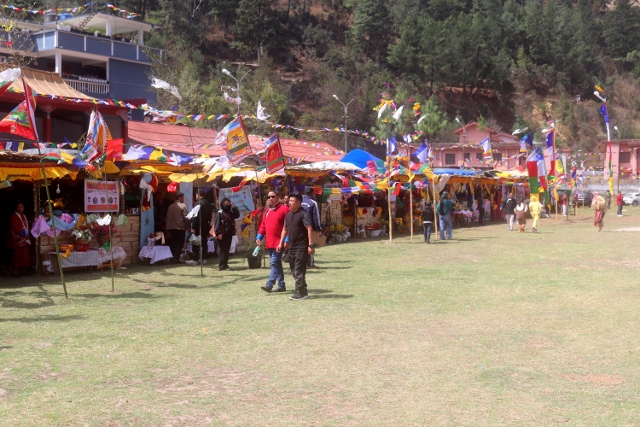
the festival grounds, with the stalls along the side

one of the dancers in action
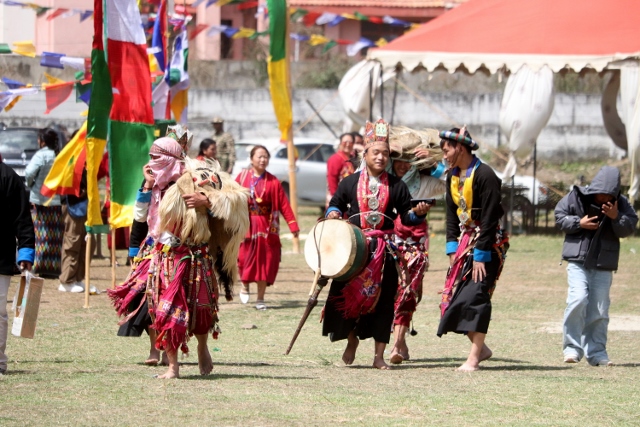
and various characters walking up and down

this one is merely shaking his head
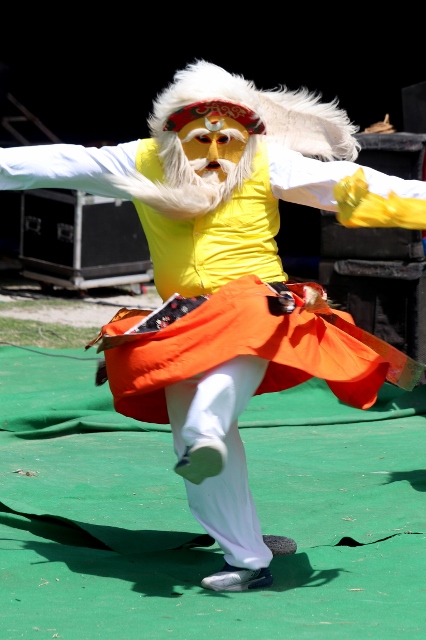
whist he is actually twirling around
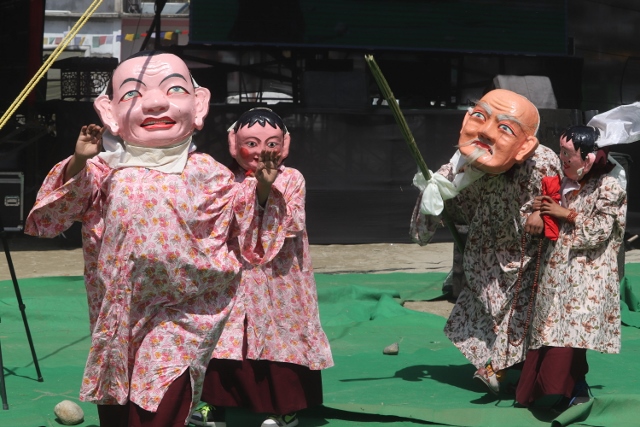
another group, of which the meaning never became clear to me

and another one, masked
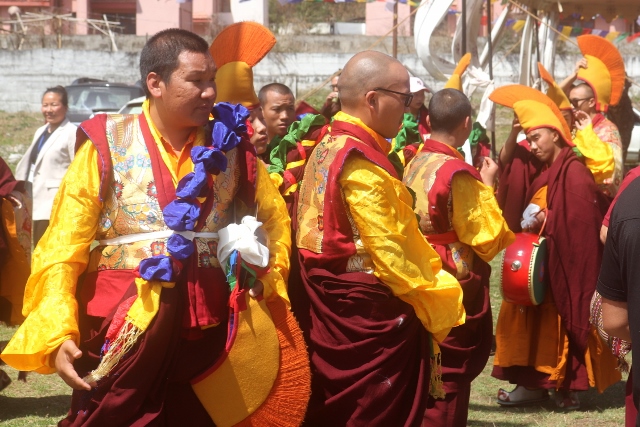
at the beginning of the ceremony, the monks in festive costume

another part of the band

the offerings
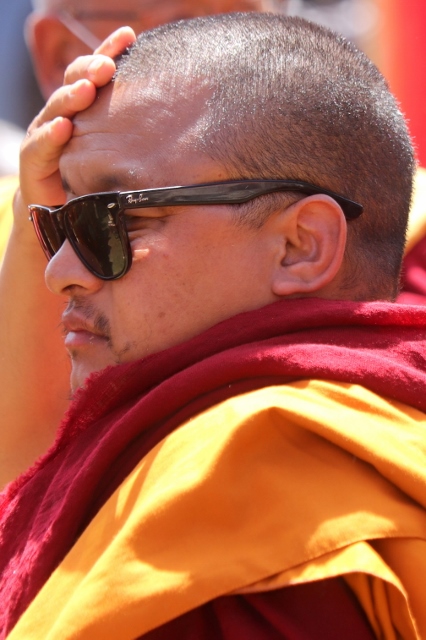
important monk

important VIP, also dressed for the occasion
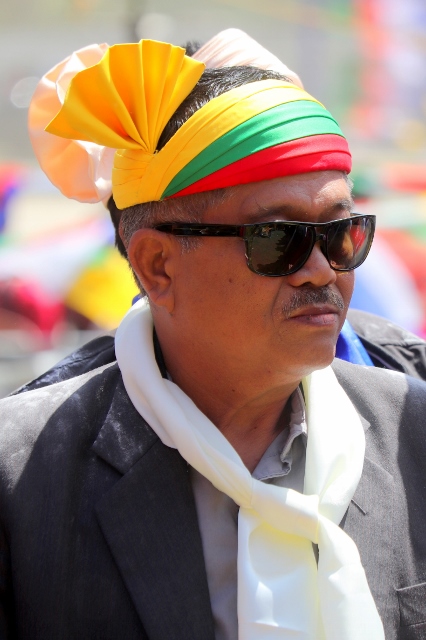
another VIP, taking it more easily
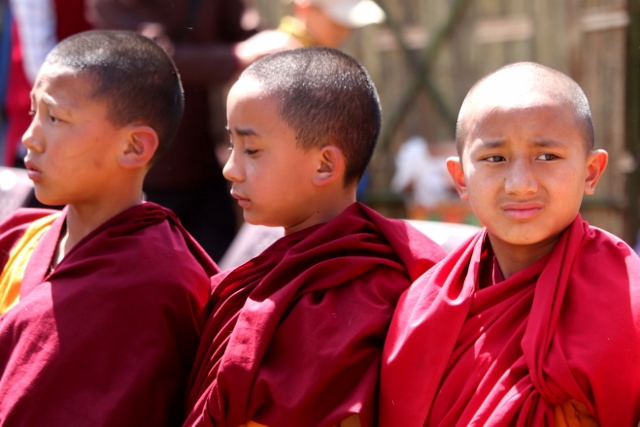
the spectators, from an early age
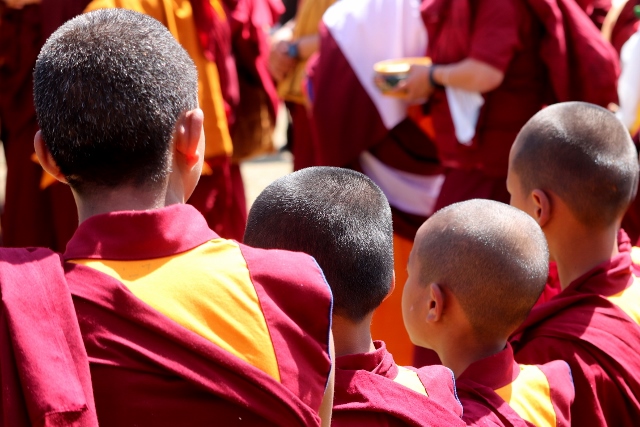
and immaculately coiffed

at the end of the ceremony flower is thrown, and even innocent bystanders don’t escape
After the ceremony we are, like everybody else, covered with flower, that’s the thing to do. And when we indicate that we really need to leave, we are first treated to fruit and apa, home-brewed rice wine, in one of the stalls.
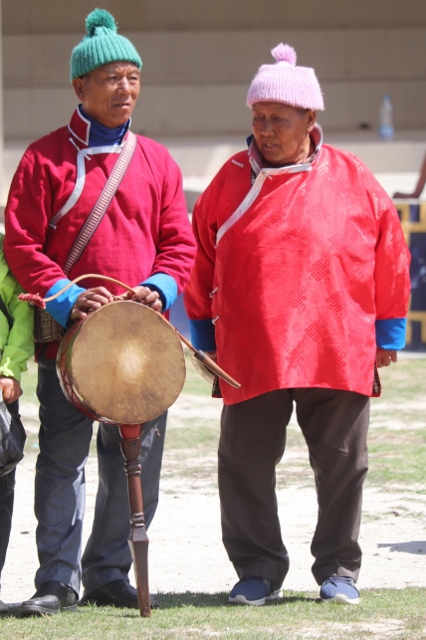
and two members of the band

a singing group ready to perform
I am sure we could have spent the rest of the day here, weathering the long speeches and enjoying more of the traditional dancing. And no doubt drinking lots more apa. But after an hour or two – to the mild dismay of our driver, who had wanted to leave much earlier – we left, for Bomdilla, further down the mountain.
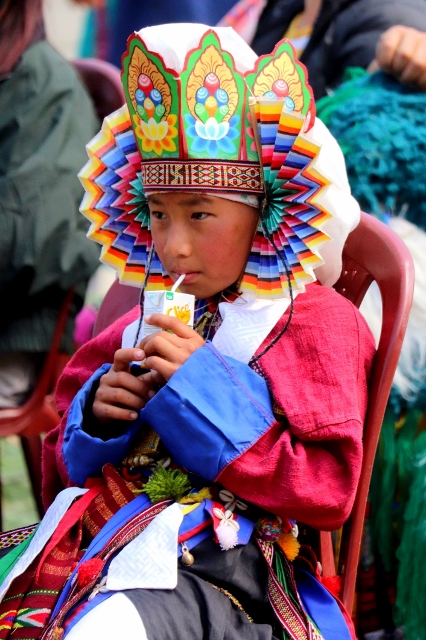
one of the younger participants
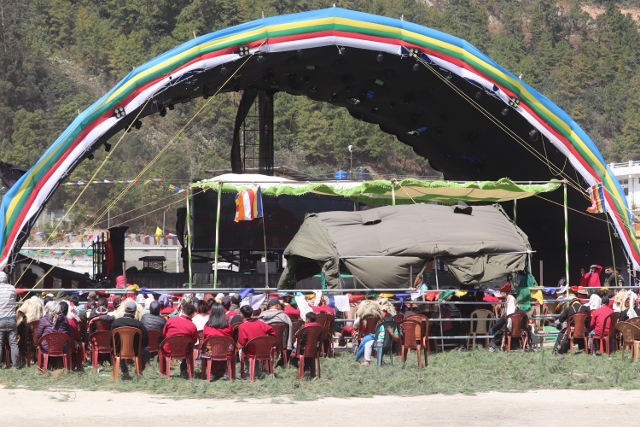
the tent where the performances were held

and then the festival ground turns out to be the local football pitch!
