
some colonial-era elements in Darjeeling have been patched up to provide some colour
A large part of Darjeeling occurs around the railway station, where the Toy Train arrives and departs. On the opposite side of the road is the Loco shed, where the different engines are kept, many of which are steam engines. There are quite a few trains, not just the once a day connection with Siliguri, but also many for what is called joy rides, shorter trips that explore the track close to Darjeeling. Most of those joy rides are hooked up with a steam engine, which requires transfer from the shed to the station, and thus blocking the road for any amount of time. With copious use of the horn, of course, but now also accompanied by foul smelling grey smoke from the coal burning. Yet, every time I pass the station, I stop and look at the spectacle, taking the noise and the smell for granted. Some more pictures here.

the Loco shed, prominently present at the entrance of Darjeeling

this is where the various antique railway engines are being kept

and they work!

this one is moved from the shed to the actual station across the road
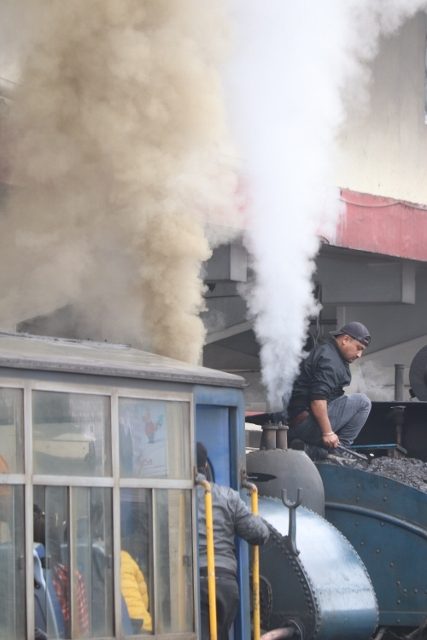
and moving trains comes with lots of noise, and lots of smoke

two of the porters sitting outside the station

and a little further, the rubbish dumped, which looks remarkably like the lunch trays we had a day earlier

Happy Valley tea estate provides tours and tea tastings

the nicely maintained tea estate

and one of the workers harvesting what must be the Autumn harvest

in fact, it is a large group of women, working on the estate

the tea factory

and the tea, before

and after preparation for the tasting
The Tea Estate
However, Darjeeling is more than the train alone. Most people will know it from the tea it produces. There are 87 tea gardens, as the plantations are called here, spread out over the hills around the town, which produce almost 10 million kg of tea per year. I don’t know much about tea, so we decide to visit one of the estates. Happy Valley, the second oldest tea estate in Darjeeling, from 1854, is just a short walk out of town, and has guided tours and tastings. Right next to the factory several women are harvesting, always a colourful process. The tour itself is mainly an explanation of the process, as the factory is not operating right now. And the process is mostly concerned with drying and oxidizing, from the withering process on a kind of conveyor belt, that gets rid of 60-70% of the moist, to what is called disruption, bruising the tea leaves to prepare them for easier oxidation, and subsequently heating the leaves to stop further oxidation. An largely automated process, although some manual labour is involved, too. Oh, and the amount of oxidation determines the type of tea, black tea having oxidized fully.

tea is also being served elsewhere in Darjeeling

and is for sale from fancy tea shops

providing a large variety of ‘flushes’
In Darjeeling, tea is plucked four times a year, in Spring, Summer, the monsoon season, and Autumn. Tea of the last two is often mixed, and all harvests know a first flush, considered superior, and a second flush, slightly less so, although this is a matter of taste, I have been explained. And indeed, we try six different types of tea, and the variety is stunning – and so is the quality, far better than the stuff we produce at home. Obviously, this comes with a price tag, as well, a good first flush can sell for 2000 rps, some 25 US$, or more, for 50 g!

the Lloyd Botanical Garden

with what is called the large conservatory

as well as a not working fountain

a bit run-down perhaps
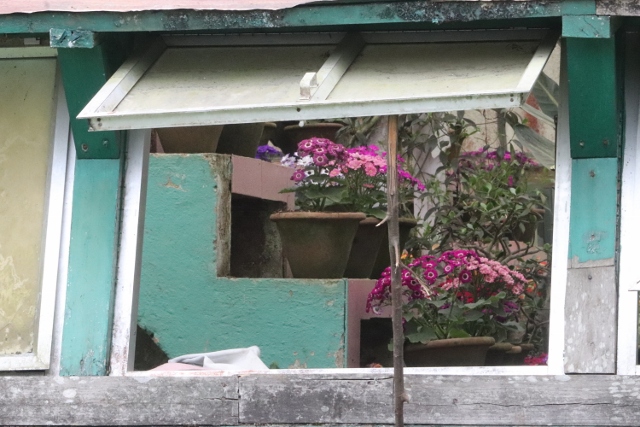
but inside full of flowers

and lots of space for plant pots

the cactus conservatory, again not in a great state

but inside again well stocked
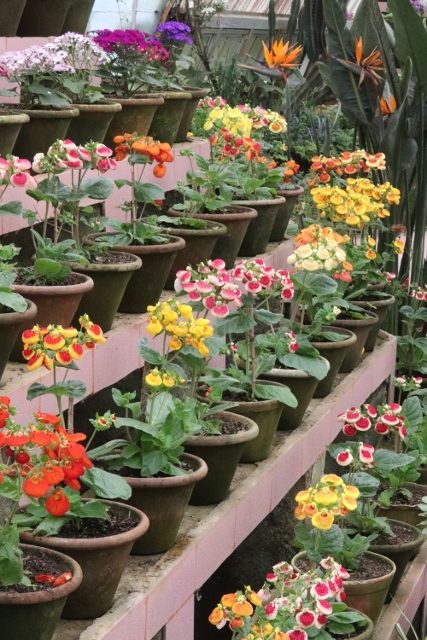
many of the plants are flowring

often, quite colourful
The Botanical Garden
After our tea lecture, we explored another British colonial heritage, the botanical garden. The one in Darjeeling is situated on a steep slope, donated by one Mr. William Lloyd in 1878, to represent the flora of the Sikkimese Himalayas. The leaflet we receive at the entrance talks about the orchidarium with ‘wild orchids of immense biological importance’. I am no specialist, but it looks to me that the average front yard of a Darjeeling residence holds more orchids than the botanical garden does; or perhaps we are visiting in the wrong season. The Large Conservatory, ‘the only one of its kind in Asia’, looks distinctly run-down, the fountain inside doesn’t work anymore, but at least the plants here seem to be well cared for. The succulent section, in the small Conservatory, is empty, except for a gigantic, and just now flowering, wisteria, which apparently dates from the garden’s establishment. But the garden is an oasis of rest and peace, quite different from the streets of Darjeeling, let alone those around the station.

and this is the well over a century old wisteria

in town, often the now familiar corrugated iron houses
The Town
But despite its traffic chaos, Darjeeling is actually a very pleasant town. Touristic, for sure – this is for the first time we see so many foreigners -, but not overly so, not disturbingly so. Built on and around a hill, the streets are steep, and in places stairs provide a shortcut up or down from the hairpin bends that the cars follow. Part of town is pedestrian, and this is where the tourists and the towns people come together in a common activity: sitting on one of the many benches, to look at the other people passing. But I prefer to walk. Around every corner could just be another colonial gem, more often than not run down, like the botanical garden, but nevertheless an interesting example of architecture of a bygone era.
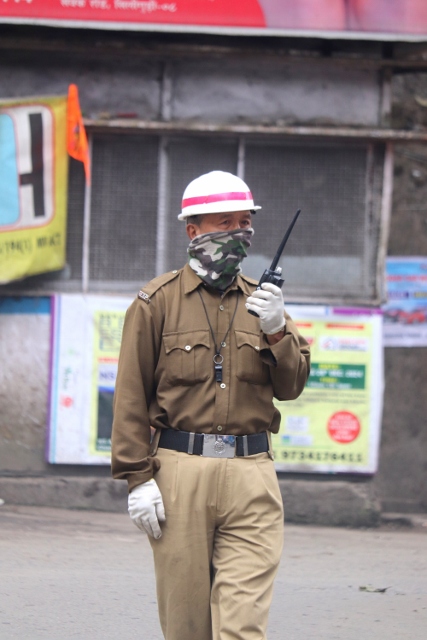
a policeman managing the traffic

which can be dense, in the narrow streets of the centre of Darjeeling
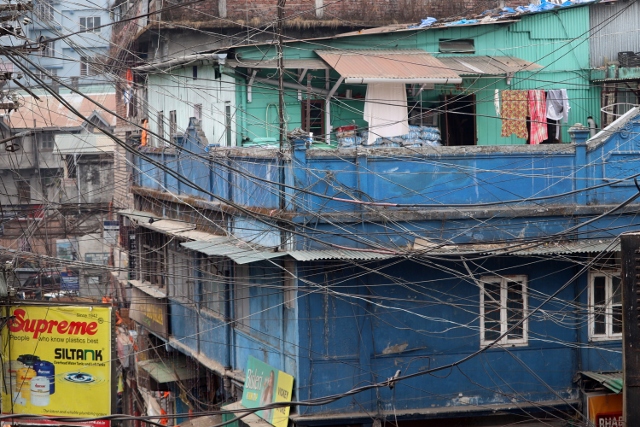
the older houses are a mix of wood, cement and corrugated iron

some of the architecture is clearly of colonial age
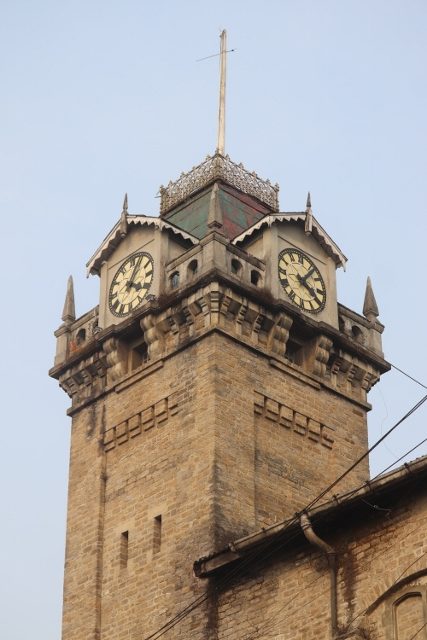
like this tower, part of what is now the municipality building

as always, every day is laundry day in India

a random window with a balcony for the plants

an older building, from 1912, which could benefit from a patch up, as well

some of the old buildings are largely made of wood, with decorative patterns

Darjeeling prides itself on being the home of the Gurkhas

it has even a huge territorial administration building of ‘Gorkhaland’
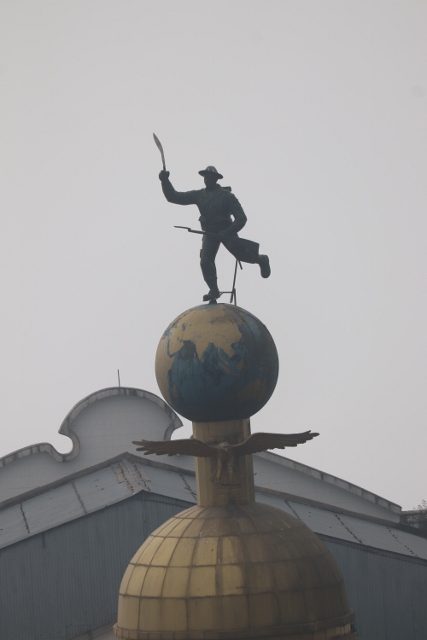
the top adorned with a ghurka soldier, wielding machete and gun

and a statue of Gurkha freedom fighter Major Durga Malla, who died in 1944

a group of women, in front of more Gurkha memories

perfectly happy to be photographed

as is quite a lot of other carrying activity

the gas bottle transportation business seems to be exclusively a female afair

I have not worked out what is being transported on these flat carts, which are everywhere in town

one of the many little shops
Like every town, Darjeeling has its market, along one of the lower streets, and in the alleys behind.

market seller with his ware, on the street

fabulous face

and a slightly larger market enterprise
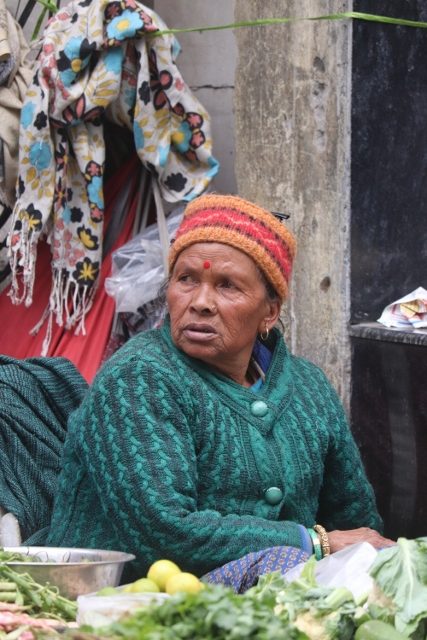
with an equally intriguing face

the meat shop, including a fly swot

and the fish monger

the market from above, with the orange flags for the Hindu festival of Ram Navami
Interestingly, the orange flags from the Ram Navami festival dominate the alleys, where I would have expected Buddhism to be the dominant religion here, so close to Sikkim, Bhutan and Tibet. In fact, the Mahakal Mandir, a temple complex on what is called Observatory Hill, is an interesting mixture of Hindu temples and Buddhist stupas and shrines, generously decorated with the colourful prayer flags. Two religions, harmoniously coexisting. Altogether, there is enough in Darjeeling to keep us entertained for a couple of days.
next: Gangtok

a Buddhist stupa in the Mahakal Mandir temple complex
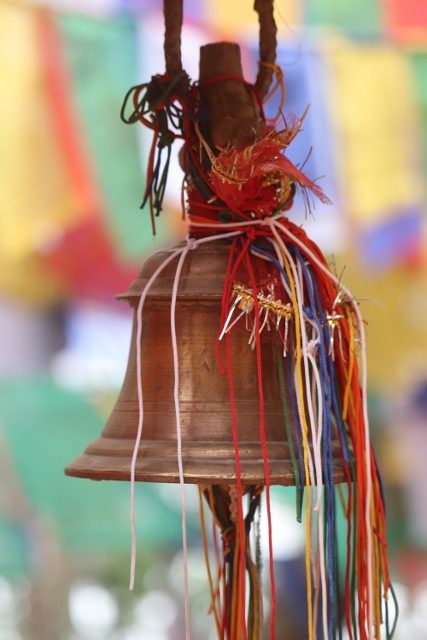
and a decorated bell

part of a much larger display of decorations

the complex is full of Buddhist prayer flags
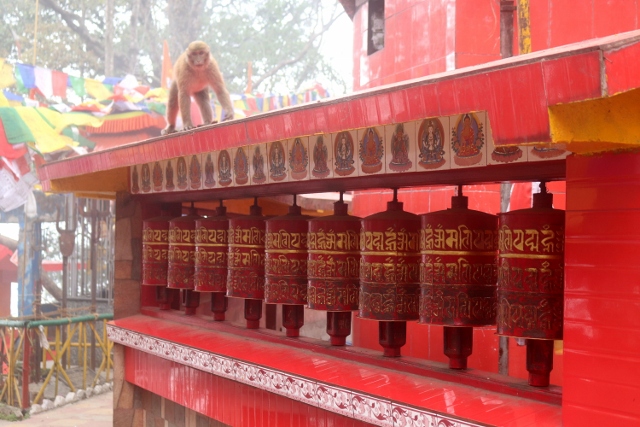
as well as the typical prayer wheels

but at the same time there are many Hindu symbols present, too

and several images of Hindu deities
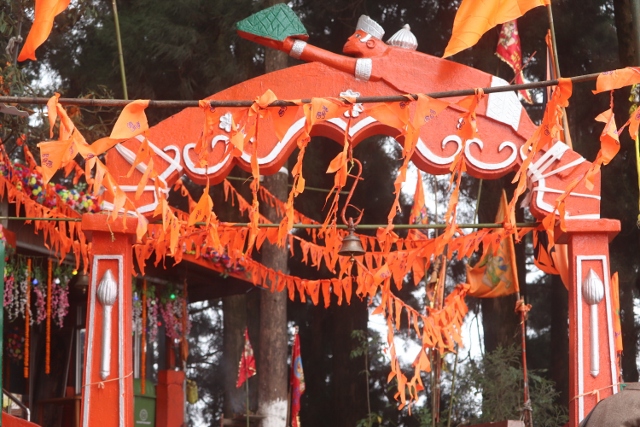
the Ram Navami festival flags

haphazard tourist being subjected to barber treatment
