
rhino providing a platform fot egrets in the Kaziranga National Park
Tawang may have been touristic, and the Ziro Valley, and Majuli. But with Kaziranga National Park we have reached a new dimension. A UNESCO World Heritage Site, this game reserve is especially known for it being the only place in the world for the one-horned rhinoceros. And there are quite a lot of them, together with elephants, sambeer deer and hog deer, wild boar and lots of birds. And the ever elusive tiger, of course.
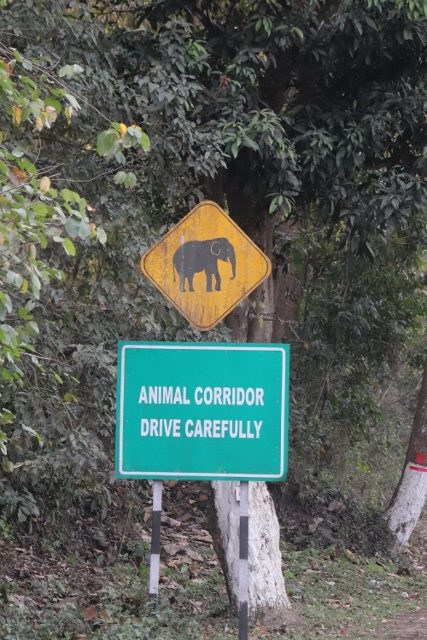
the Assam Trunk Road passes by the Kaziranga park, and warns for crossing animals

which is not these elephants, of course, who are just using the road to get home

only special safari jeeps allowed in the park, hundreds of them
The Visitors
Lots of people flock to the park to come and see it all. And they are well prepared, with camouflage dress, safari hats, dark sunglasses – despite the fact that the sun is letting us down today -, and shawls wrapped around their faces against the dust. We feel utterly unprepared, amateurs, really. Which is enhanced by the size of lenses some of the tourists are carrying. Never mind that we can drive right up to the rhinos, too close even for my own humble tele-lens.

the park is known for its one-horned rhinoceros, here two young ones facing off
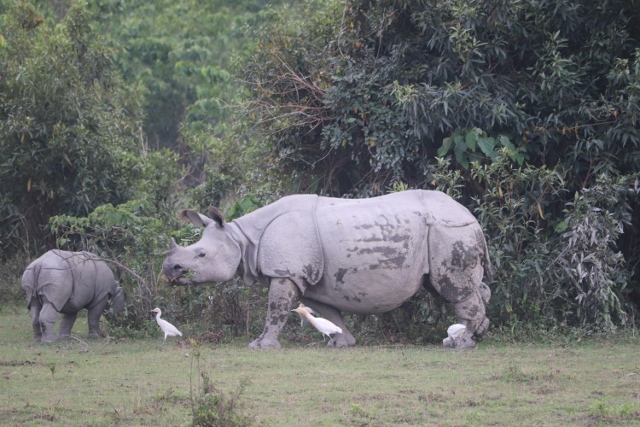
and this is a mother with her young – and the egrets, of course

water buffalo are semi-wild, I think, also present in the park

deer are just curious, before running away anyhow

a family of elephants

and a single one, probably an old male

the roads in the park are excellent, but narrow

just about wide enough for two jeeps, unless everybody just stops to look
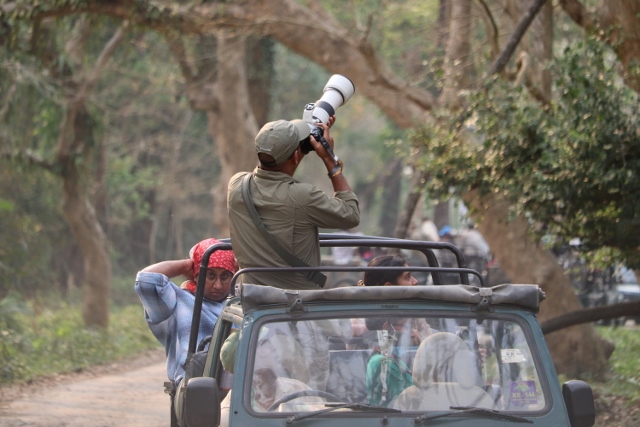
as I said, we are amateurs compared to the average visitor
The process of visiting the park is highly controlled. Although the roads are good quality dirt roads, easily good enough for a sedan car, you can only enter the park in a safari jeep, invariably dark green, which you have to rent, with driver. There are hundreds of them, first all lined up outside the gate, but also in the park itself. Each time there is something to see, several jeeps congregate in one spot. And even if you would want to pass, you cannot, they block the entire road. Which in any case is not very wide, often just enough for two cars next to each other.
The Wildlife
And the safari itself? Nice, but I have been on more spectacular safaris. The tiger remains elusive, of course, and for the rest there are so many rhinos that we don’t even stop for them anymore. The deer, the wild boar, and a family of elephants, a few families even. And several types of birds, but nothing we haven’t seen yet outside the park.

no less than seven rhinos on this little piece of land

judging by his wrinkles, this is a really old turtle

and a bird of prey, not sure which one

these are so-called ruddy shelducks, aren’t they beautiful

a black-and-white kingfisher

a few minutes later in action!

sunset in the park

providing nice photo opportunities
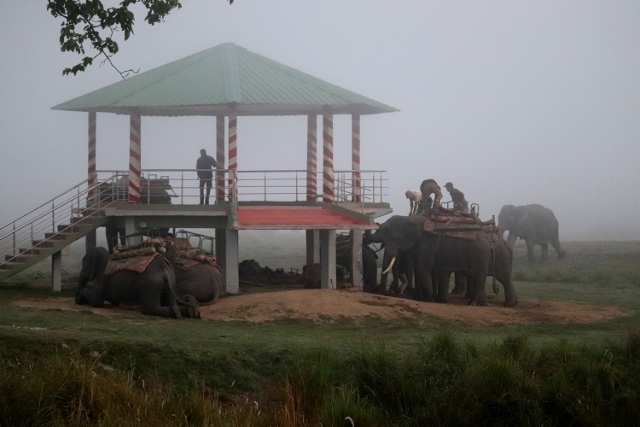
the elephamt safari departure platform

early morning, a herd of elephants

and a rhino, trapped!

another rhino trying to hide
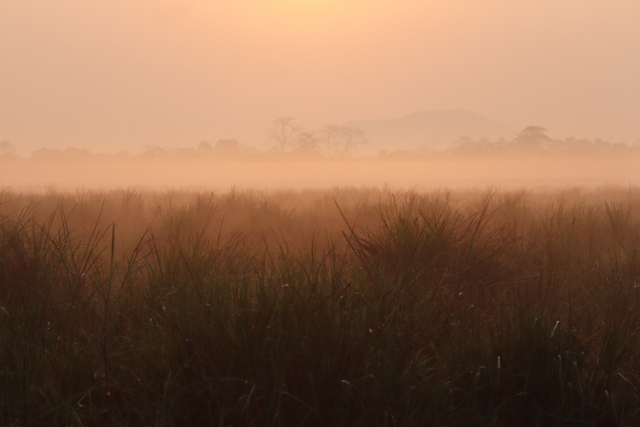
early morning mist lying low over the park

which doesn’t make it easier to spot this group of deer

a wild boar, coming close
The Elephant Safari
The novelty is the elephant safari, next morning. My trusted travel companion declined the opportunity – either because we had to get up very early, or she doesn’t agree with the use of animals for this type of follies, I am not sure -, so I am on my own. Well, not really. Because I share an elephant’s back with an Indian engineer, who manages to hold a telephone conversation twice, during the one hour ride. Between quarter past five and quarter past six, am. And because we are actually moving with a group of nine elephants, two to three tourists per elephant. Who are all busily talking, which takes some of the charm of a peaceful, early morning sunrise experience away.
The animals are the same as earlier, of course. We move from rhino to rhino, a wild boar is curious and comes very close, but the deer see little reason to stay around the group of noisy elephants. At one stage my elephant driver says that he thinks there is a tiger nearby. To which my friend the engineer immediate loudly shouts to all the others “Tiger, tiger!!!”, and they all enthusiastically scream with equal enthusiasm. We don’t see the tiger.

the audience enthusuatically filming the dance performance

which sports lots of traditional costumes

including the farmer girls, and boys

and another group of pretty women in traditional dress
After an hour it is over. I don’t regret the ride, but I am happy we are back at the disembarkation place. A car is infinitely more comfortable, I have decided.
The Performance
In the evening I attend a dance performance, of Assamese and other tribal dances. The music is quite nice, lots of percussion, drums of the types we have at home. The costumes are beautiful. But the whole thing lacks enthusiasm, the dancers have been doing this for too long, it looks. Even the public loses interest: where in the first fifteen-twenty minutes many people raised their telephones in order to video the performance – a very irritating habit if you try to watch, from somewhere in the back -, even that died down. And lots of people well left before the end.
A truly touristic experience then, Kaziranga. Perhaps in retrospect not the most favourite experience of the trip.
next: Sivasagar

some working a rice basket

other another type of basket, all part of the dance
