
carved shield outside Kigwema, one of the Angami tribe villages outside Kohima – always the focus on the heads…
Kohima is located on a couple of hillsides. As soon as you leave the city, you are confronted with the rice paddies and vegetable terraces that surround the town, a fabulous sight. Every river valley is built up from below, up the slope, with terrace after terrace, interspersed with little huts for shelter, or for tool storage. Most paddies are dry, at this time of the year, but some contain water, although the luxuriant green colour of the rice is absent. Unfortunately, it is a bit hazy, obscuring the views somewhat, but still, very enjoyable.

rice paddies or vegetable terraces outside Kohima

every slope has been cultivated from bottom to top

the flatter places are easier, obviously, but still needs the little dams to contain the water

some of the paddies have already water standing inside

people have the small huts near the paddies, for shelter and for keeping the tools
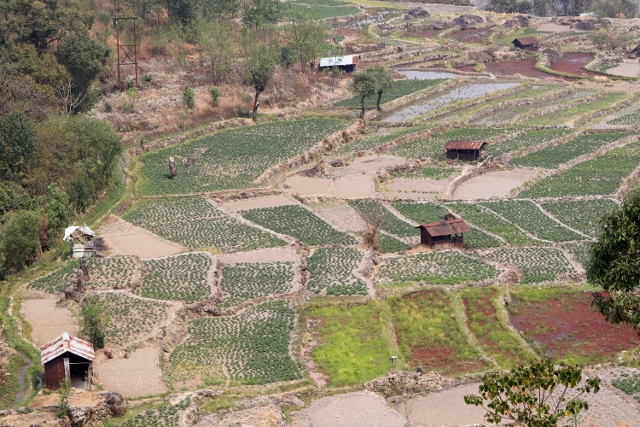
here, too, lots of small huts dotted across the vegetable gardens

another example, trees mirroring in the water of the paddies
Outside town are also several Angami villages, some of which we pay a visit. The Angami people are one of the dominant tribes in Nagaland, and inhabit the area around Kohima. And although our guide and our driver were a little reluctant, I managed to convince them to stop in Kigwema first, a suggestion I had plucked from a travel site.
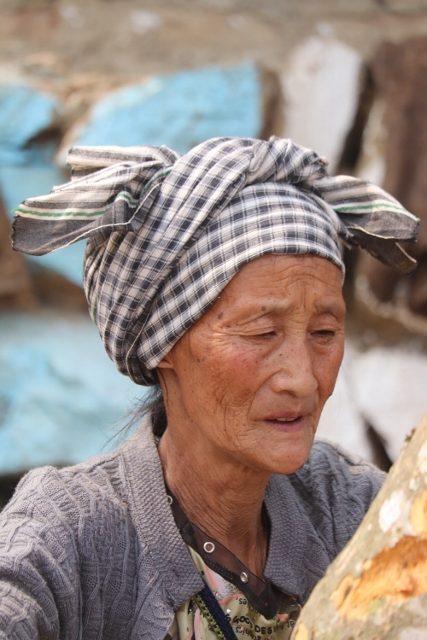
this lady is also involved in the wood transport

wood is the dominant issue in Kigwema village, today

one of the basic traditional houses, with the corrugated iron totems on the roof
Kigwema
And this turned out to be a great suggestion. Kigwema is a lovely little place, which is distinguished by its many traditional Angami houses. These have a pair of what looks like crossed machetes at the roof in the front, originally made of wood perhaps, but nowadays, with corrugated iron roofs the solution of choice, the totems – the machetes – are also of corrugated iron. Mostly undecorated, it is just the form, but it emphasizes the cultural heritage of the tribe. And the deeper we get into the village, the more of them we encounter.
A few of the houses, according to our guide from the richer people, are in fact decorated, with a carved – and occasionally even a painted – front, and with the skulls of many mithuns above the entrance; the mithuns, which we already encountered in Arunachal Pradesh, are a local type of cattle, something between a cow and a buffalo, and are sacred animals for the Naga people (except that they can be killed and eaten, of course). The totems on the roof are still corrugated iron.

and two more elaborately decorated ones, brightly painted
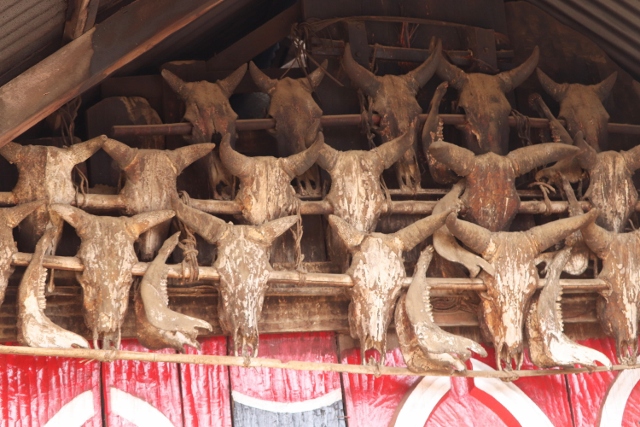
and one of them decorated with a series of mithun skulls, sacred animals here, resembling something between a cow and a buffalo
But the nicest part is just walking through the village, talking to the people – a remarkable number of them do speak quite a bit of English. Nobody is concerned, everybody very relaxed; they just continue with what they are doing, which today is focused on wood distribution in large baskets, carried on the back of the women – the men help filling the baskets. Really nice. And still no tourist in sight, except us. A few more pictures, if you like this, are here.
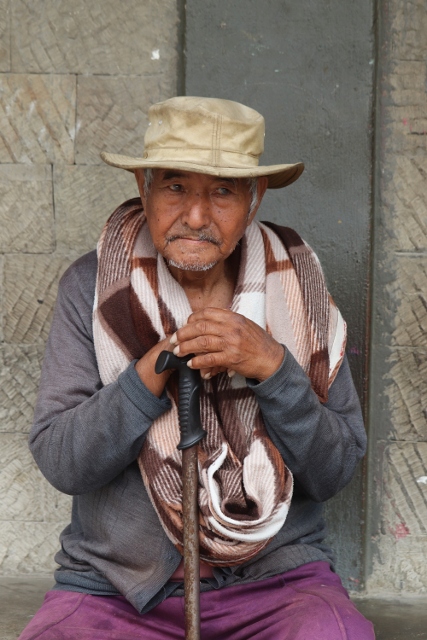
and this gentlemen has seen it al before
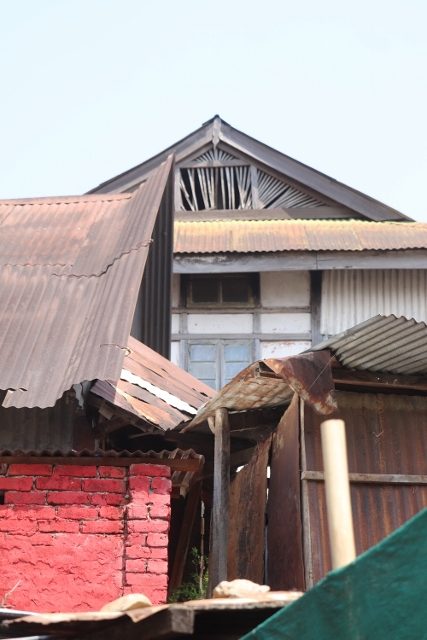
one of the houses in Zakhama village, another Angami stronghold outside Kohima
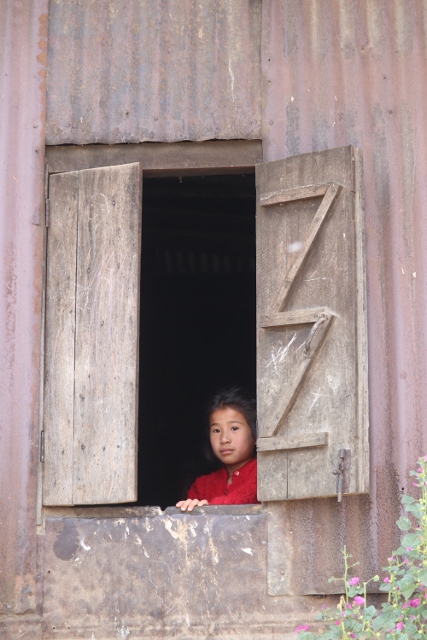
corrugated iron walls, wooden windows, and curious children

the villige prides itself for the extensive flower decorations everywhere
Zakhama
The other village I found on the travel site, nearby Zakhama (sometimes called Jakhama), doesn’t have the same focus on traditional houses. But it has the same friendly people. There are quite a few newer, larger, concrete houses in the village, but the majority is still corrugated iron, with occasionally bamboo woven walls. And every house has flowers, often in a long row of pots, in front, or on the porch. It is not always equally easy to find our way through the village, some paths lead to a next street, others just to the yard of a private house, but once again, nobody seems upset, an apology is quickly accepted. And then they want to know where we are from. Again, a few more photo’s can be found here.
The only traditional house we come across here is a resthouse – which I think is, at least sometimes, being erected on a place where somebody has died – outside the village. We have seen more of those rest houses, not as nicely decorated as this one, along the roads, often near sharp bends.
next: there is more around Kohima (2)
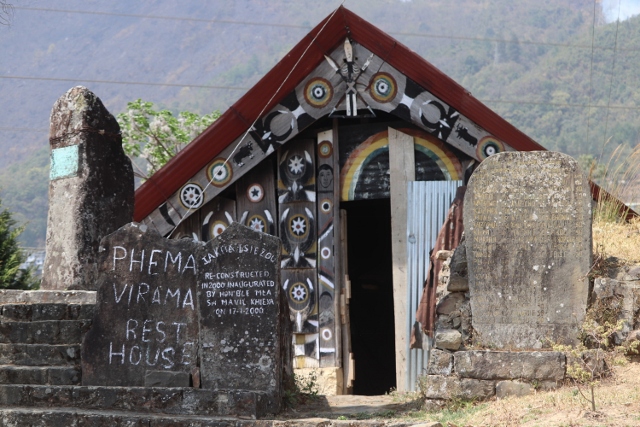
a resthouse, outside the villge, has been decorated in traditional form
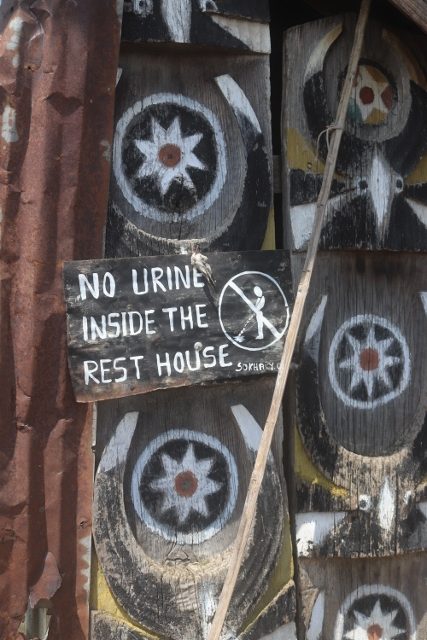
although some traditions are now being discouraged
