
the Toy Train – the real version, with steam engine – at the Ghum station in between Siliguri and Darjeeling
Siliguri, or rather, nearby New Jalpaiguri Junction, is the starting point for what is commonly known as the Toy Train, a narrow gauge railway that runs between Siliguri and Darjeeling. And climbs from 120 meters above sea level to more than 2000.
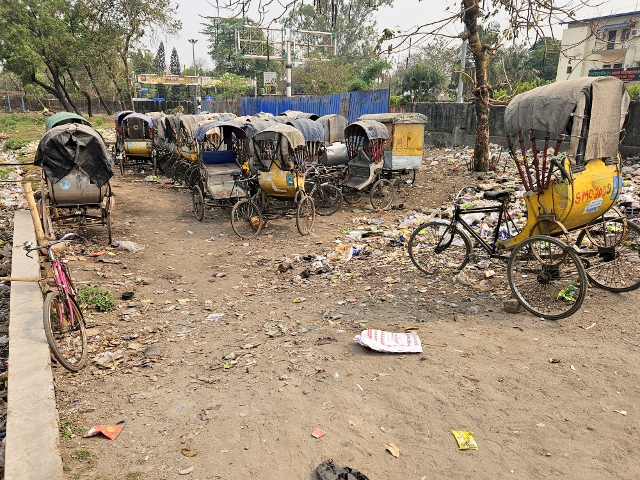
rickshaws parked outside New Jalpaiguri station, starting point for the Darjeeling Himalayan Railway
The Darjeeling Himalayan Railway, as it is officially known, was built in 1880 to extend train services that already ran from Calcutta to Siliguri, further to Darjeeling, a popular hill station. But because of the steep slope, it was decided to use narrow gauge, which can make sharper bends. Originally the track followed the Hill Cart Road; well, up to a certain extent, because the tracks cross the road no less than 155 times! To ease the gradient, several switch-backs and loops were incorporated later.
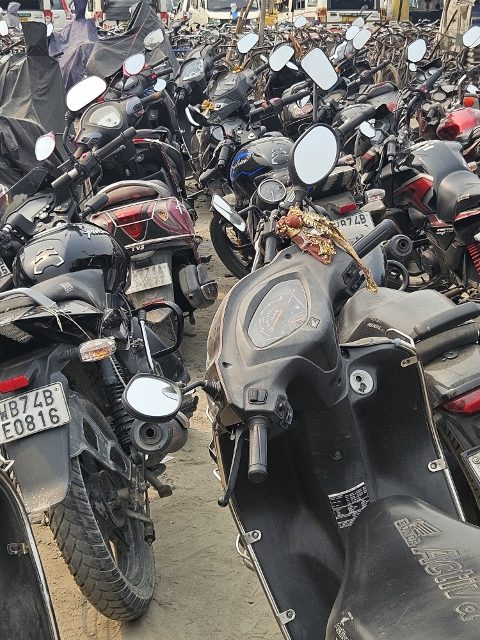
motorbikes are still the preferred way of transport in India

and here you can leave your helmet, a kind of P&R in New Jalpaiguri station

inside the station, the usual
The Station
The New Jalpaiguri station is huge, obviously an important railway junction. An enormous parking in front offers space for the Sumos – shared taxi jeeps -, but also rickshaws and tuktuks, motorbikes and even bicycles. Inside, a large amount of railway tracks facilitate a multitude of trains, mostly freight, it seems. The contrast with our train could not be bigger: as it pulls into the station, there is one old, fairly small diesel engine and two wagons, the AC one with 15 seats and the non-AC with perhaps 25. And that is all, a toy train indeed. This is not a regular Indian train, but a tourist enterprise, no doubt helped by in UNESCO World Heritage status. After all, the train is scheduled to take a little over seven hours to reach Darjeeling, whilst a bus or a car does it in two and a half.

multiple tracks at New Jalpaiguri facilitate large freight trains

and then there is also, our little train, narrow gauge unlike the rest of the tracks

on the way to Siliguri, the first station along the line
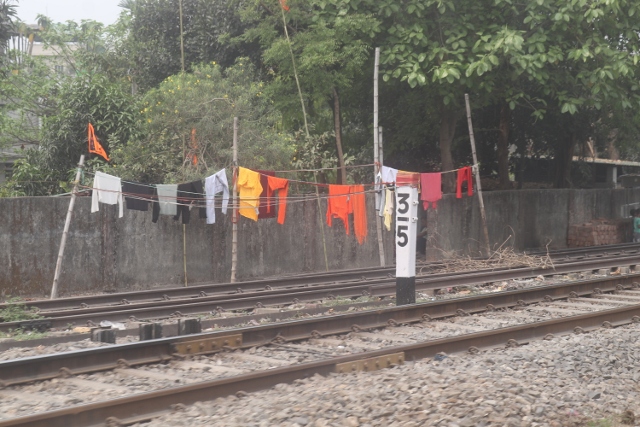
and the people having washed this are glad we have a diesel engine, not a steam engine
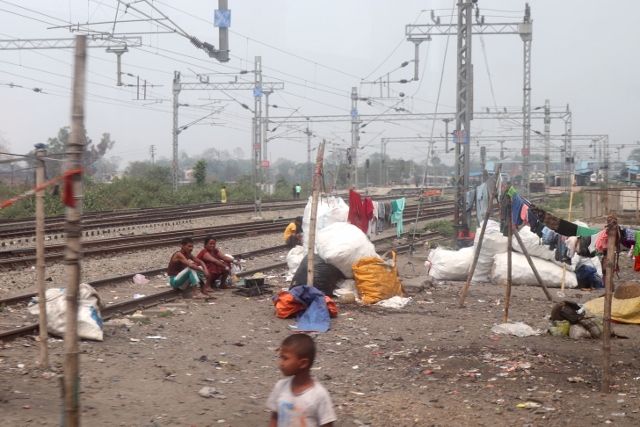
life along the railway tracks, near Siliguri station

and this is how close the track passes by houses and shops
After we hauled our luggage in the train – quite a bit more than when we left, as we lost discipline somewhat in Nagaland – we take our comfortable seats. The train leaves as scheduled, punctually at 10.10 am. Only to stop a few minutes later, for no apparent reason. This go- and stop-again continues through the whole of the urban area of Siliguri, where we skirt past houses and shops, mostly corrugated iron shacks. If we could have opened a window, we would have been able to touch the walls, so close are we. And all of this accompanied by the almost continuous use of the train’s horn. To warn the people, tightly standing in the doorway, or in front of their shop.
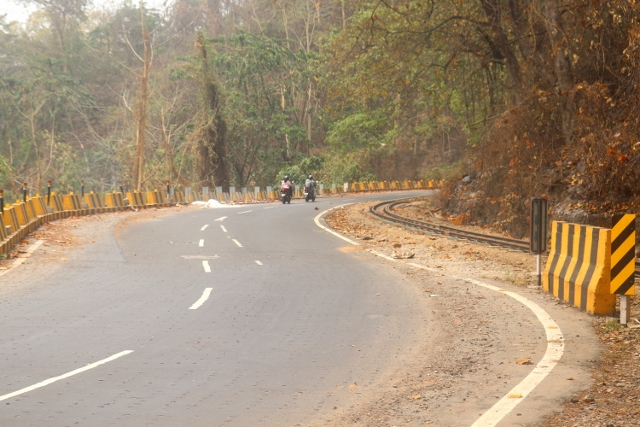
the Hill Cart Road, with the railway track next to it
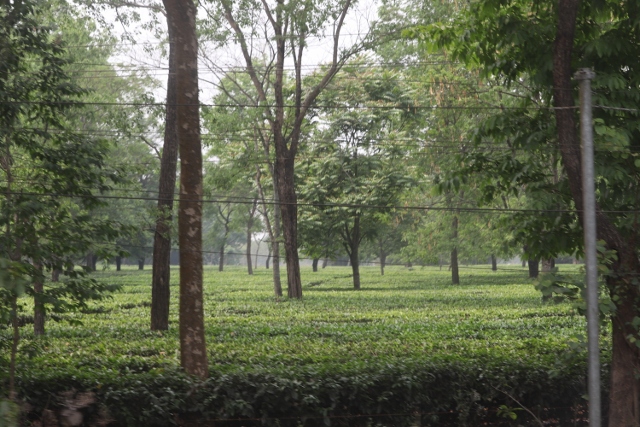
passing tea plantations

and even an elephant crossing zone in a nature reserve
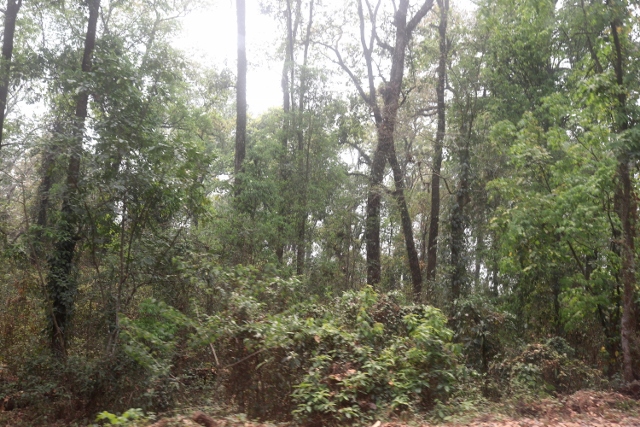
which looks like this, jungle
The Journey
Once outside town, well over an hour after our start, we join the Hill Cart Road, the main road to Darjeeling. That is to say, our tracks are right next to the road. Initially we ride through tea plantations, and a nature reserve, including ‘elephant crossing corridors’. Not with the still almost continuous use of the horn, I think.
Once the road – and the railway track – begins to climb and becomes more winding, the track, which cannot make equally sharp bends as the road does, starts crossing the road frequently, essentially cutting the corners. Which, for obvious reasons, also calls for almost continuous use of the horn, probably much more effective than the signs along the road. And then, when the slope becomes too steep, we reach the first switch-back, operated manually by a man with a green and a red flag.

a brief section of double-track, leaving Sukna station
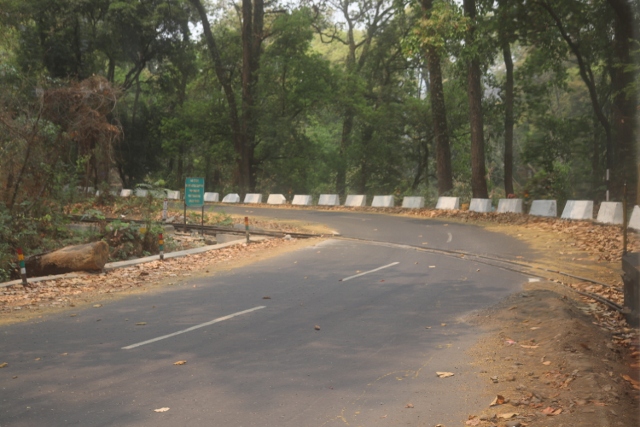
when the bends get too sharp, the train starts ‘cutting corners, tracks not being able to bend equally sharply

crossing accompanied by warning signs (almost sharp, the train goes faster than you think)

at one of the switch-backs, the operator manually ‘doing the needful’ – one of those lovely Indian expressions

road crossing, from higher up now

this is a slightly more modern warning sign
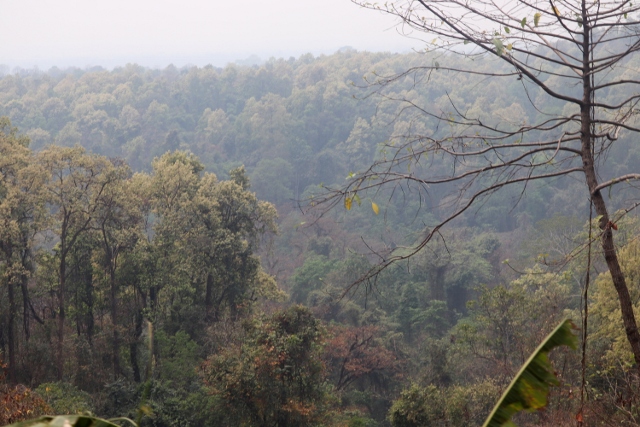
and the sweeing views, well, obscured by trees and weather
The idea is that, the higher we get, we have sweeping views over the hills. But the weather doesn’t help. Visibility is poor, and higher up we are occasionally riding through the clouds. And what view is left is often obscured by trees. But the ride in the train is fun, and there is enough entertainment from the villages and towns we pass, all the time close to whatever houses there are. And the further we get, the more dominant the prayer flags become: we are back in Buddhist area, obviously, although the flags, many weathered, still need to compete with the orange flags that remain from the Ram Navami festival.
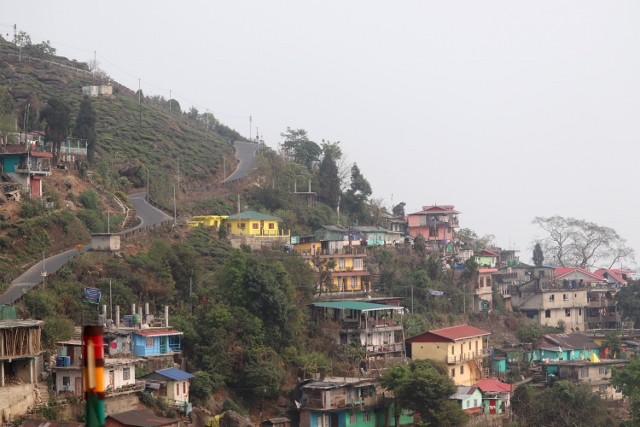
one of the towns along the track

the higher we get, the more Bhuddist prayer flags we encounter

no train story can be without a picture of the tracks, no?
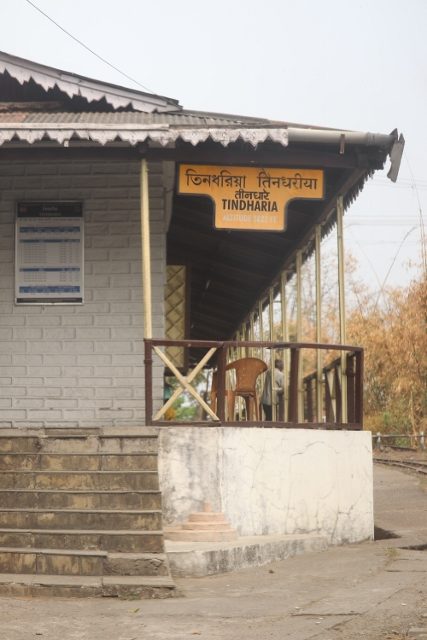
Tindharia station is where we collect our lunch

and once again, the train leaving the station right next to the houses
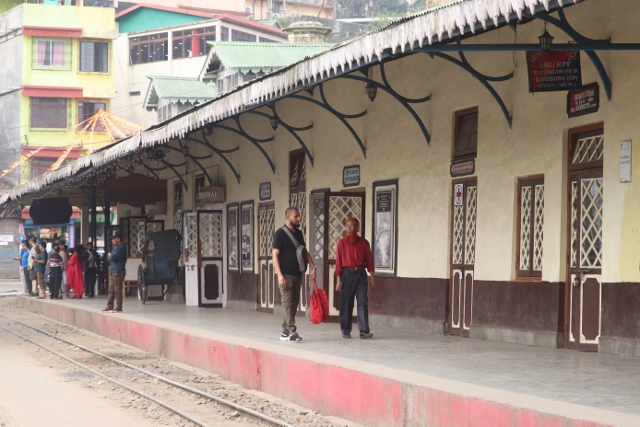
the platform at Kurseong station
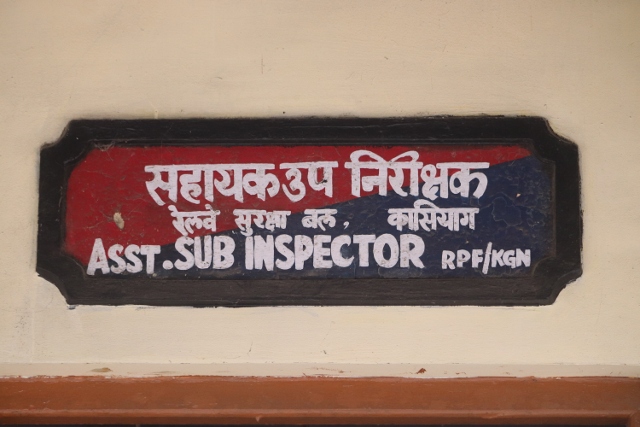
where they have rooms for everybody, even the assistant sub-inspector

but also not just First Class, no, an Upper Class waiting room
We stop at several stations, some of which are quite nice, reminiscent of the old days of train travel. There are rooms for the station manager, an ostentation station restaurant, and waiting rooms. For the ‘upper class’, even (!). In Tindharia we pick up lunch, and shortly afterwards we pass Agony Point, probably a reference to the very steep slope down, when I look out of the window. Sometimes, when the ledge is really narrow, the train tracks have been laid in the tarmac. Which has its effect on the traffic, of course, as in creating a traffic jam. Luckily, everybody has been sufficiently warned, by the still almost continuous use of the train horn.

as well as a rather oppulent restaurant

we are reaching the area where steam engines are also being used, for shorter tourist excursions

the train driver standing outside, at the back of the engine

we are leaving Kurseong, right through the middle of town again
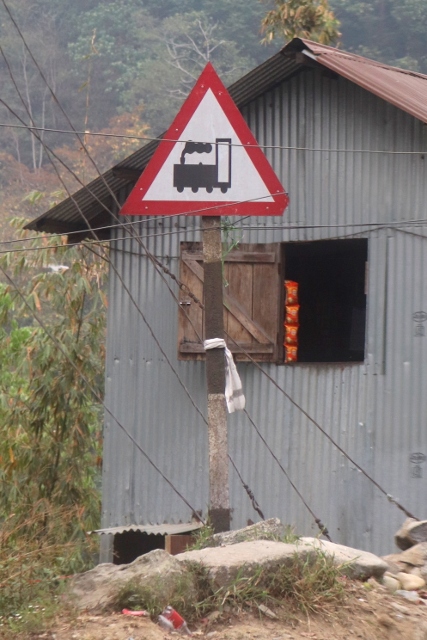
with another warning sign, of course
In the end we are delayed, it gets dark, and we only arrive at 7 pm, after almost nine hours. The last part is a bit endless. But, a great experience, that I would not have wanted to miss. And inspection of the station of Darjeeling, that can wait until the next day.

arrival in Ghum, the last main station before Darjeeling
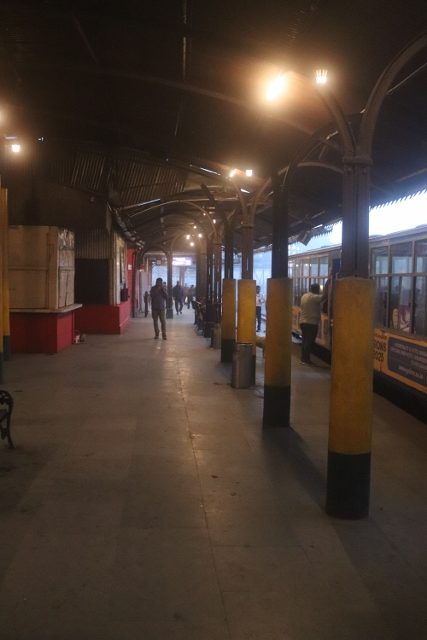
it is getting late, the light are on in Ghum

where we incur long delays, because of the movements of other trains, on shorter tourist excursions

and the fire brigade equipment

the ticket sales window
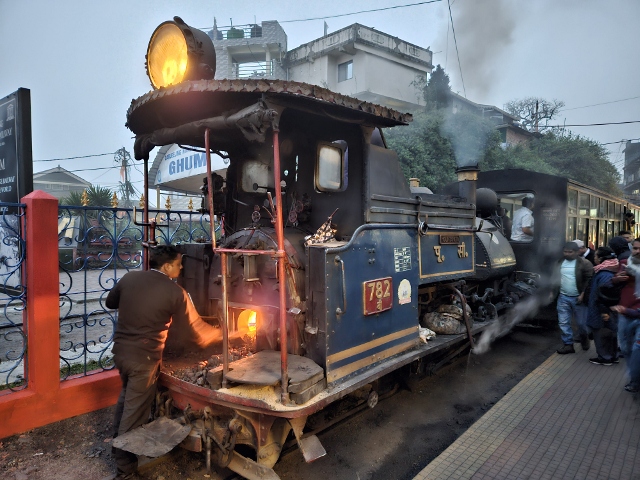
they are fabulous, no, these steam engines, still fully operational

ah, and two haphaard tourists being full of themselves, inside the train
